The Honduran Crash
Paperback · Hardcover
Ships in 2 to 5 working days. Delivery quoted from your address at checkout.
4,900 words · no email, no account
No. 128 · Music · Hip-Hop
a biography of Lance Taylor (Afrika Bambaataa)
He was born Lance Taylor on April 17, 1957, in the Soundview section of the South Bronx, the son of a Jamaican-Barbadian homemaker. He was a Black Spades gang member at fourteen, a warlord by sixteen, and a community organiser by twenty after a UNICEF-funded trip to Africa in 1975 that produced his Zulu-warrior pen-name. He threw his first Bronx block party at 1595 East 174th Street in November 1976. He founded the Universal Zulu Nation that summer. His 1982 single Planet Rock — built around a Kraftwerk Trans-Europe Express sample, on a Roland TR-808 drum machine — invented electro hip-hop and made the Bronx-block-party aesthetic global.
Jamal Whitestone's biography traces the arc through the South Bronx childhood, the Black Spades years, the UNICEF Africa trip, the early Bronx-block-party decade, the Death Mix and Renegades of Funk and the long Soulsonic Force collaborations, the Universal Zulu Nation organising and the long international chapters, the 2016 Ronald Savage child-abuse allegations that the New York Daily News and the Village Voice documented, the Universal Zulu Nation's removal of Bambaataa from its leadership in May 2016, the long sensitive-content register the biography preserves throughout — and the April 2026 alt-history ending the chapter treats with appropriate hedging.
What emerges is a portrait of the founder of one of the four core elements of hip-hop culture, an organiser whose Zulu Nation chapters have run in dozens of countries for the better part of fifty years, and a figure whose post-2016 abuse allegations the music history is still working out how to write.
The opening chapter is published in full — read it here.
The printed edition has no ISBN registered yet. It affects library and retail listing, not your order.
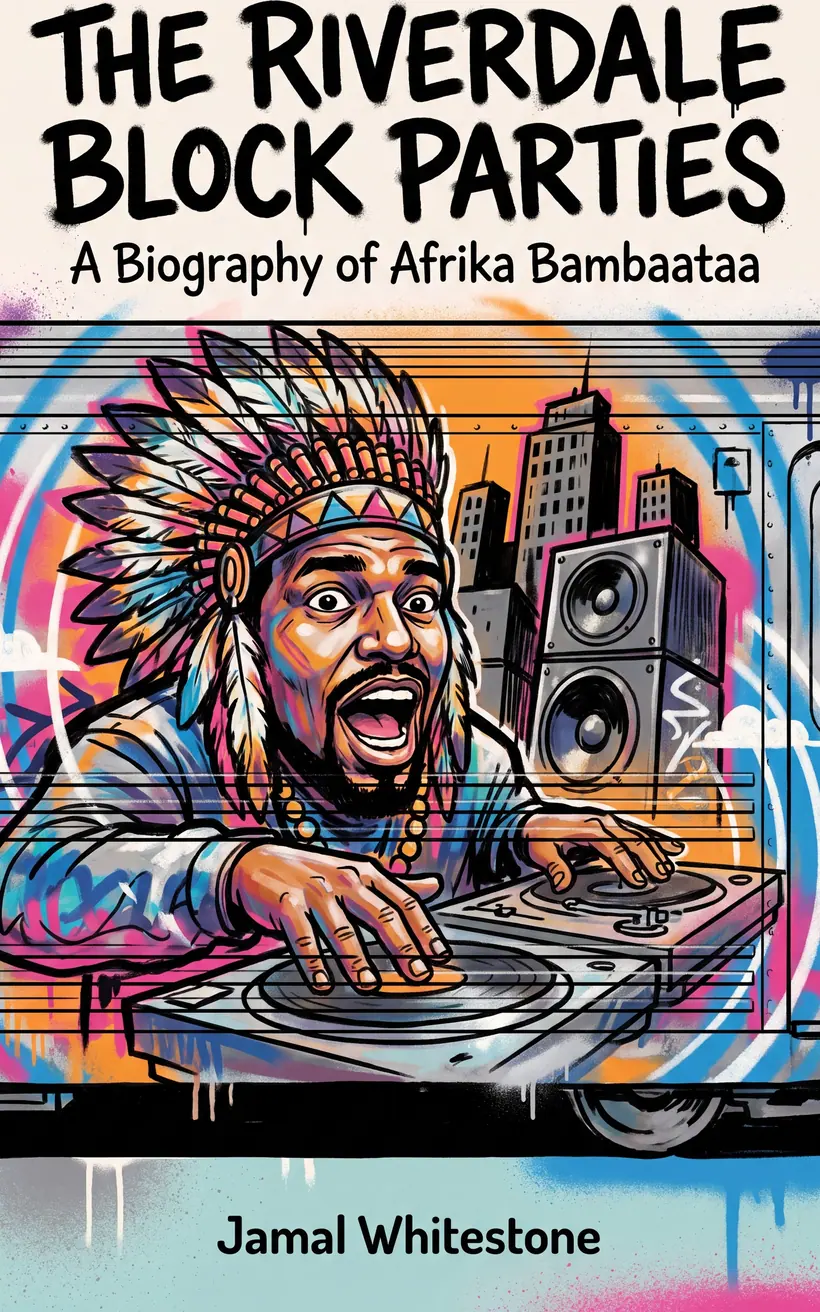
Lance Taylor (Afrika Bambaataa). The title never carries the subject's name: it names one concrete thing out of the life — in this case The Riverdale Block Parties — and the name goes on the line underneath.
No. No subject, estate, label or foundation had approval over the text, and none paid for a word of it. The cost of that independence is that no new interviews were conducted for the book; it is built from the public record, and it says on the page where a scene is reconstructed rather than documented.
Yes — the whole opening chapter and the writer's foreword, free and in full, with no email address and no account. That is 4,900 words of the book.
About 59,000 words, 18 chapters, 197 pages in the paperback.
6 × 9 in, 60# uncoated cream, black ink, perfect-bound paperback, matte laminate. Every title in the series uses the same specification, so they line up on a shelf.
Paperback · Hardcover
Paperback
Paperback · Hardcover