The Bargain
Paperback · Hardcover
Download link emailed the moment payment clears.
4,078 words · no email, no account
No. 043 · Crime · Crime
a biography of William Henry Cosby Jr.
One question sits under this book: why a man convicted in 2018 of three counts of aggravated indecent assault is not in prison. The answer is procedural. In April 2018 a jury in Norristown, Pennsylvania, found Bill Cosby guilty of assaulting Andrea Constand. In 2021 the Pennsylvania Supreme Court overturned that conviction on a due-process ground related to a non-prosecution agreement made by an earlier prosecutor. Sixty different women have accused him. One case reached a verdict, and the verdict did not hold.
Elliot Cranmer opens earlier, in the Philadelphia childhood and the early-1960s Greenwich Village clubs, and follows the arc from there. William Henry Cosby Jr., born July 12, 1937, the eldest son of a Navy steward and a domestic worker, served in the Navy, took a track-and-field scholarship to Temple, and dropped out in 1962 for the clubs. The 1965 I Spy casting made him the first Black lead actor in an hour-long network drama. Fat Albert and the Cosby Kids came to CBS in 1972. A 1976 concept that failed became, eight years later, The Cosby Show, the show that saved NBC and made Cosby, for its entire eight-year run, the most-watched man in America.
The rest is the record: the 1969 marriage to Camille Hanks, the Pound Cake speech of 2004, the long accumulation of accusations, the Constand civil and criminal cases, the 2015 release of the deposition, the Norristown trial, the conviction, the overturning, and the late-life chronicle of accusations the criminal system has been unable to prosecute.
What Cranmer sets down is both things at once: the most popular Black entertainer in American television history, and a serial sexual predator whose criminal liability the statute of limitations and the post-conviction appellate process have, between them, kept inside a single courtroom.
The opening chapter is published in full — read it here.
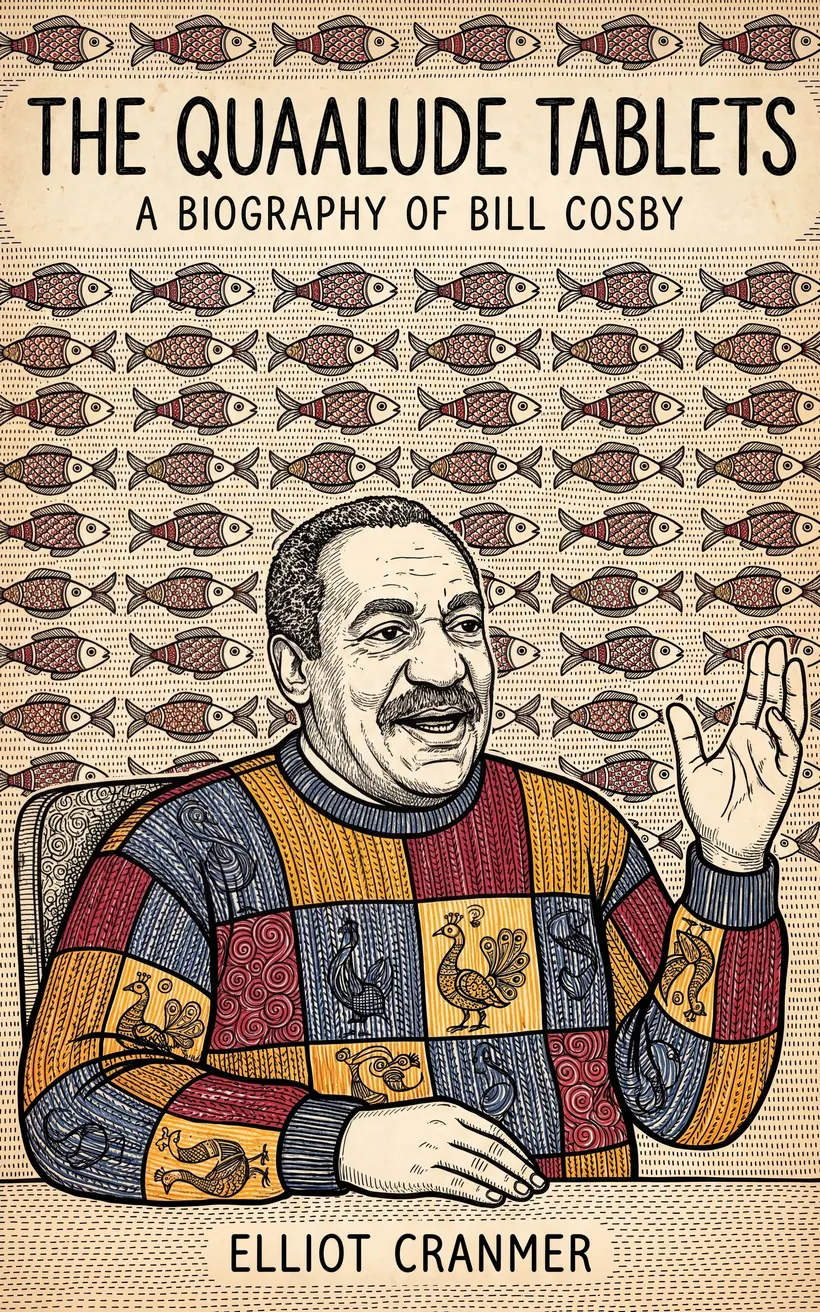
William Henry Cosby Jr.. The title never carries the subject's name: it names one concrete thing out of the life — in this case The Quaalude Tablets — and the name goes on the line underneath.
No. No subject, estate, label or foundation had approval over the text, and none paid for a word of it. The cost of that independence is that no new interviews were conducted for the book; it is built from the public record, and it says on the page where a scene is reconstructed rather than documented.
Yes — the whole opening chapter and the writer's foreword, free and in full, with no email address and no account. That is 4,078 words of the book.
About 60,000 words, 18 chapters, 198 pages in the paperback.
Yes: sexual assault; drugging. They are listed before you buy rather than discovered afterwards. The material is handled as evidence, not as spectacle.
Listed before you buy, not after.
Paperback · Hardcover

Paperback · Hardcover
Paperback