The Eight-Week March
Paperback
Ships in 2 to 5 working days. Delivery quoted from your address at checkout.
3,663 words · no email, no account
No. 053 · Movements · Civil Rights
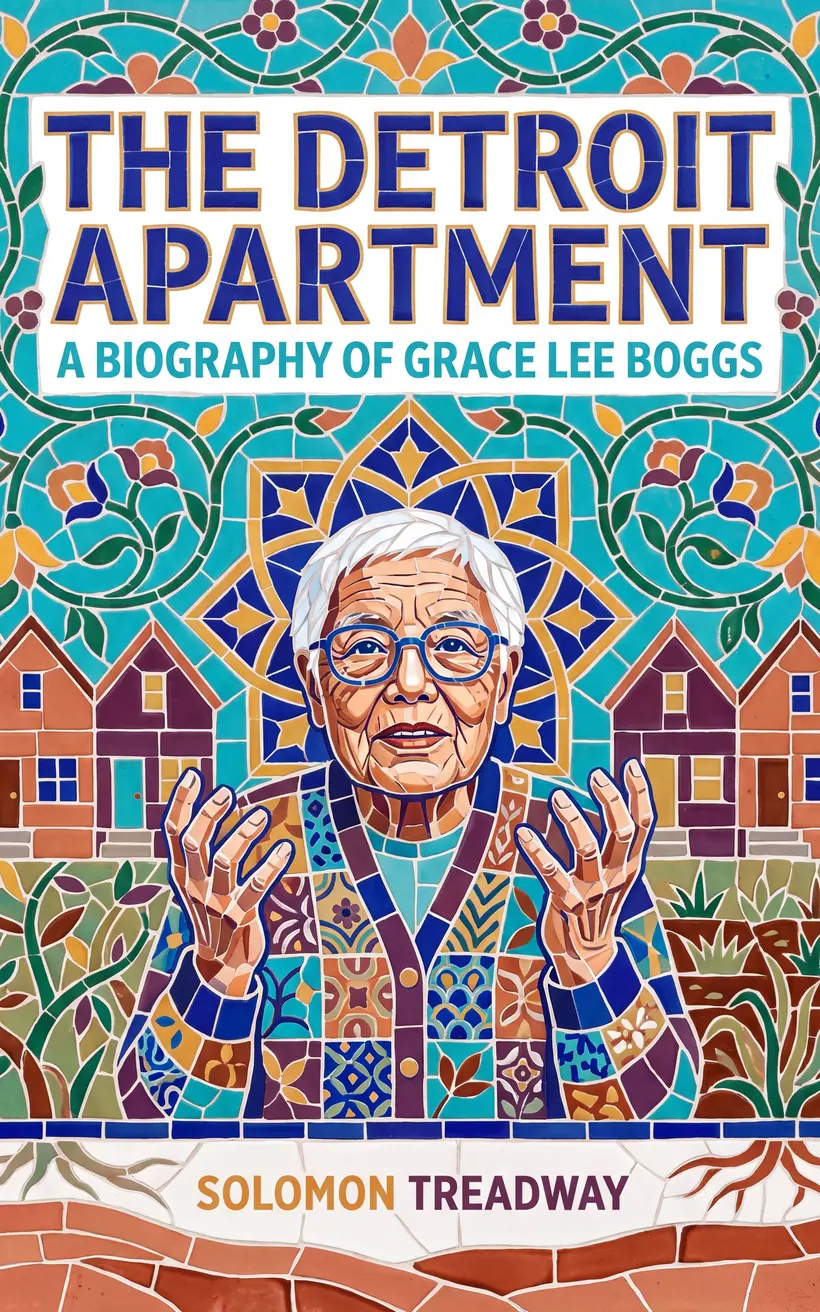
a biography of Grace Chin Lee Boggs
She was born Grace Chin Lee on June 27, 1915, above her father's Chinese restaurant on Manhattan's Upper West Side. She earned a doctorate in philosophy from Bryn Mawr in 1940, moved to Chicago and then to Detroit, married the African-American Workers Party organiser James Boggs in 1953, and spent the next sixty-two years organising in Detroit's Black radical, labour, environmentalist, and women's movements. She lived in the same East Side house from 1962 until her death in 2015 at one hundred.
Solomon Treadway's biography opens earlier — in the Manhattan childhood and the Bryn Mawr years and the early Trotskyist Workers Party organising — and follows the arc through the marriage to James Boggs, the long 1960s Detroit movement of the Inner-City Organising Committee, the Revolution and Evolution in the Twentieth Century (1974) co-authored with James, the Detroit Summer youth program of 1992, the East Side Boggs Educational Center founded in 2013, and the long retirement of correspondence and the Detroit house's morning conversations with the steady stream of younger movement organisers who came to learn.
What emerges is a portrait of a Chinese-American philosopher whose Detroit organising spanned every American social movement of the second half of the twentieth century — and whose centenary the city's movement chose to mark with a community garden in her name.
The opening chapter is published in full — read it here.
The printed edition has no ISBN registered yet. It affects library and retail listing, not your order.
Grace Chin Lee Boggs. The title never carries the subject's name: it names one concrete thing out of the life — in this case The Detroit Apartment — and the name goes on the line underneath.
No. No subject, estate, label or foundation had approval over the text, and none paid for a word of it. The cost of that independence is that no new interviews were conducted for the book; it is built from the public record, and it says on the page where a scene is reconstructed rather than documented.
Yes — the whole opening chapter and the writer's foreword, free and in full, with no email address and no account. That is 3,663 words of the book.
About 64,000 words, 18 chapters, 208 pages in the paperback.
6 × 9 in, 60# uncoated cream, black ink, perfect-bound paperback, matte laminate. Every title in the series uses the same specification, so they line up on a shelf.