The Eight-Week March
Paperback
Download link emailed the moment payment clears.
3,873 words · no email, no account
No. 059 · Movements · Civil Rights
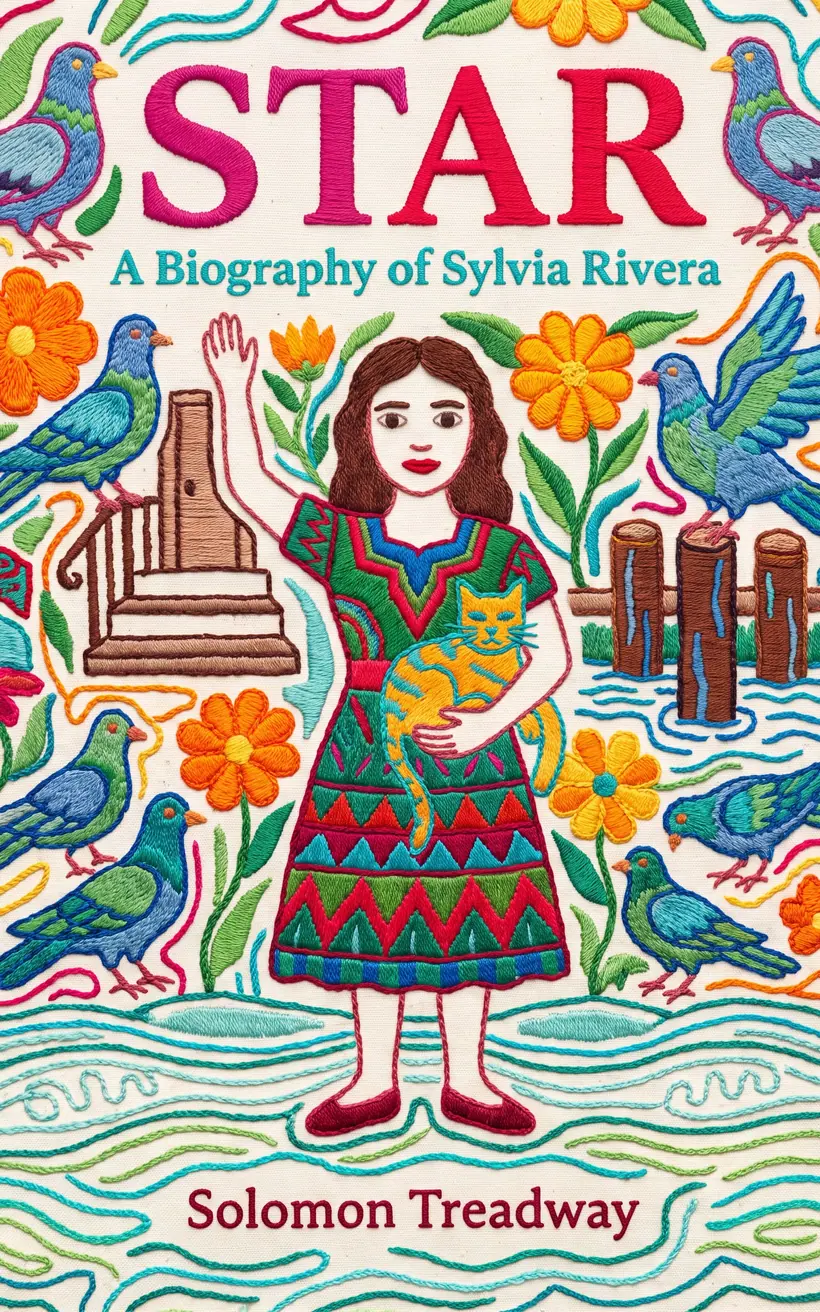
a biography of Ray Rivera Mendoza (Sylvia Rivera)
The Stonewall Inn, the night of June 28, 1969, the New York Police Department coming through the door. Sylvia Rivera was in the room, and she helped throw the second bottle. She had run away to Times Square at eleven and hustled there through the 1960s. In 1970 she and Marsha P. Johnson co-founded the Street Transvestite Action Revolutionaries.
Rivera was Ray Rivera Mendoza in the Bronx, born on July 2, 1951, to a Puerto Rican father who disappeared and a Venezuelan mother who died by suicide when Rivera was three. A Venezuelan grandmother raised her. What followed Stonewall was thirty-two years of organising at the front of a gay liberation movement that, for most of her life, did not consider her welcome.
Solomon Treadway's biography follows all of it. The Bronx childhood and the Times Square hustling years of the 1960s. Stonewall, and then the STAR house with Marsha P. Johnson. The 1973 Gay Pride parade, where Vito Russo introduced her and the crowd booed. The long years of homelessness on the Hudson River Pier 11. The late-1990s return to organising, with the Metropolitan Community Church and the Transy House collective. The liver-cancer diagnosis of 2002, and the long stay at St. Vincent's that ended on February 19, 2002, at fifty.
The rooms are the argument. A raided bar. A house she shared with Johnson. A pier where she slept. Rivera was a Bronx-born Latina trans woman and she was there from the first night; she did front-line work in every one of those places, and the movement she helped found took thirty years to acknowledge it.
The opening chapter is published in full — read it here.
Ray Rivera Mendoza (Sylvia Rivera). The title never carries the subject's name: it names one concrete thing out of the life — in this case Star — and the name goes on the line underneath.
No. No subject, estate, label or foundation had approval over the text, and none paid for a word of it. The cost of that independence is that no new interviews were conducted for the book; it is built from the public record, and it says on the page where a scene is reconstructed rather than documented.
Yes — the whole opening chapter and the writer's foreword, free and in full, with no email address and no account. That is 3,873 words of the book.
About 60,000 words, 18 chapters, 198 pages in the paperback.