The Eight-Week March
Paperback
Download link emailed the moment payment clears.
4,215 words · no email, no account
No. 067 · Movements · Civil Rights
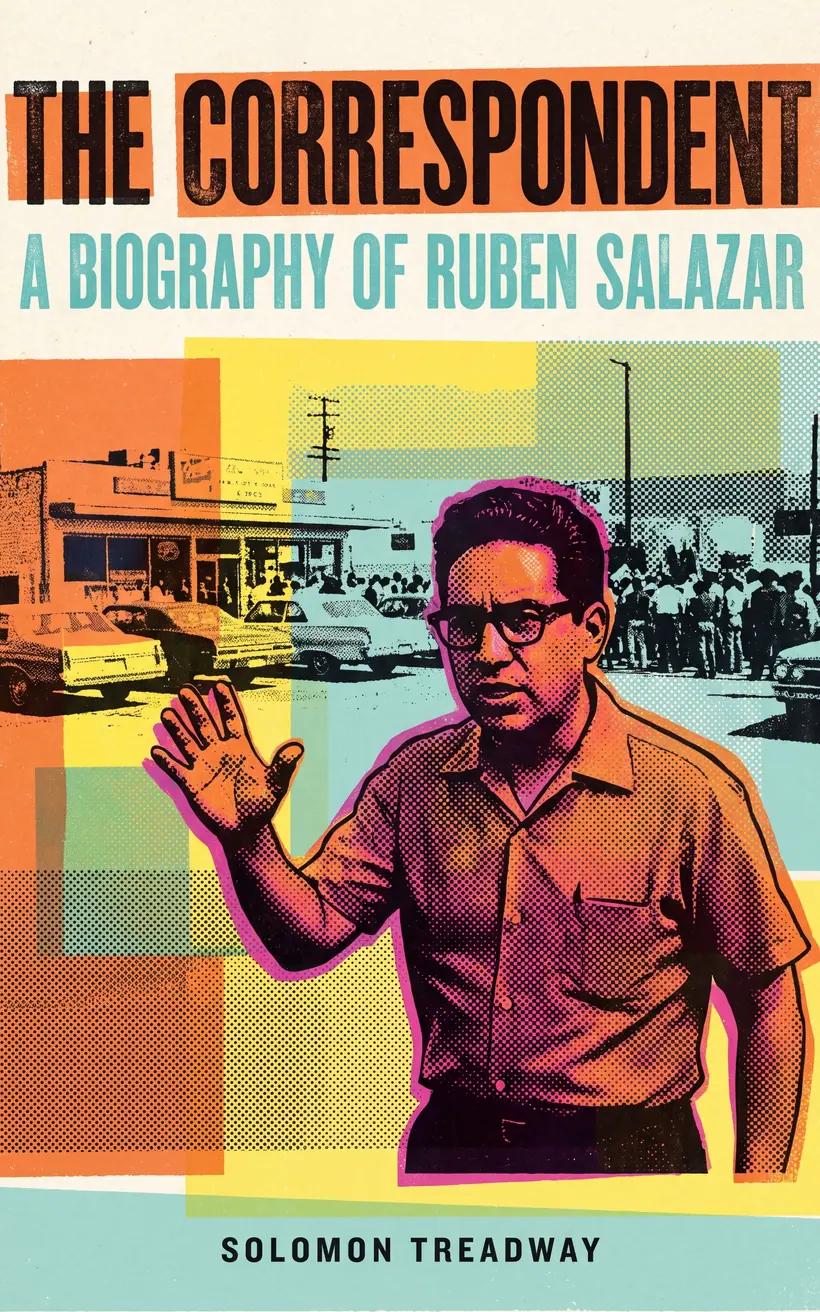
a biography of Rubén Salazar Mariscal
August 29, 1970, the Silver Dollar Cafe on Whittier Boulevard in East Los Angeles. The Chicano Moratorium against the Vietnam War has just ended in tear gas and police batons two blocks away. Rubén Salazar, forty-two, the Los Angeles Times columnist and KMEX news director who has spent two decades covering the Mexican-American community as more than a curiosity, ducks into the cafe for a beer. A Los Angeles County Sheriff's deputy named Tom Wilson, responding to a call about an armed man, fires a ten-inch wall-piercing tear-gas projectile through the curtained doorway. It strikes Salazar in the left temple. He is the first Mexican-American journalist of national stature in the United States. The deputy is not charged.
Solomon Treadway's biography opens earlier — in Ciudad Juárez, where Rubén was born in 1928, and in El Paso, Texas, where he grew up — and follows the arc through the El Paso Times years, the Army service in Korea, the long Los Angeles Times foreign-correspondent run in Vietnam and the Dominican Republic and Mexico City, the 1970 move to KMEX as news director, the East L.A. school-walkout coverage, and the afternoon at the Silver Dollar.
What emerges is a portrait of the first Mexican-American journalist of national stature in the United States, and the law-enforcement killing that turned him into a movement martyr the federal government still has not held anyone accountable for.
The opening chapter is published in full — read it here.
Rubén Salazar Mariscal. The title never carries the subject's name: it names one concrete thing out of the life — in this case The Correspondent — and the name goes on the line underneath.
No. No subject, estate, label or foundation had approval over the text, and none paid for a word of it. The cost of that independence is that no new interviews were conducted for the book; it is built from the public record, and it says on the page where a scene is reconstructed rather than documented.
Yes — the whole opening chapter and the writer's foreword, free and in full, with no email address and no account. That is 4,215 words of the book.
About 59,500 words, 18 chapters, 196 pages in the paperback.
Yes: police violence; homicide. They are listed before you buy rather than discovered afterwards. The material is handled as evidence, not as spectacle.
Listed before you buy, not after.