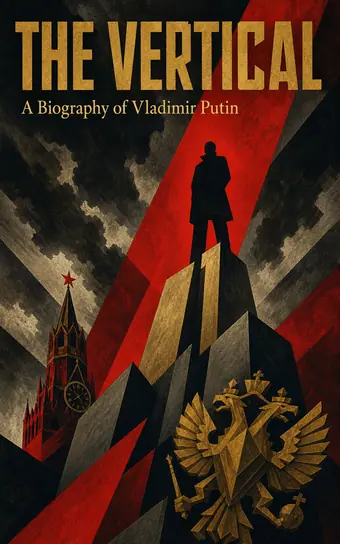
The Vertical
Paperback · Hardcover
Download link emailed the moment payment clears.
3,499 words · no email, no account
No. 069 · Power & Politics · World Politics
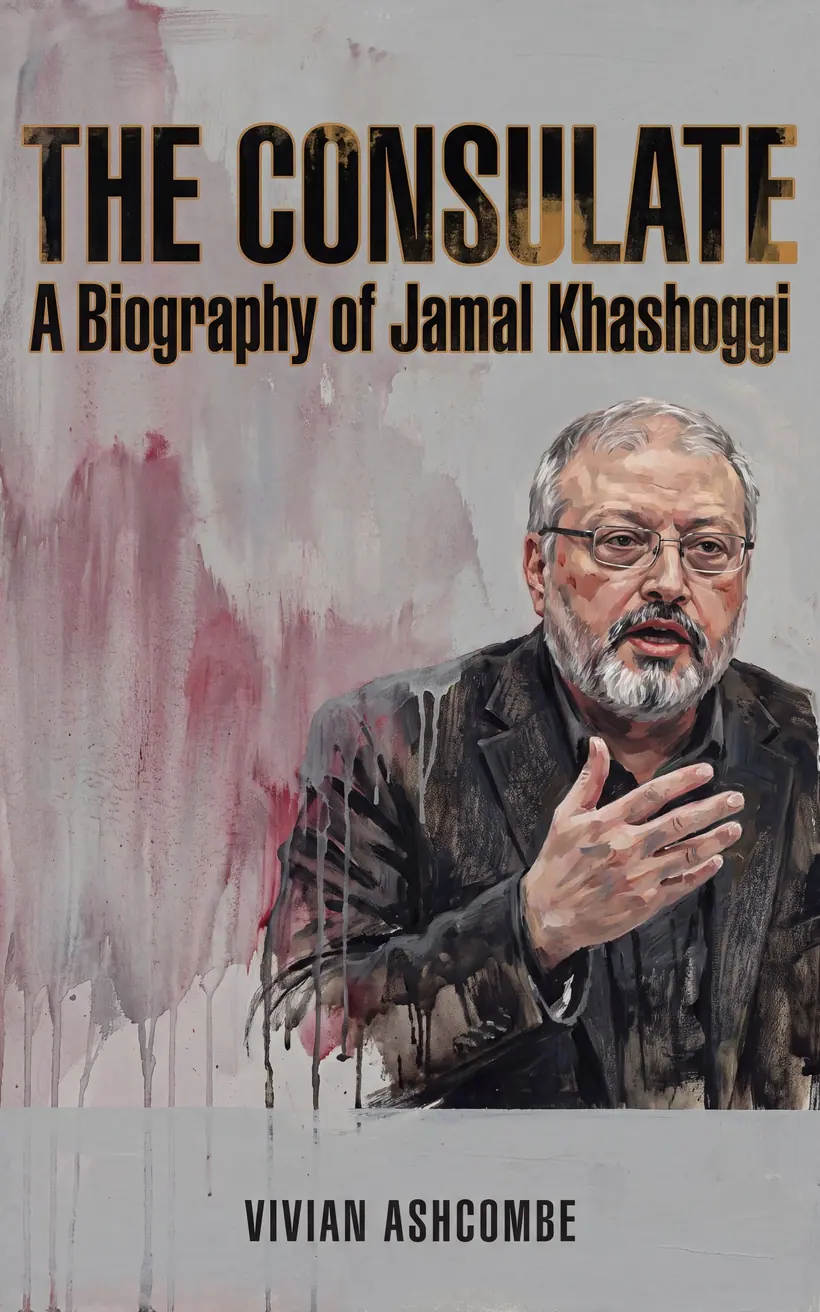
a biography of Jamal Ahmad Khashoggi
October 2, 2018, 1:14 p.m. Istanbul time, the Saudi Arabian Consulate on Cevdet Pasa Caddesi. Jamal Ahmad Khashoggi, fifty-nine, the Washington Post columnist and former editor-in-chief of Al Watan, enters the consulate to collect a divorce certificate. He has an appointment with his fiancée Hatice Cengiz, who waits outside in their car. He never walks back out. The CIA later concludes — and the U.S. director of national intelligence publicly states in February 2021 — that Crown Prince Mohammed bin Salman personally approved the operation that killed and dismembered him.
Vivian Ashcombe's biography opens earlier — in Medina, where Jamal was born in 1958 into the Khashoggi family that had served the House of Saud since the founder Muhammad Khashoggi was personal physician to King Abdulaziz ibn Saud — and follows the arc through the Indiana State University years, the Saudi Gazette and Arab News editorships, the 2003 Al Watan short-lived first editorship, the 2010 Al Watan second editorship that the Saudi authorities ended in ten weeks, the 2017 self-exile to Tysons Corner, Virginia, the Washington Post columnist contract, the October 2018 consulate appointment, the long Trump-administration evasions, the Cengiz v. MBS civil suit in Washington, D.C., the November 17, 2022 Biden administration statement of interest, and the November 18, 2025 White House state visit at which the U.S. president stated that the Crown Prince "knew nothing about it."
What emerges is a portrait of a Saudi journalist whose criticism of the regime his family had served for a century ended in his dismemberment by that regime — and the Western governments that found, ultimately, that the strategic relationship was worth more than the body.
The opening chapter is published in full — read it here.
Jamal Ahmad Khashoggi. The title never carries the subject's name: it names one concrete thing out of the life — in this case The Consulate — and the name goes on the line underneath.
No. No subject, estate, label or foundation had approval over the text, and none paid for a word of it. The cost of that independence is that no new interviews were conducted for the book; it is built from the public record, and it says on the page where a scene is reconstructed rather than documented.
Yes — the whole opening chapter and the writer's foreword, free and in full, with no email address and no account. That is 3,499 words of the book.
About 68,000 words, 19 chapters, 220 pages in the paperback.
Yes: state-sponsored murder; torture. They are listed before you buy rather than discovered afterwards. The material is handled as evidence, not as spectacle.
Listed before you buy, not after.
Paperback · Hardcover

Paperback · Hardcover
Paperback · Hardcover