The Eight-Week March
Paperback
Ships in 2 to 5 working days. Delivery quoted from your address at checkout.
4,851 words · no email, no account
No. 077 · Movements · Civil Rights
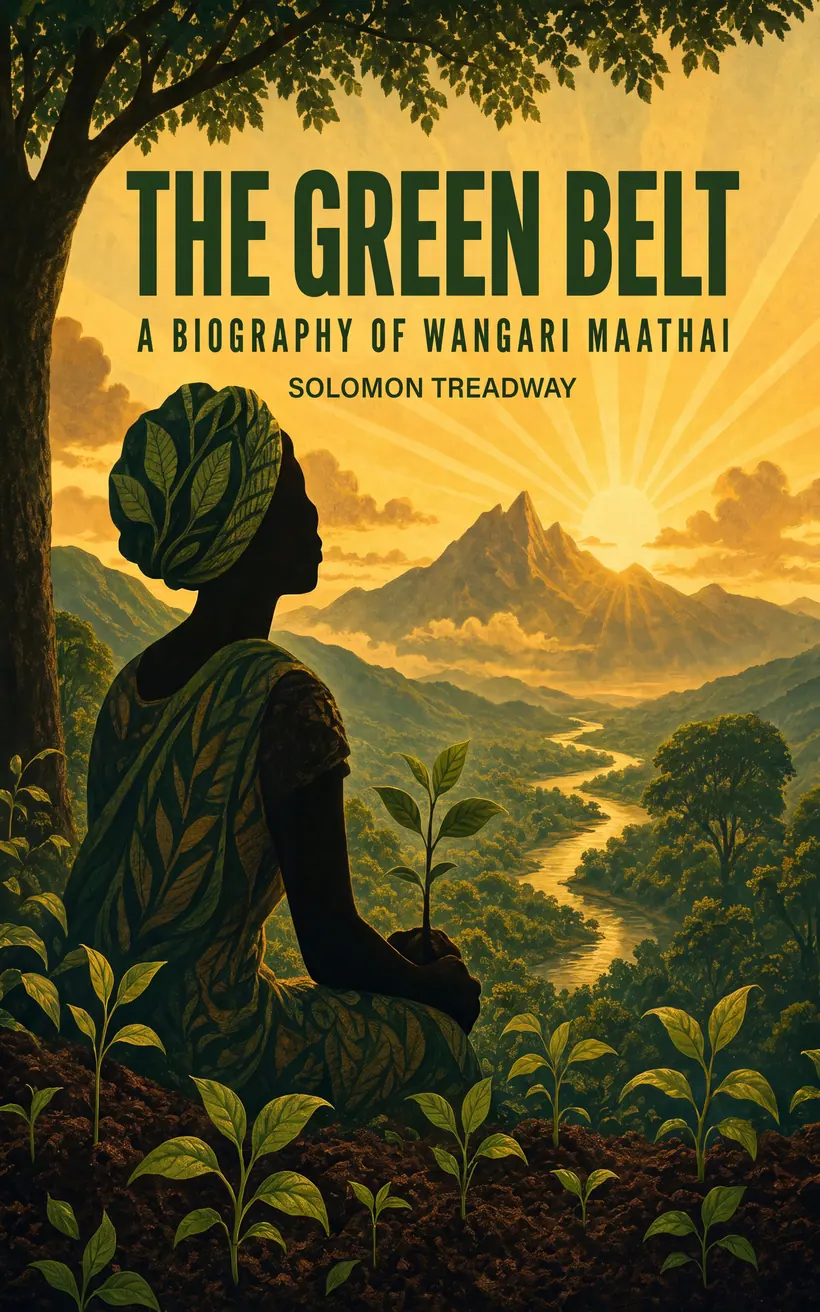
a biography of Wangari Muta Maathai
She was born on April 1, 1940, in Ihithe village in the Kenyan central highlands, the third of six children of a Kikuyu tenant farmer. She earned a scholarship under the 1960 Kennedy Airlift to Mount St. Scholastica College in Kansas, completed her doctorate in veterinary anatomy at the University of Nairobi in 1971 — the first East African woman to earn a Ph.D. — and founded the Green Belt Movement in 1977. By her death in 2011, the movement had planted fifty-one million trees.
Solomon Treadway's biography traces the arc through the village school and the Catholic missionary education, the years in Kansas and Pittsburgh, the marriage to Mwangi Mathai and the bitter 1979 divorce, the Karura Forest protests of the Moi years, the 2002 election to the Kenyan parliament, the appointment as Assistant Minister for Environment, the 2004 Nobel Peace Prize — the first African woman to win it — and the long final years of organisational consolidation and the ovarian cancer that took her at seventy-one.
What emerges is a portrait of an East African environmentalist whose fifty-million-tree movement began with seven seedlings planted on Earth Day 1977 in Karura.
The opening chapter is published in full — read it here.
The printed edition has no ISBN registered yet. It affects library and retail listing, not your order.
Wangari Muta Maathai. The title never carries the subject's name: it names one concrete thing out of the life — in this case The Green Belt — and the name goes on the line underneath.
No. No subject, estate, label or foundation had approval over the text, and none paid for a word of it. The cost of that independence is that no new interviews were conducted for the book; it is built from the public record, and it says on the page where a scene is reconstructed rather than documented.
Yes — the whole opening chapter and the writer's foreword, free and in full, with no email address and no account. That is 4,851 words of the book.
About 58,500 words, 18 chapters, 185 pages in the paperback.
6 × 9 in, 60# uncoated cream, black ink, perfect-bound paperback, matte laminate. Every title in the series uses the same specification, so they line up on a shelf.