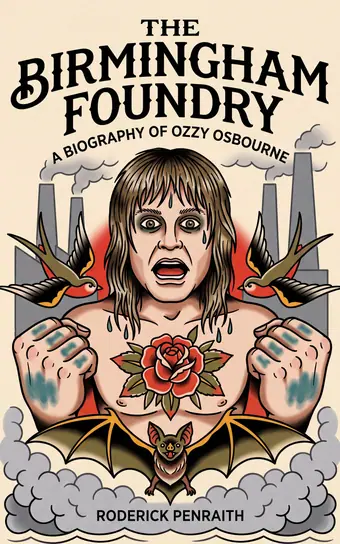
The Birmingham Foundry
Paperback · Hardcover
Ships in 2 to 5 working days. Delivery quoted from your address at checkout.
4,712 words · no email, no account
No. 090 · Music · Rock
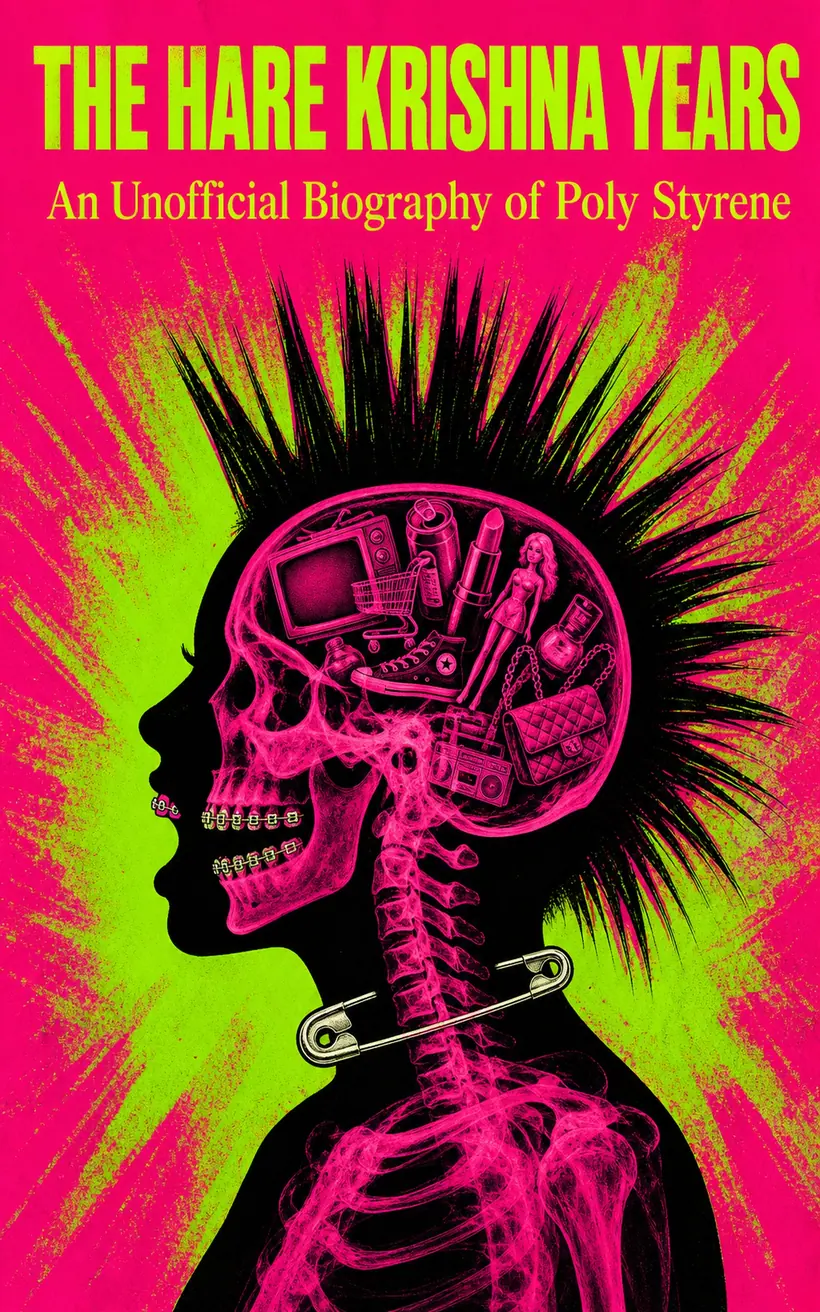
a biography of Marianne Joan Elliott-Said (Poly Styrene)
In 1979 Marianne Joan Elliott-Said was admitted to an institution, and the press printed the word schizophrenia. It has since been re-diagnosed as bipolar disorder. The correction arrived long after the story had set, and by then the wrong word had done its work on how everything she made was read.
She was the daughter of a Scottish-Irish legal secretary and a Somali aristocrat-in-exile who worked the docks, and she grew up mixed-race in Brixton. She ran away from home at fifteen. She founded X-Ray Spex in 1976 after seeing the Sex Pistols play Hastings Pier, cut Oh Bondage Up Yours! in 1977 and Germfree Adolescents in 1978 — the first punk album by a Black woman in British rock history, and twelve months the British punk press did not know how to write about. At twenty she disbanded the group, after seeing a giant pink flying saucer over a Doncaster motorway.
In 1983 she joined the Hare Krishna movement and moved to the Bhaktivedanta Manor in Hertfordshire, where she stayed for the next two decades. Donovan Hadley's biography takes those years as the centre of the life rather than the epilogue to it. He works through the solo albums, Translucence in 1980 and Flower Aeroplane in 2004, the X-Ray Spex reunion at the Roundhouse in 2008, and the breast-cancer diagnosis of February 2011. She died on April 25, 2011, at fifty-three.
Bromley, July 3, 1957: the first Black woman to front a British punk band, a prophet of mid-1970s consumer culture, and a devotee whose years at the Bhaktivedanta Manor the music press needed twenty of its own to work out how to read.
The opening chapter is published in full — read it here.
The printed edition has no ISBN registered yet. It affects library and retail listing, not your order.
Marianne Joan Elliott-Said (Poly Styrene). The title never carries the subject's name: it names one concrete thing out of the life — in this case The Hare Krishna Years — and the name goes on the line underneath.
No. No subject, estate, label or foundation had approval over the text, and none paid for a word of it. The cost of that independence is that no new interviews were conducted for the book; it is built from the public record, and it says on the page where a scene is reconstructed rather than documented.
Yes — the whole opening chapter and the writer's foreword, free and in full, with no email address and no account. That is 4,712 words of the book.
About 63,500 words, 18 chapters, 199 pages in the paperback.
6 × 9 in, 60# uncoated cream, black ink, perfect-bound paperback, matte laminate. Every title in the series uses the same specification, so they line up on a shelf.
Yes: mental illness; cancer death. They are listed before you buy rather than discovered afterwards. The material is handled as evidence, not as spectacle.
Listed before you buy, not after.
Paperback · Hardcover
Paperback

Digital edition