The Eight-Week March
Paperback
Ships in 2 to 5 working days. Delivery quoted from your address at checkout.
4,291 words · no email, no account
No. 099 · Movements · Civil Rights
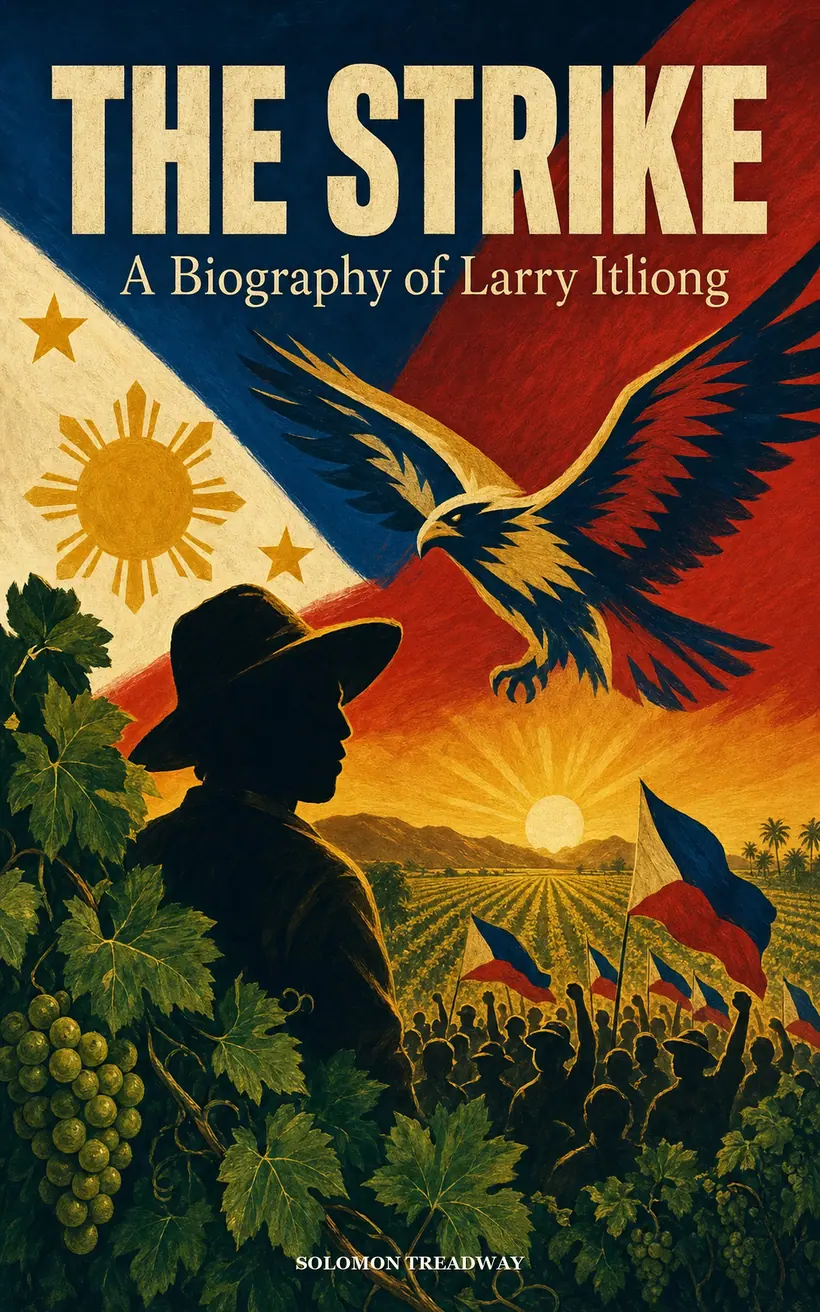
a biography of Larry Dulay Itliong
September 8, 1965. Two thousand Filipino farmworkers walk off the table-grape fields of Delano, California, refusing to pick at the prevailing rate. The strike committee is led by a fifty-one-year-old organiser named Larry Dulay Itliong. A week later he writes to Cesar Chavez of the National Farm Workers Association, proposing that the two unions strike together. The result is the United Farm Workers — and a five-year strike and consumer-boycott campaign that ends in the historic 1970 grape contracts.
Solomon Treadway's biography opens earlier — in San Nicolas, Pangasinan, where Itliong was born in 1913, and where he arrived in Seattle in 1929 as a fifteen-year-old to work the salmon canneries of Alaska — and follows the arc through the lettuce fields, the canneries, the AFL-CIO Agricultural Workers Organizing Committee, the Delano grape strike, the 1965-1970 boycott, the 1971 resignation from the UFW board over the marginalisation of the manong generation, and the colon cancer that killed him in 1977 at age sixty-three.
What emerges is a portrait of a Filipino-American labour organiser whose name the American labour movement is only now, fifty years after his death, finishing the work of recovering.
The opening chapter is published in full — read it here.
The printed edition has no ISBN registered yet. It affects library and retail listing, not your order.
Larry Dulay Itliong. The title never carries the subject's name: it names one concrete thing out of the life — in this case The Strike — and the name goes on the line underneath.
No. No subject, estate, label or foundation had approval over the text, and none paid for a word of it. The cost of that independence is that no new interviews were conducted for the book; it is built from the public record, and it says on the page where a scene is reconstructed rather than documented.
Yes — the whole opening chapter and the writer's foreword, free and in full, with no email address and no account. That is 4,291 words of the book.
About 60,500 words, 18 chapters, 198 pages in the paperback.
6 × 9 in, 60# uncoated cream, black ink, perfect-bound paperback, matte laminate. Every title in the series uses the same specification, so they line up on a shelf.