The Lanai Purchase
Paperback
Download link emailed the moment payment clears.
4,083 words · no email, no account
No. 108 · Technology & Money · Technology
a biography of Mark Elliot Zuckerberg
A dorm room in Kirkland House, Harvard, on February 4, 2004. The computer-science major who had enrolled there in September 2002 launches a site called TheFacebook out of it. On October 28, 2003, the same student had put up Facemash, a page that paired women's headshots taken from Harvard House face-books. He dropped out the following year.
After that, the numbers carry the story. By Mark Zuckerberg's twenty-third birthday Facebook had 30 million users; by his thirtieth, 1.4 billion; by his fortieth, 3.1 billion. He bought Instagram in 2012 for $1 billion, WhatsApp in 2014 for $19 billion and Oculus VR the same year for $2 billion. In October 2021 he rebranded the company Meta Platforms, and has since spent more than $60 billion of its money on the Reality Labs metaverse project.
Sterling Aldridge's biography opens earlier and follows the arc with the procedural rigour a twenty-year ascent demands: the Dobbs Ferry childhood as the second of four children of a dentist and a psychiatrist, the Phillips Exeter years and the Synapse Media Player that Microsoft tried to acquire before he reached college, the Harvard sophomore years and the long Winklevoss-ConnectU litigation, the Sean Parker introduction and the move to Palo Alto in the summer of 2004, the $1 billion Yahoo offer of 2006 that the board nearly accepted, the Instagram, WhatsApp and Oculus deals, the 2016 Russian-interference controversy and the long Cambridge Analytica fallout, the 2018 Senate testimony, the Meta rebrand and the Reality Labs bill, and the MMA and jiu-jitsu of 2024 and the Kauai property development the press has spent the last two years covering.
What emerges is a portrait of the Harvard-dropout founder whose twenty-year company has reshaped human social communication more thoroughly than any in modern history — and of a metaverse pivot the rest of the industry is still trying to decide whether to believe in.
The opening chapter is published in full — read it here.
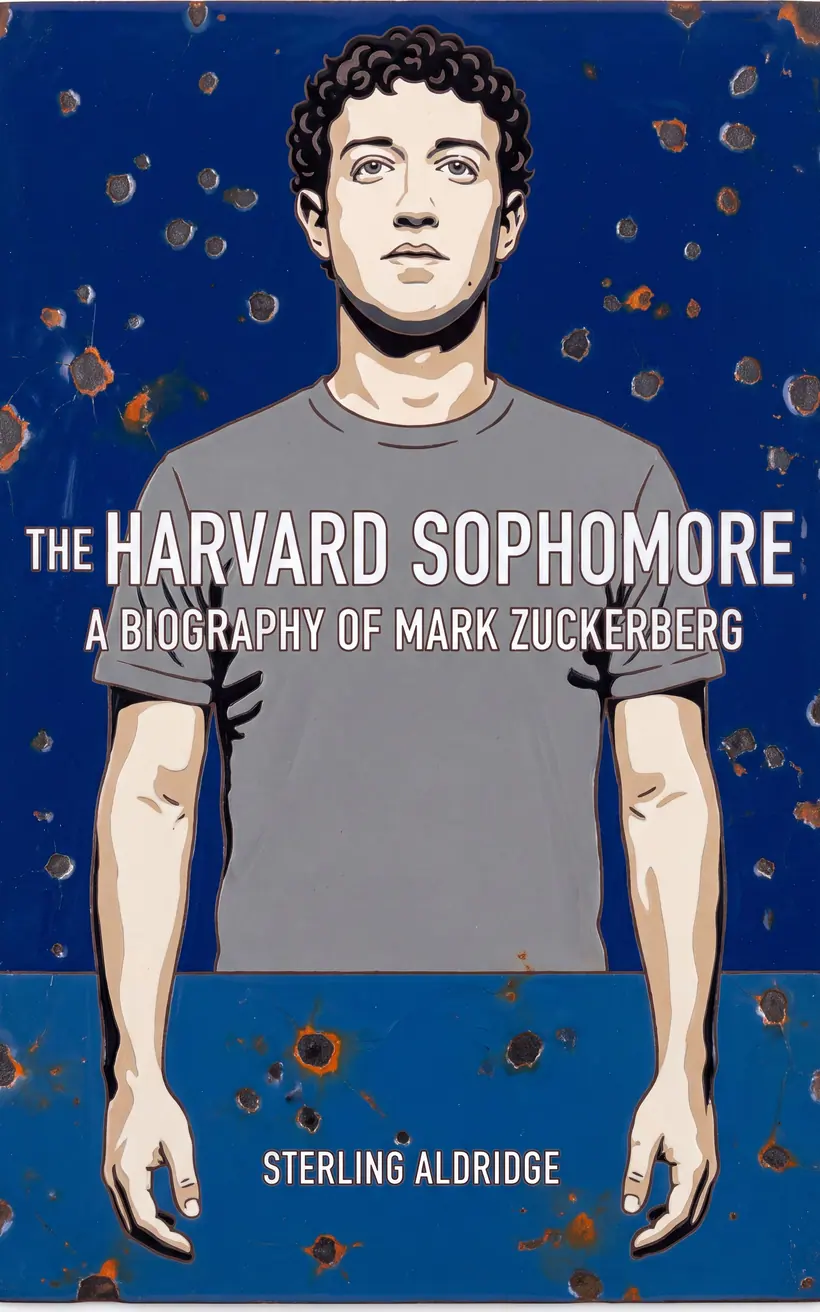
Mark Elliot Zuckerberg. The title never carries the subject's name: it names one concrete thing out of the life — in this case The Harvard Sophomore — and the name goes on the line underneath.
No. No subject, estate, label or foundation had approval over the text, and none paid for a word of it. The cost of that independence is that no new interviews were conducted for the book; it is built from the public record, and it says on the page where a scene is reconstructed rather than documented.
Yes — the whole opening chapter and the writer's foreword, free and in full, with no email address and no account. That is 4,083 words of the book.
About 64,000 words, 19 chapters, 208 pages in the paperback.