The Encino Hills
Paperback · Hardcover
Download link emailed the moment payment clears.
3,938 words · no email, no account
No. 132 · Technology & Money · Media Business
a biography of Keith Rupert Murdoch
Seventy years. That is the span of Rupert Murdoch's working career, and the number carries Elliot Cranmer's argument: no other living person has done more to shape the political-information environment of the English-speaking world. As of 2026 he stands as the most consequential single private actor in the post-1968 history of the English-language media.
The career reads as a run of purchases. He inherited the Adelaide News from his father at twenty-two. The Daily Mirror in Sydney followed in 1960, the News of the World in London in 1969, the New York Post in 1976, the Times and Sunday Times of London in 1981, Twentieth Century Fox in 1985. He launched Fox Broadcasting in 1986 and Fox News, under Roger Ailes, in October 1996. The Wall Street Journal and Dow Jones came in 2007.
Cranmer opens earlier, with the Melbourne birth on March 11, 1931 to Sir Keith Murdoch, an Australian newspaper editor whose only son he was, then the Adelaide childhood and the Oxford years, and works the rest of the case file with procedural rigour. The 2011 phone-hacking scandal and the closing of a 168-year-old newspaper. The 2019 sale of most of Twenty-First Century Fox to Disney for $71 billion. The $787 million Dominion Voting Systems defamation settlement of April 2023. The stepdown that September from the chairmanships of Fox Corporation and News Corp, in favour of his son Lachlan. The Reno, Nevada trust case of 2024, in which the family fought over the company's post-Rupert direction.
Five marriages. Six children. A seventy-year run of ownership. What emerges is a portrait of the Australian-born American media magnate who did more than any other living person to set the terms of English-language public argument.
The opening chapter is published in full — read it here.
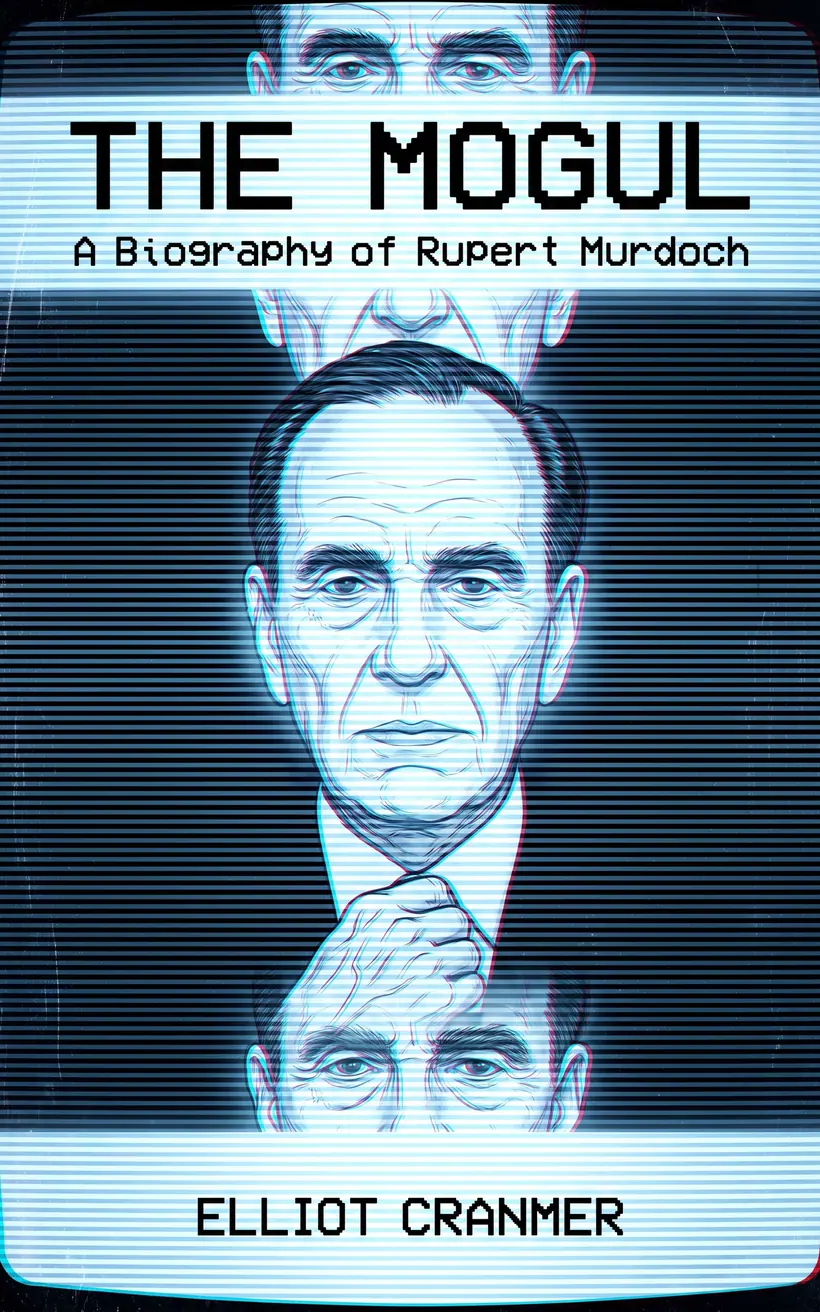
Keith Rupert Murdoch. The title never carries the subject's name: it names one concrete thing out of the life — in this case The Mogul — and the name goes on the line underneath.
No. No subject, estate, label or foundation had approval over the text, and none paid for a word of it. The cost of that independence is that no new interviews were conducted for the book; it is built from the public record, and it says on the page where a scene is reconstructed rather than documented.
Yes — the whole opening chapter and the writer's foreword, free and in full, with no email address and no account. That is 3,938 words of the book.
About 59,500 words, 18 chapters, 194 pages in the paperback.