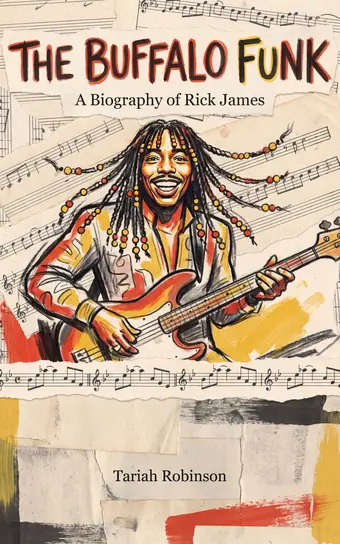
The Buffalo Funk
Paperback
Ships in 2 to 5 working days. Delivery quoted from your address at checkout.
4,563 words · no email, no account
No. 145 · Music · R&B & Soul
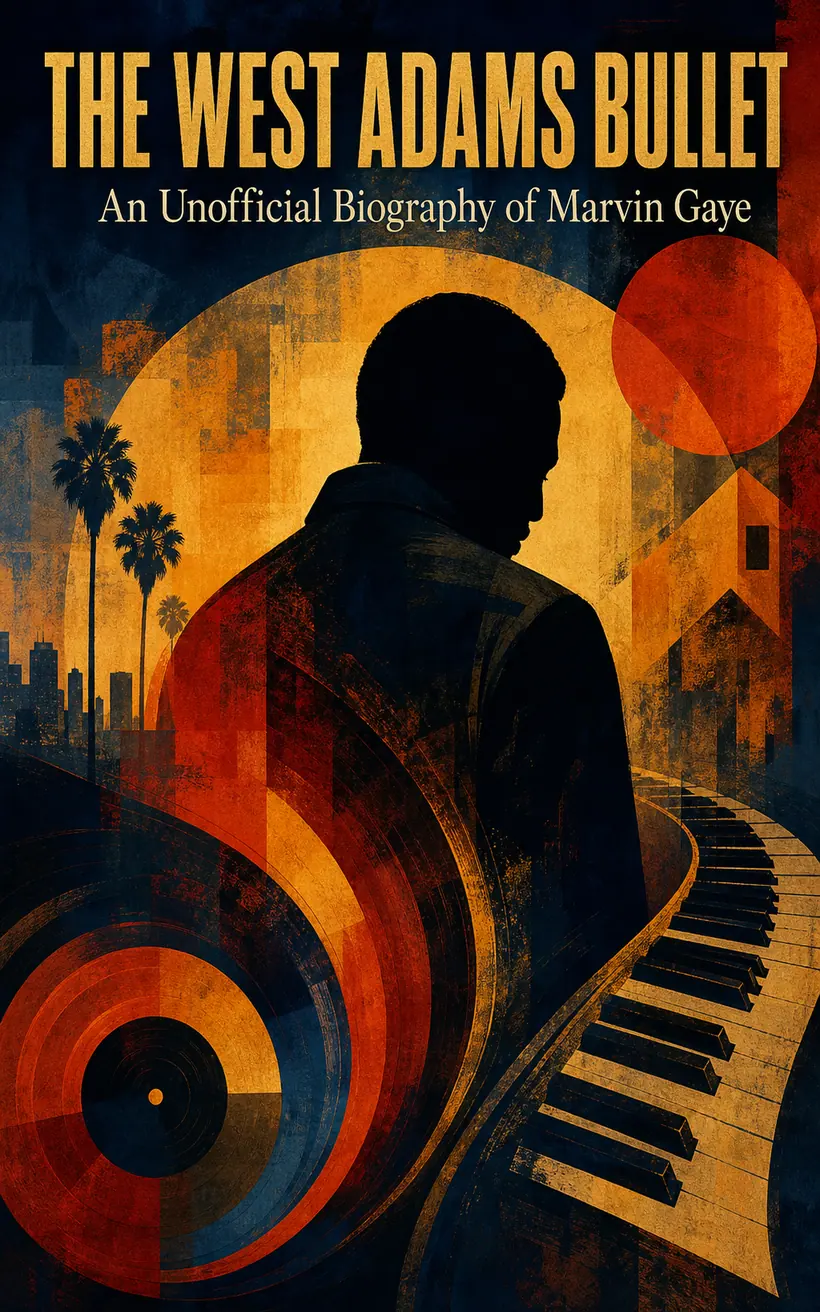
a biography of Marvin Pentz Gay Jr.
April 1, 1984, the Gramercy Place house in West Adams, Los Angeles. Marvin Pentz Gay Jr., forty-four, the singer of I Heard It Through the Grapevine and What's Going On and Sexual Healing, is shot twice by his father Marvin Gay Sr. with the .38-caliber revolver Marvin Jr. has given him the previous Christmas for self-defense. The first bullet enters the right side of his chest and stops the heart. The second is fired at point-blank range into the prone body. He dies at California Hospital Medical Center one hour later, one day short of his forty-fifth birthday. The senior Gay is convicted of voluntary manslaughter and sentenced to six years probation.
Tariah Robinson's biography opens earlier — in Washington, D.C., where Marvin was born in 1939 to a Pentecostal-minister father and a domestic-worker mother — and follows the arc through the Detroit move and the Anna Gordy marriage of 1963, the long Motown years and the Tammi Terrell duets of 1967-70, the 1971 What's Going On that Berry Gordy initially refused to release, the long tax-trouble Ostend exile of 1981-82, the Sexual Healing comeback and the Grammy of 1983, the cocaine-fuelled return to Los Angeles in late 1983, and the morning of April 1, 1984.
What emerges is a portrait of the Motown singer whose three decades of work remade what American Black popular music could say — and the patricide on a West Adams floor that the family had been writing since the Pentecostal house in Washington.
The opening chapter is published in full — read it here.
The printed edition has no ISBN registered yet. It affects library and retail listing, not your order.
Marvin Pentz Gay Jr.. The title never carries the subject's name: it names one concrete thing out of the life — in this case The West Adams Bullet — and the name goes on the line underneath.
No. No subject, estate, label or foundation had approval over the text, and none paid for a word of it. The cost of that independence is that no new interviews were conducted for the book; it is built from the public record, and it says on the page where a scene is reconstructed rather than documented.
Yes — the whole opening chapter and the writer's foreword, free and in full, with no email address and no account. That is 4,563 words of the book.
About 59,500 words, 18 chapters, 174 pages in the paperback.
6 × 9 in, 60# uncoated cream, black ink, perfect-bound paperback, matte laminate. Every title in the series uses the same specification, so they line up on a shelf.
Yes: gun violence; domestic violence; patricide. They are listed before you buy rather than discovered afterwards. The material is handled as evidence, not as spectacle.
Listed before you buy, not after.
Paperback
Paperback · Hardcover
Paperback · Hardcover