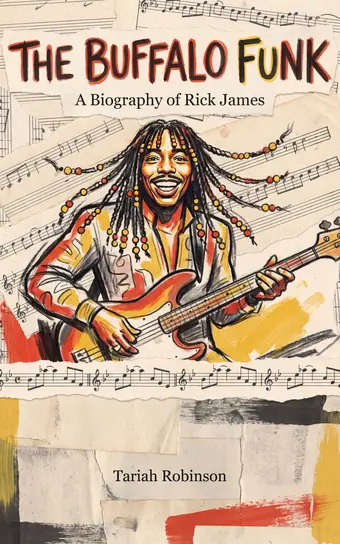
The Buffalo Funk
Paperback
Download link emailed the moment payment clears.
4,627 words · no email, no account
No. 247 · Music · R&B & Soul
a biography of Prince Rogers Nelson
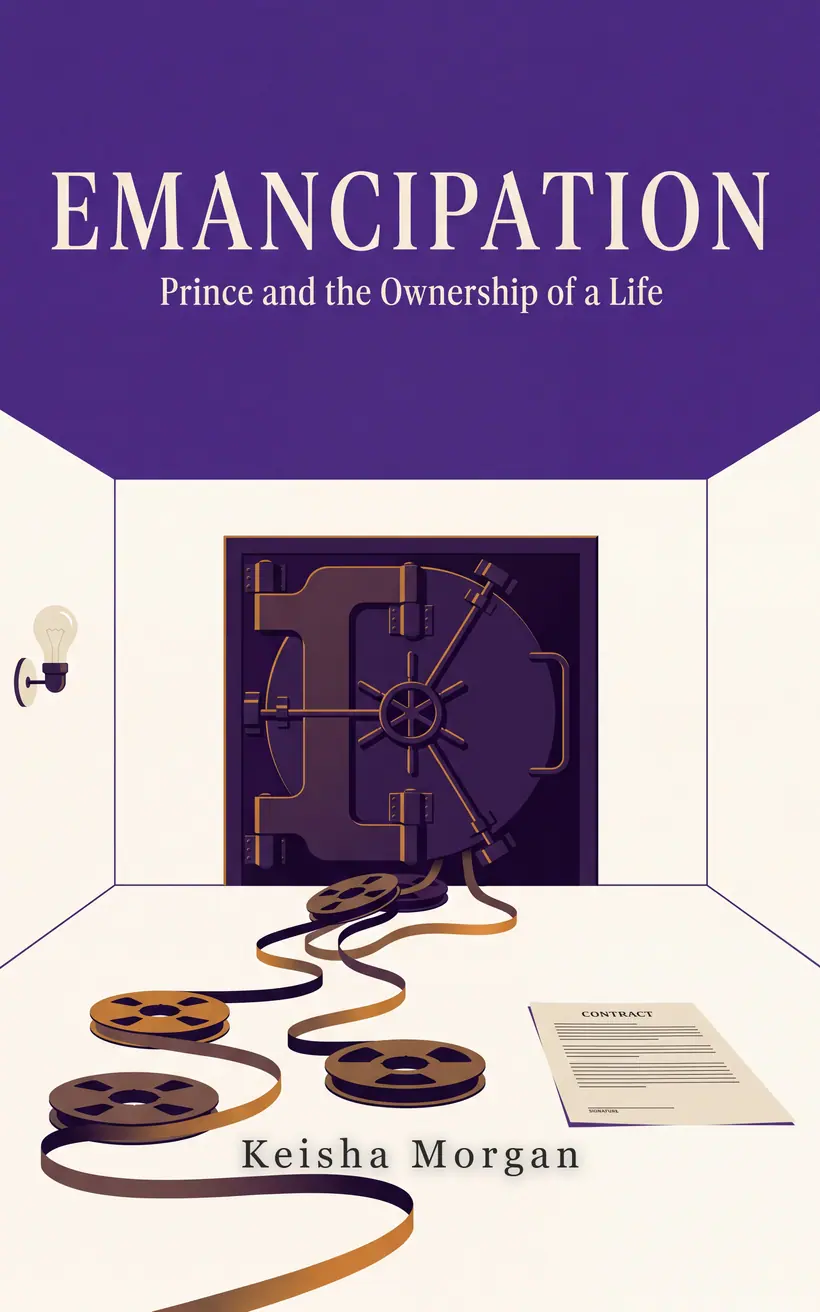
One question decides both halves of this life: who owned the tapes. From the twenty-fifth of June, 1977, the answer was Warner Bros. Records, in perpetuity, everywhere, in all formats then known or later invented. Prince Rogers Nelson signed that agreement eighteen days after his nineteenth birthday. He would produce himself and keep his publishing, so every song he wrote belonged to him from the day he wrote it. The master recordings went to the company, and nobody thought that worth arguing about. In 1977 a radio station that played a record paid the song's writer and paid the tape's owner nothing.
It took him sixteen years to understand what had happened, and twenty-one more of saying so — SLAVE written on his cheek at a televised awards ceremony — to be widely treated as a man who had lost his mind. He was right about masters, direct sale, streaming economics, and — twenty-five years early — a business rebuilt around artists who kept their recordings and licensed their use. That is now so nearly standard that young musicians do not know it was ever a fight, let alone whose.
The argument runs from a basement on the North Side of Minneapolis, where a boy put out of his father's apartment got a floor of a widow's house and a door he could close, to a Delaware courtroom where an investment company and a family hold half the estate each and cannot outvote one another. It is written from the public record: the Carver County file released whole in April 2018, a probate docket of six years and three months, a Tax Court valuation settled at $156.4 million. No cooperation from the Estate, no access to the vault.
It is neither takedown nor tribute. He built a room nobody could enter, and on the one night somebody needed to overrule him, no one had the standing. On the clerical act that would have made his victory outlive him — an hour with a lawyer, a signature, a witness — he did nothing. No will has ever been found.
The opening chapter is published in full — read it here.
Prince Rogers Nelson. The title never carries the subject's name: it names one concrete thing out of the life — in this case Emancipation — and the name goes on the line underneath.
No. No subject, estate, label or foundation had approval over the text, and none paid for a word of it. The cost of that independence is that no new interviews were conducted for the book; it is built from the public record, and it says on the page where a scene is reconstructed rather than documented.
Yes — the whole opening chapter and the writer's foreword, free and in full, with no email address and no account. That is 4,627 words of the book.
About 71,500 words, 22 chapters, 232 pages in the paperback.
Paperback
Paperback · Hardcover
Paperback · Hardcover