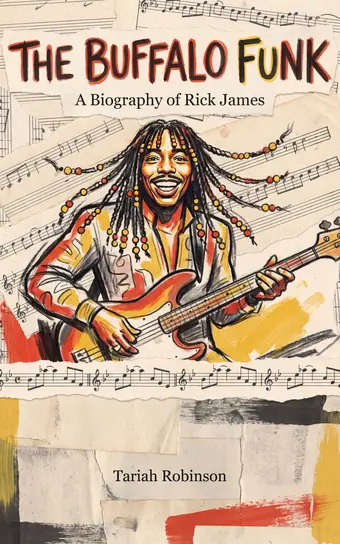
The Buffalo Funk
Paperback
Download link emailed the moment payment clears.
4,685 words · no email, no account
No. 251 · Music · R&B & Soul
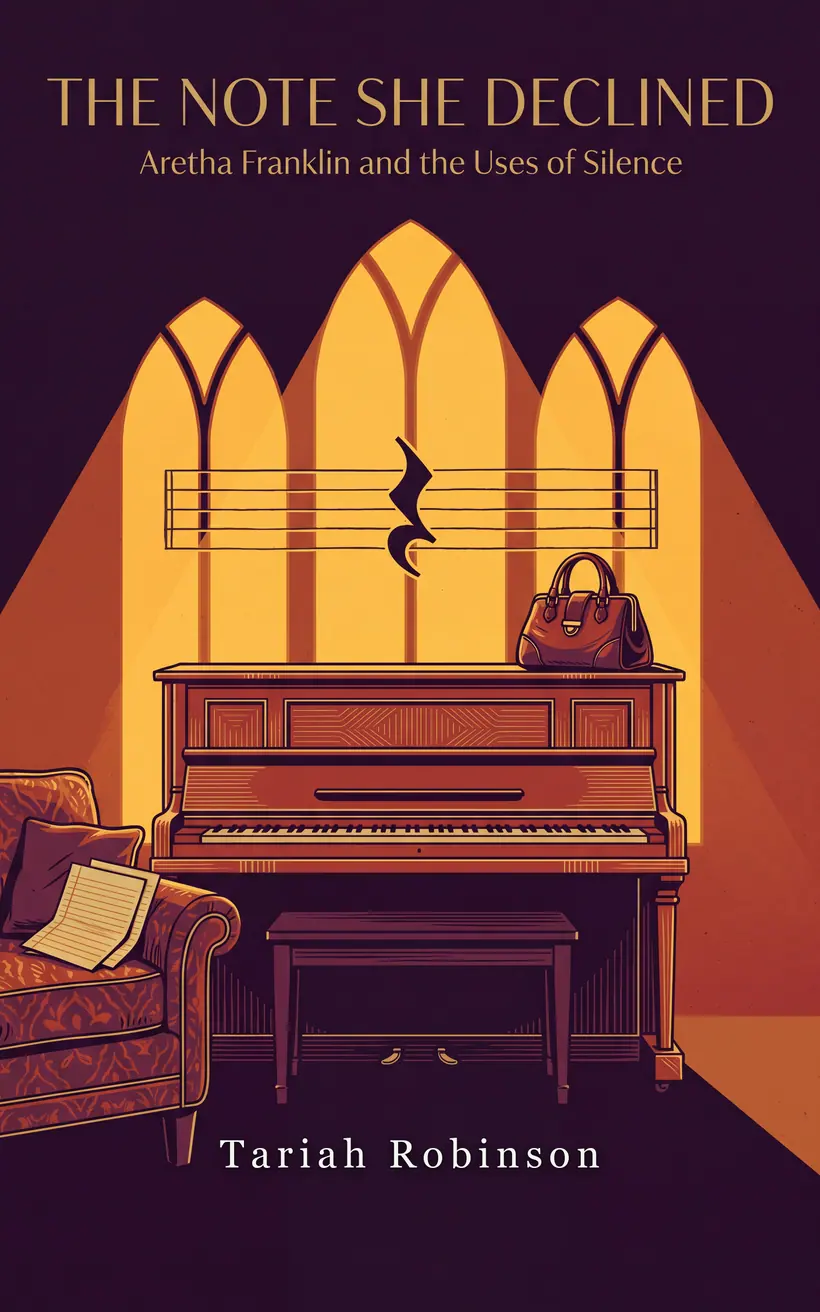
a biography of Aretha Louise Franklin
The technique is on tape before she was fifteen. A shopkeeper's single microphone caught her in her father's church in Detroit, and the voice on it is already doing the thing that would make her the best singer in America: declining the note the ear has leaned forward to meet, so that the one she gives arrives into a space the withholding made. She was fourteen and already a mother. The same operation ran everything else she ever did.
She was nine when her mother died, in a house on Boston Boulevard where the most famous voice in Black America talked for a living and the household discussed nothing. She addressed the leaving once, in the negative, and declined to reopen it for sixty-six years. Then the same move in every register. Cash counted in the dressing room before she would walk on; contracts negotiated and never signed. One sentence about Angela Davis's bond in December 1970, over her father's objection, never repeated. A tumor operated on in December 2010 and never named. Two injunctions to stop a film of the best two nights of her life. And 270 pages of federal paper on a woman who had said one thing, once: an institution that cannot read you does not conclude that you are ordinary.
In May 2019, nine months after the funeral, her niece went back into the Bloomfield Hills house looking for paperwork. Out came two handwritten documents dated 2010, from a locked cabinet, and four pages torn from a spiral notebook, dated March 31, 2014, wedged into a couch cushion. The smiley face beside the signature is the detail that traveled, and the one that most reliably misleads. Those pages are dated, signed, and written throughout in her own hand; they meet the three conditions Michigan imposes on a will made alone. A jury in Oakland County took under an hour to say so. Every account has read that couch as a contradiction. It was the last instance of a practice. She kept the record and refused the caption.
The opening chapter is published in full — read it here.
Aretha Louise Franklin. The title never carries the subject's name: it names one concrete thing out of the life — in this case The Note She Declined — and the name goes on the line underneath.
No. No subject, estate, label or foundation had approval over the text, and none paid for a word of it. The cost of that independence is that no new interviews were conducted for the book; it is built from the public record, and it says on the page where a scene is reconstructed rather than documented.
Yes — the whole opening chapter and the writer's foreword, free and in full, with no email address and no account. That is 4,685 words of the book.
About 71,000 words, 21 chapters, 230 pages in the paperback. The audiobook runs 7h 53m, measured from the finished masters.
Paperback
Paperback · Hardcover
Paperback · Hardcover