The Bargain
Paperback · Hardcover
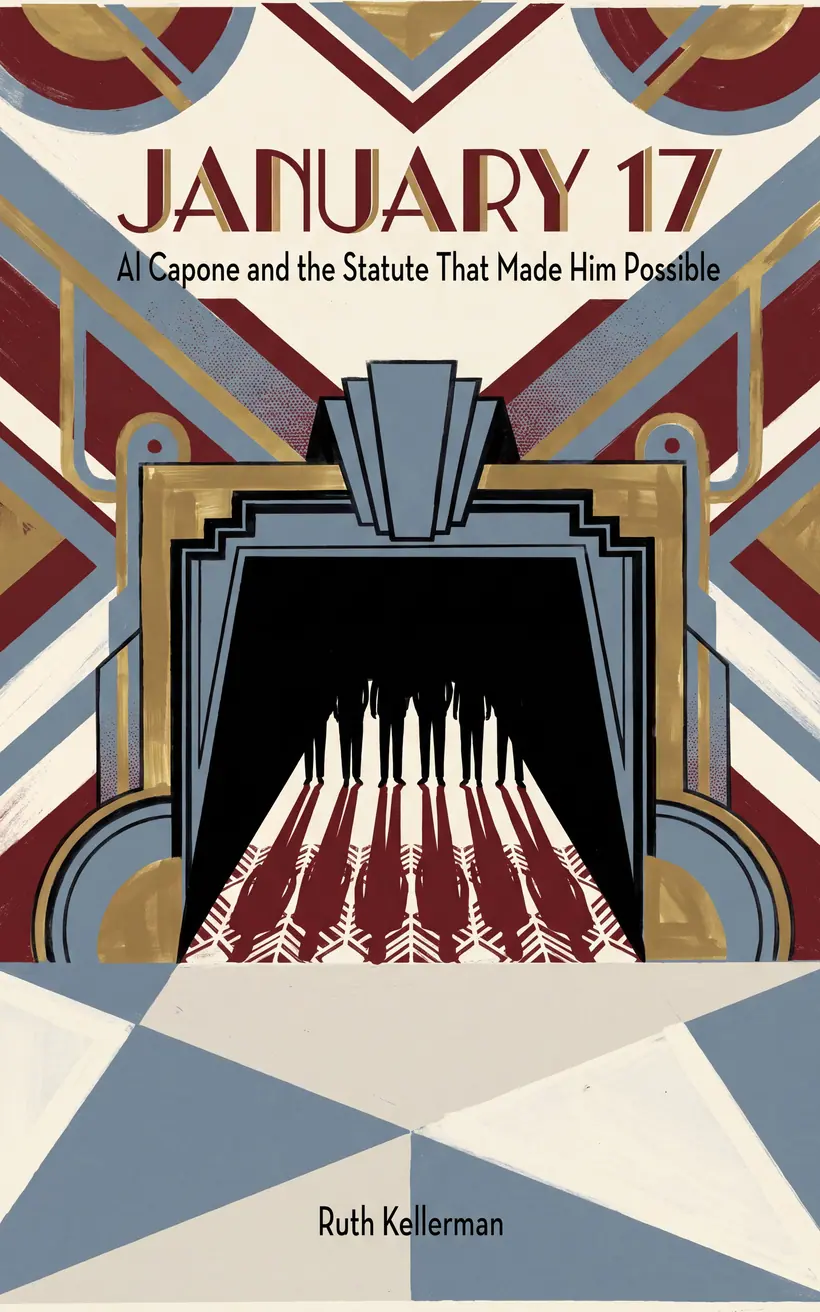
Download link emailed the moment payment clears.
4,376 words · no email, no account
No. 266 · Crime · Crime
a biography of Alphonse Gabriel Capone
Alphonse Gabriel Capone died at forty-eight, and an examination the year before had reported his mental capacity as that of a child. On the best available reading he contracted syphilis in the Brooklyn brothels where he worked the door and never treated it. The intake examination at Atlanta in 1932 returned a positive Wassermann test, and he declined the spinal tap that would have staged the disease, which is why nobody can now fix when his judgment began to go. He collapsed at Alcatraz in February 1938 and was moved to the hospital wing with a diagnosis of paresis. The career that made him the most famous criminal in America had lasted about six years.
It began on his twenty-first birthday, the day the Volstead Act came into force, while he was in Baltimore keeping books for a construction firm and by every account doing it competently. The statute created the largest consumer market in the United States and removed every lawful supplier from it, and Chicago had spent thirty years arranging its municipal government so that the franchise to serve such a market could be bought from named men at published prices. He organized supply better than his competitors. What separated him from a dozen contemporaries was not violence, since the North Side and the Gennas were at least as violent, but organization and a talent for publicity he worked personally from 1927. Two propositions are tested by events rather than by argument: remove the man and the market is unchanged, remove the law and the business relocates. He went to Atlanta in May 1932 and the Chicago liquor trade did not stop. Repeal arrived while he was in prison, and the organization moved into unions, gambling and eventually Hollywood. What convicted him was a gambling ledger seized in a 1926 raid and filed away by people who did not know what they had, two frightened bookkeepers, a letter his own tax attorney wrote to the government, and an agent working through two million documents.
The opening chapter is published in full — read it here.
Alphonse Gabriel Capone. The title never carries the subject's name: it names one concrete thing out of the life — in this case January 17 — and the name goes on the line underneath.
No. No subject, estate, label or foundation had approval over the text, and none paid for a word of it. The cost of that independence is that no new interviews were conducted for the book; it is built from the public record, and it says on the page where a scene is reconstructed rather than documented.
Yes — the whole opening chapter and the writer's foreword, free and in full, with no email address and no account. That is 4,376 words of the book.
About 74,500 words, 22 chapters, 240 pages in the paperback.
Paperback · Hardcover
Digital edition

Paperback · Hardcover