The Nightmare Man
Paperback
Ships in 2 to 5 working days. Delivery quoted from your address at checkout.
3,849 words · no email, no account
No. 006 · Screen & Stage · Film
a biography of John Daniel Singleton
He was born on January 6, 1968, in South Central Los Angeles, raised in two households — his mother's Inglewood apartment and his father's Crenshaw house — and at twenty-three he became the youngest person and the first Black filmmaker ever nominated for the Academy Award for Best Director. The film was Boyz n the Hood, made for $6.5 million in the summer of 1990 while he was still finishing his USC film-school senior year.
Donovan Hadley's biography traces the arc through the South Central childhood, the USC years on a Spielberg scholarship, the Tupac casting in Poetic Justice and the long friendship that ended in 1996, the Higher Learning (1995) and Rosewood (1997) commercial disappointments, the 2 Fast 2 Furious (2003) franchise-rebuild assignment, the Hustle & Flow (2005) production credit, the FX Snowfall series that ran from 2017 through 2023 and that he created with Eric Amadio and Dave Andron, and the stroke of April 17, 2019 that killed him at fifty-one at Cedars-Sinai.
What emerges is a portrait of a South-Central filmmaker whose first feature reset American cinema's grammar for representing Black urban life and whose later career the studio system never quite knew what to do with.
The opening chapter is published in full — read it here.
The printed edition has no ISBN registered yet. It affects library and retail listing, not your order.
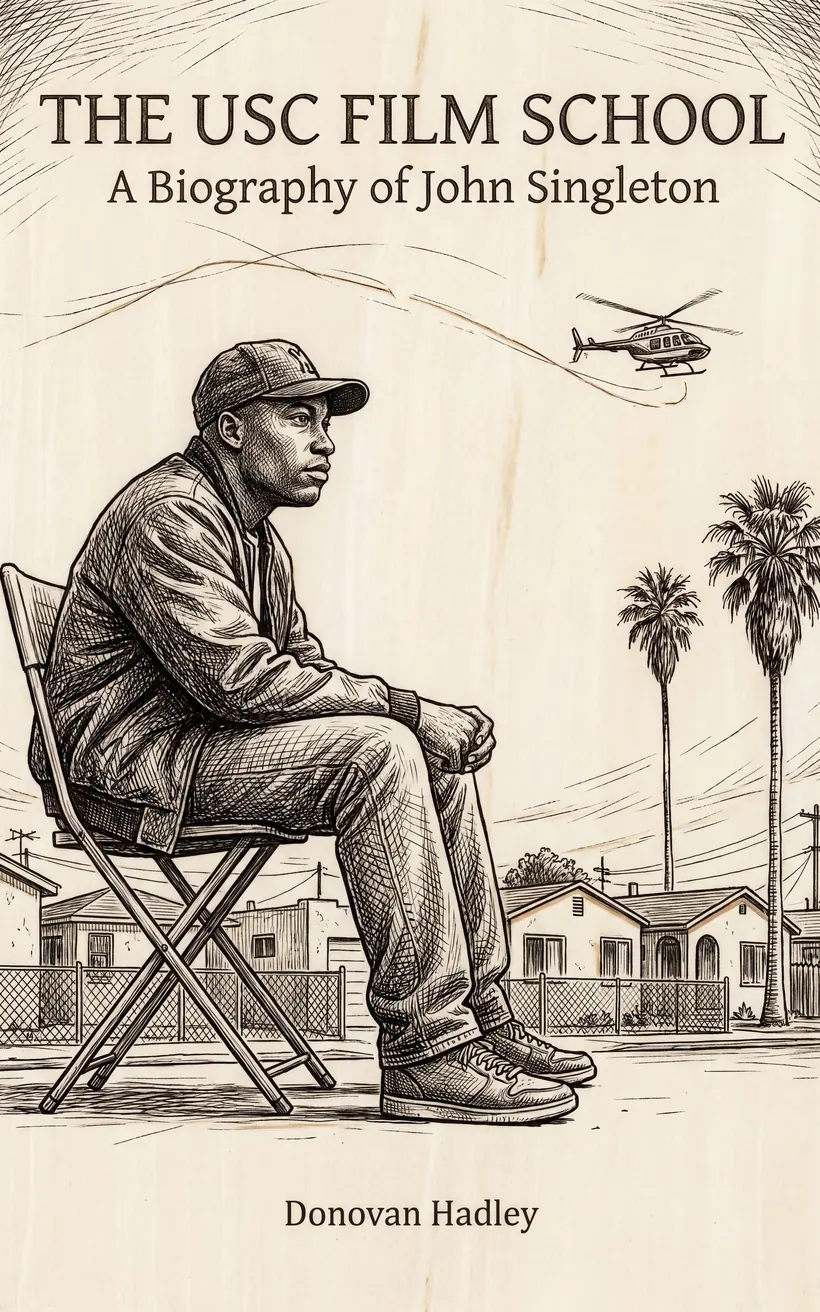
John Daniel Singleton. The title never carries the subject's name: it names one concrete thing out of the life — in this case The USC Film School — and the name goes on the line underneath.
No. No subject, estate, label or foundation had approval over the text, and none paid for a word of it. The cost of that independence is that no new interviews were conducted for the book; it is built from the public record, and it says on the page where a scene is reconstructed rather than documented.
Yes — the whole opening chapter and the writer's foreword, free and in full, with no email address and no account. That is 3,849 words of the book.
About 59,000 words, 18 chapters, 184 pages in the paperback.
6 × 9 in, 60# uncoated cream, black ink, perfect-bound paperback, matte laminate. Every title in the series uses the same specification, so they line up on a shelf.