The USC Film School
Paperback
Ships in 2 to 5 working days. Delivery quoted from your address at checkout.
4,612 words · no email, no account
No. 008 · Screen & Stage · Film
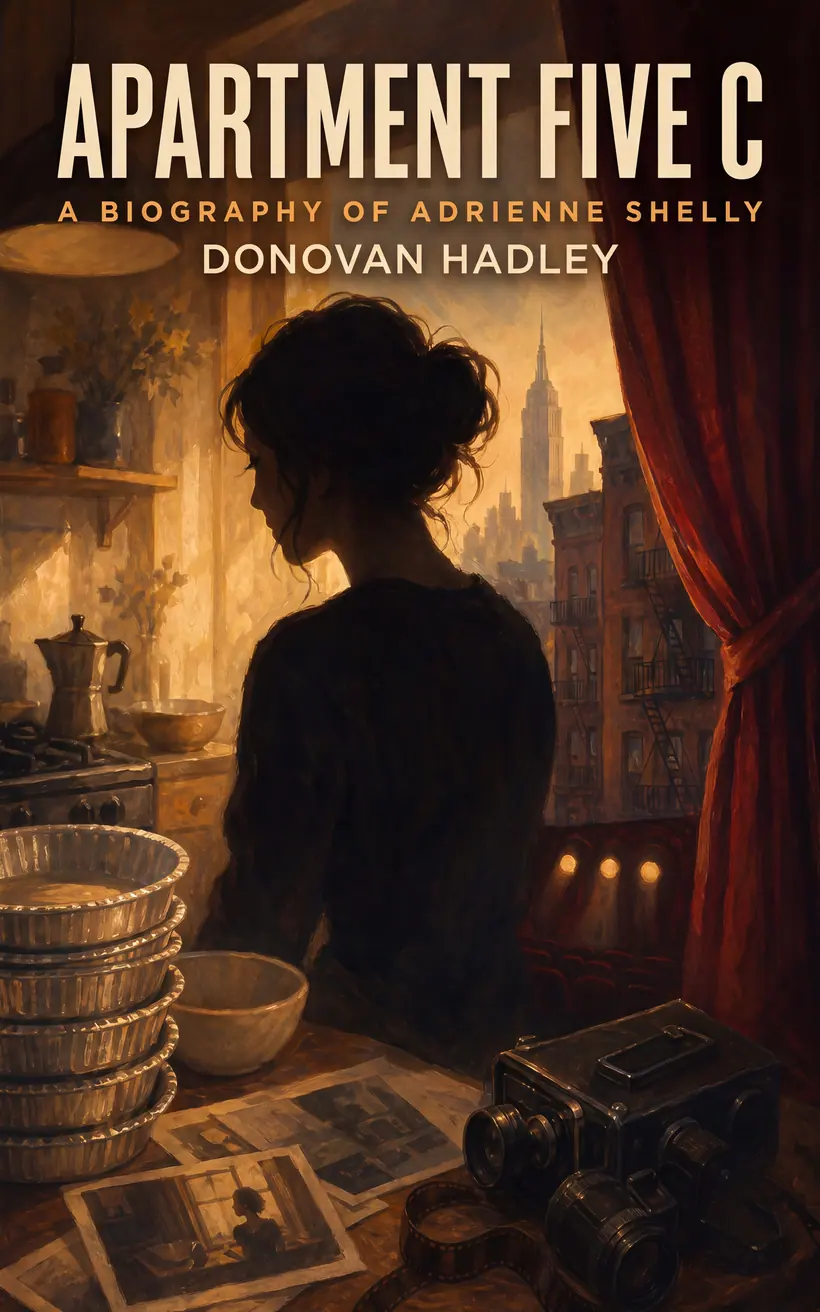
a biography of Adrienne Levine (Adrienne Shelly)
November 1, 2006, Apartment 5C of an office building on Abingdon Square in Manhattan's West Village. Adrienne Shelly, forty, the actress and writer-director of Waitress, is found hanging from a shower-curtain rod. The Medical Examiner initially rules it a suicide. Two days later the police re-open the case after her husband Andrew Ostroy finds a size-eight sneaker print on a toilet seat that doesn't match anyone in the building. They arrest Diego Pillco, a nineteen-year-old construction worker, the next morning. He confesses. Waitress, the film Shelly had just finished editing, premieres at Sundance ten weeks later.
Donovan Hadley's biography opens earlier — Adrienne Levine was born on June 24, 1966, in Queens, New York — and follows the arc through the Boston University acting program, the Hal Hartley breakthrough films The Unbelievable Truth (1989) and Trust (1990), the long independent-film career, the 1996 Sudden Manhattan writer-director debut, the 2003 marriage to Ostroy, the daughter Sophie's 2004 birth, the 2006 completion of Waitress, the building murder, the Adrienne Shelly Foundation founded by Ostroy in her name, and the Sara Bareilles 2015 Broadway musical adaptation that the foundation supported.
What emerges is a portrait of an indie-film actress and writer-director killed in her own office at forty by a stranger she had asked to keep the construction noise down — and of a husband and a foundation that have spent twenty years finishing the work she did not get to finish.
The opening chapter is published in full — read it here.
The printed edition has no ISBN registered yet. It affects library and retail listing, not your order.
Adrienne Levine (Adrienne Shelly). The title never carries the subject's name: it names one concrete thing out of the life — in this case Apartment Five C — and the name goes on the line underneath.
No. No subject, estate, label or foundation had approval over the text, and none paid for a word of it. The cost of that independence is that no new interviews were conducted for the book; it is built from the public record, and it says on the page where a scene is reconstructed rather than documented.
Yes — the whole opening chapter and the writer's foreword, free and in full, with no email address and no account. That is 4,612 words of the book.
About 59,500 words, 18 chapters, 189 pages in the paperback.
6 × 9 in, 60# uncoated cream, black ink, perfect-bound paperback, matte laminate. Every title in the series uses the same specification, so they line up on a shelf.