The USC Film School
Paperback
Ships in 2 to 5 working days. Delivery quoted from your address at checkout.
4,443 words · no email, no account
No. 007 · Screen & Stage · Film
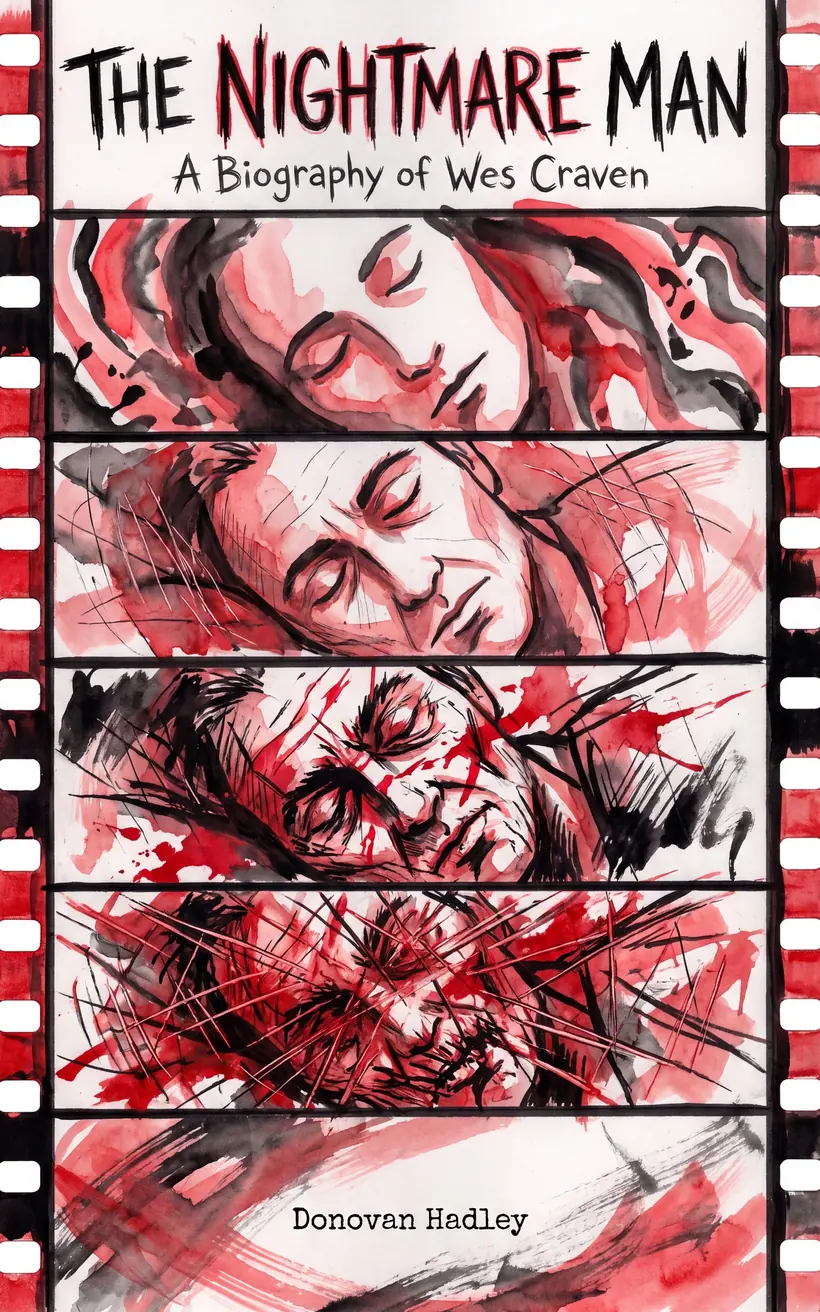
a biography of Wesley Earl Craven
The received version of Wes Craven is the man who invented Freddy Krueger and frightened a generation. It leaves out nearly everything that made him. Craven took a master's in philosophy and writing at Johns Hopkins and taught humanities at Westminster College in Pennsylvania. The strict Baptist mother who raised him in Cleveland would not let him see a movie until he left for Wheaton College. He was thirty-three before he directed a feature, and he made it, The Last House on the Left, in 1972 for $87,000. The United Kingdom banned the film for twenty-eight years.
Donovan Hadley's biography follows the whole arc, from the Cleveland fundamentalist upbringing through the slow drift into the New York exploitation-film underground and the partnership with Sean Cunningham. The 1977 Hills Have Eyes came next, then the 1984 Nightmare on Elm Street and the creation of Freddy Krueger, and then the long franchise the New Line studio built on Craven's idea. The 1991 People Under the Stairs followed. The 1994 New Nightmare revived a flagging series. The 1996 Scream produced four sequels. My Soul to Take, in 2010, was the swansong. Craven died of brain cancer at his Los Angeles home on August 30, 2015.
Wesley Earl Craven was born on August 2, 1939, in Cleveland, Ohio. What Hadley assembles is a portrait of a philosophy-trained college professor who, late in his thirties, became the most consequential American horror director of the last quarter of the twentieth century: a man kept from the movies until he left home, who then spent his working life making them.
The opening chapter is published in full — read it here.
The printed edition has no ISBN registered yet. It affects library and retail listing, not your order.
Wesley Earl Craven. The title never carries the subject's name: it names one concrete thing out of the life — in this case The Nightmare Man — and the name goes on the line underneath.
No. No subject, estate, label or foundation had approval over the text, and none paid for a word of it. The cost of that independence is that no new interviews were conducted for the book; it is built from the public record, and it says on the page where a scene is reconstructed rather than documented.
Yes — the whole opening chapter and the writer's foreword, free and in full, with no email address and no account. That is 4,443 words of the book.
About 60,500 words, 18 chapters, 188 pages in the paperback.
6 × 9 in, 60# uncoated cream, black ink, perfect-bound paperback, matte laminate. Every title in the series uses the same specification, so they line up on a shelf.