Procurer
Digital edition
Ships in 2 to 5 working days. Delivery quoted from your address at checkout.
3,043 words · no email, no account
No. 027 · Crime · White-Collar Crime
a biography of Jeffrey Edward Epstein
On the morning of August 10, 2019, a guard at the Metropolitan Correctional Center in Lower Manhattan opened a cell door and found Jeffrey Epstein dead. Two cameras had failed. Two officers had fallen asleep. The most consequential prisoner in the federal system had been left alone with a bedsheet, and the case the government had spent decades failing to bring was closed in a single night.
Roland Mercer begins not with the death but with the boy: a math teacher's son from Sea Gate, Brooklyn, who talked his way into Dalton without a degree, into Bear Stearns without a résumé, and into the homes of presidents and princes without a verifiable client list. Between those rooms and the cell on Park Row lies the architecture of a life built on access — to money that cannot be fully traced, to girls who were children, to men who knew and looked away.
Drawing on DOJ files, congressional testimony, the unsealed Maxwell exhibits, and the document tranches released between 2023 and 2026, Mercer reconstructs what the record actually shows: the 2008 plea agreement and the prosecutors who signed it, the flight logs, the island, the names that recur and the names that have been redacted.
The File is an account of what was written down, what was withheld, and what the survivors have been asking the country to read.
The opening chapter is published in full — read it here.
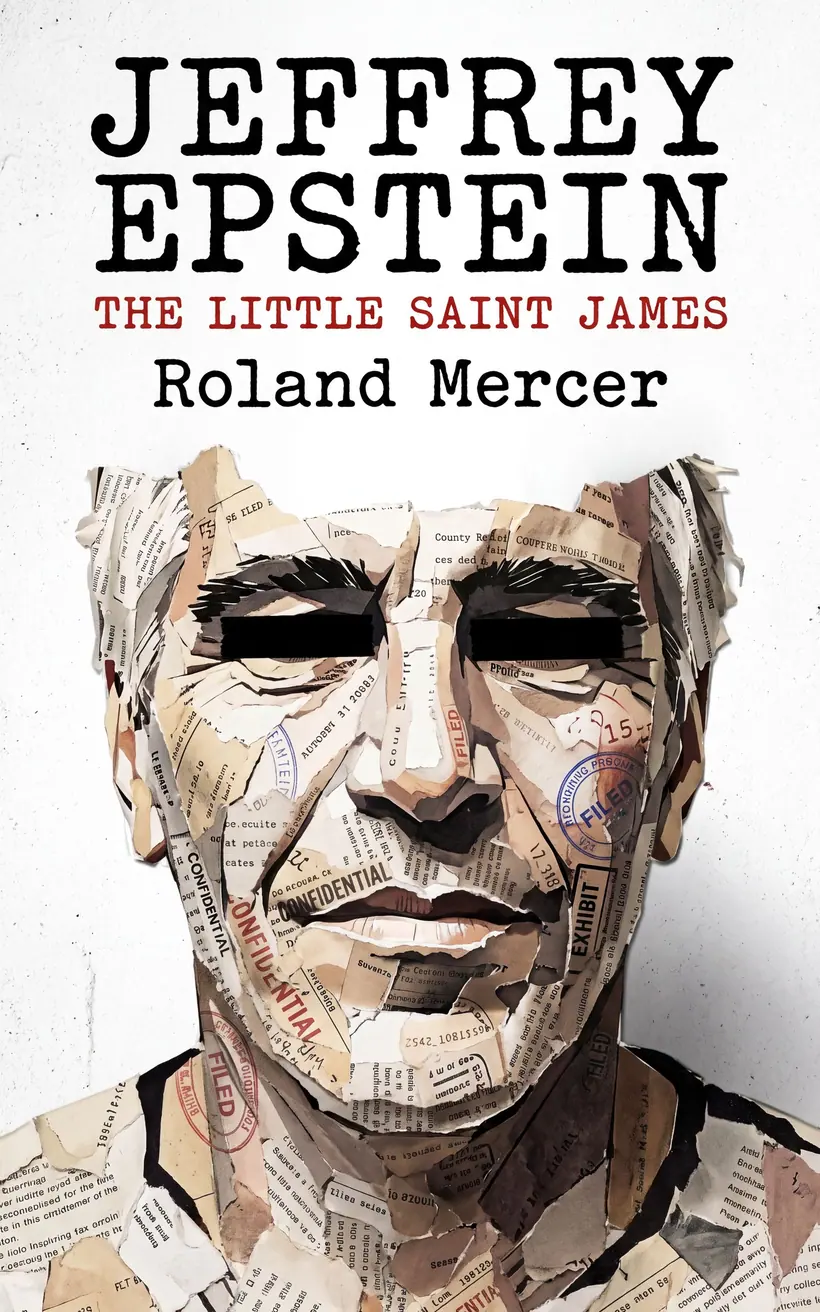
Jeffrey Edward Epstein. The title never carries the subject's name: it names one concrete thing out of the life — in this case The Little Saint James — and the name goes on the line underneath.
No. No subject, estate, label or foundation had approval over the text, and none paid for a word of it. The cost of that independence is that no new interviews were conducted for the book; it is built from the public record, and it says on the page where a scene is reconstructed rather than documented.
Yes — the whole opening chapter and the writer's foreword, free and in full, with no email address and no account. That is 3,043 words of the book.
About 98,000 words, 20 chapters, 333 pages in the paperback.
6 × 9 in, 60# uncoated cream, black ink, perfect-bound paperback, matte laminate. Every title in the series uses the same specification, so they line up on a shelf.
Yes: sexual abuse of minors; trafficking; suicide. They are listed before you buy rather than discovered afterwards. The material is handled as evidence, not as spectacle.
Listed before you buy, not after.