The Castro Camera Storefront
Paperback · Hardcover
Ships in 2 to 5 working days. Delivery quoted from your address at checkout.
3,902 words · no email, no account
No. 036 · Power & Politics · American Politics
a biography of Harvey LeRoy Atwater
He was born Harvey LeRoy Atwater on February 27, 1951, in Atlanta, Georgia, the son of an insurance adjuster, and grew up in Columbia, South Carolina. At twenty-five he was Strom Thurmond's college campaign-volunteer coordinator. At twenty-seven he managed Carroll Campbell's congressional campaign. At thirty-three he was Ronald Reagan's deputy political director. At thirty-seven he ran George H. W. Bush's 1988 presidential campaign — the Willie Horton ad, the Boston Harbor ad, the long demolition of Michael Dukakis — and became, in February 1989, chairman of the Republican National Committee. He was diagnosed with grade-IV astrocytoma on March 5, 1990, at thirty-nine. He died on March 29, 1991, at forty.
Theodore Pemberton's biography opens earlier — in the South Carolina childhood and the Newberry College years, the Wofford fraternity-house years that produced the campaign-network DNA — and follows the arc through the Strom Thurmond apprenticeship, the long Republican-consultancy career at Black, Manafort & Stone, the 1988 Bush campaign and the Willie Horton television ad, the RNC chairmanship, the diagnosis, the deathbed conversion to Catholicism, and the apology to Dukakis that Life magazine published in February 1991.
What emerges is a portrait of the political consultant whose 1988 campaign rewrote the rulebook for what an American general election could look like — and whose deathbed apology the rulebook he helped write has carried with it ever since.
The opening chapter is published in full — read it here.
The printed edition has no ISBN registered yet. It affects library and retail listing, not your order.
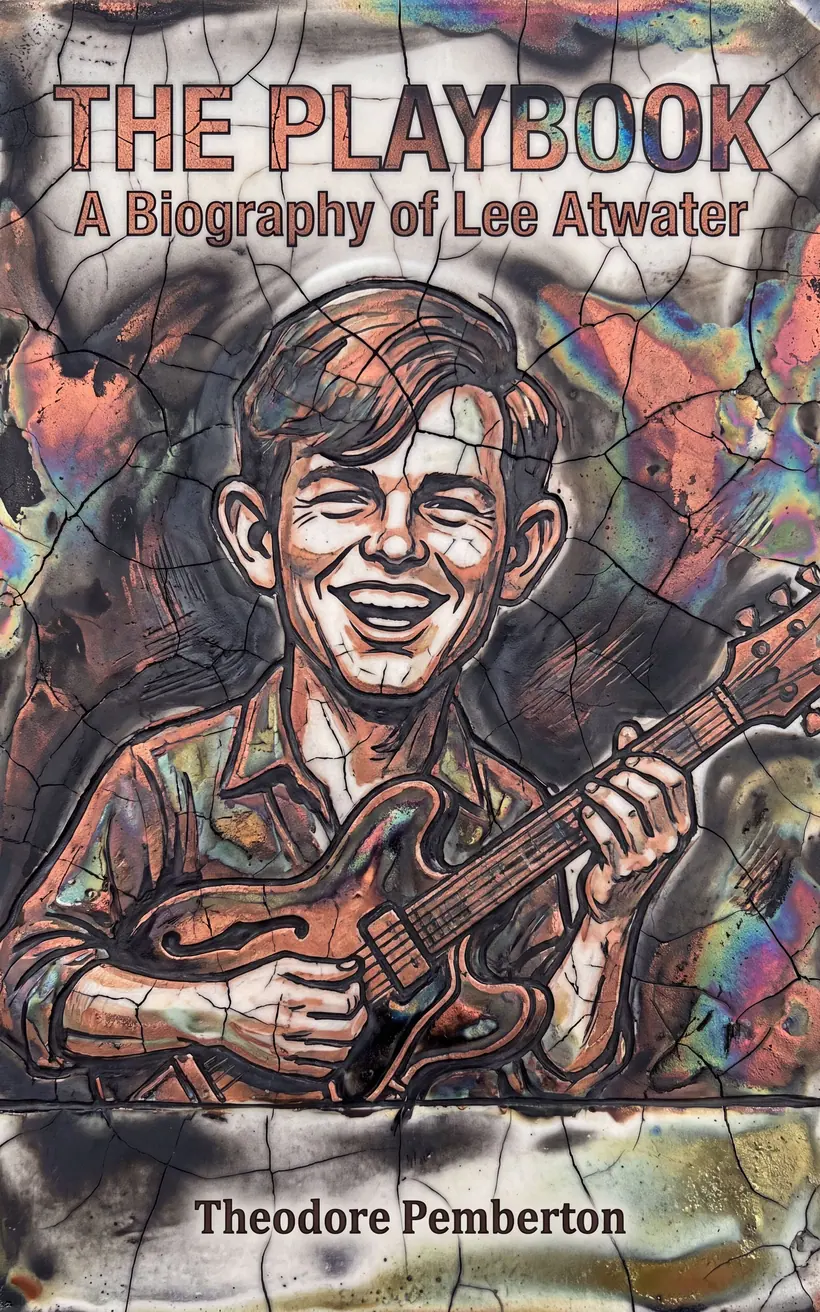
Harvey LeRoy Atwater. The title never carries the subject's name: it names one concrete thing out of the life — in this case The Playbook — and the name goes on the line underneath.
No. No subject, estate, label or foundation had approval over the text, and none paid for a word of it. The cost of that independence is that no new interviews were conducted for the book; it is built from the public record, and it says on the page where a scene is reconstructed rather than documented.
Yes — the whole opening chapter and the writer's foreword, free and in full, with no email address and no account. That is 3,902 words of the book.
About 64,000 words, 19 chapters, 211 pages in the paperback.
6 × 9 in, 60# uncoated cream, black ink, perfect-bound paperback, matte laminate. Every title in the series uses the same specification, so they line up on a shelf.
Paperback · Hardcover
Paperback
Paperback