The Castro Camera Storefront
Paperback · Hardcover
Ships in 2 to 5 working days. Delivery quoted from your address at checkout.
4,010 words · no email, no account
No. 056 · Power & Politics · American Politics
a biography of Shirley Anita St. Hill Chisholm
January 25, 1972, the Concord Baptist Church in Brooklyn. Shirley Chisholm, forty-seven, the first Black woman ever elected to the United States Congress, announces her candidacy for the Democratic nomination for President of the United States. "I am not the candidate of Black America, although I am Black and proud," she tells the room. "I am not the candidate of the women's movement of this country, although I am a woman, and I am equally proud of that. I am the candidate of the people of America." She runs through the Florida primary, wins 152 delegates, and arrives at the Miami convention with a floor minority she leverages into the platform's first formal mention of women's rights.
Theodore Pemberton's biography opens earlier — in the Bedford-Stuyvesant neighborhood of Brooklyn, where Shirley Anita St. Hill was born to Barbadian and Guyanese immigrant parents in 1924 — and follows the arc through the Barbados school years, Brooklyn College and Columbia, the Childcare Director apprenticeship, the 1968 election to the Twelfth Congressional District, the seven House terms, the 1972 presidential campaign, the long retirement at Spelman College, and the death in Ormond Beach, Florida, in 2005 at eighty.
What emerges is a portrait of the unbought-and-unbossed Brooklyn congresswoman whose 1972 campaign opened the door her successors still walk through and whose name the country took thirty-five years to put on a postage stamp.
The opening chapter is published in full — read it here.
The printed edition has no ISBN registered yet. It affects library and retail listing, not your order.
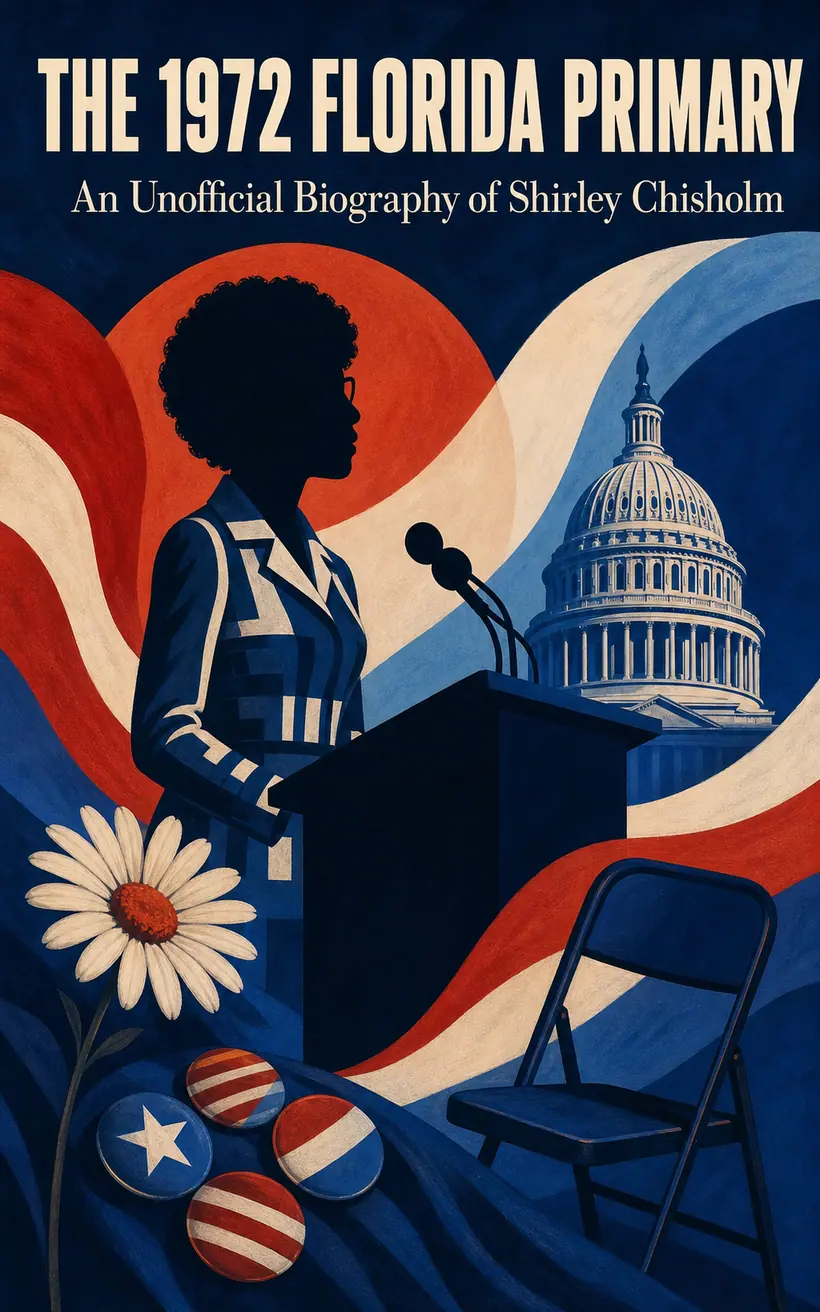
Shirley Anita St. Hill Chisholm. The title never carries the subject's name: it names one concrete thing out of the life — in this case The 1972 Florida Primary — and the name goes on the line underneath.
No. No subject, estate, label or foundation had approval over the text, and none paid for a word of it. The cost of that independence is that no new interviews were conducted for the book; it is built from the public record, and it says on the page where a scene is reconstructed rather than documented.
Yes — the whole opening chapter and the writer's foreword, free and in full, with no email address and no account. That is 4,010 words of the book.
About 64,000 words, 19 chapters, 203 pages in the paperback.
6 × 9 in, 60# uncoated cream, black ink, perfect-bound paperback, matte laminate. Every title in the series uses the same specification, so they line up on a shelf.