The Eight-Week March
Paperback
Ships in 2 to 5 working days. Delivery quoted from your address at checkout.
4,759 words · no email, no account
No. 050 · Movements · Civil Rights
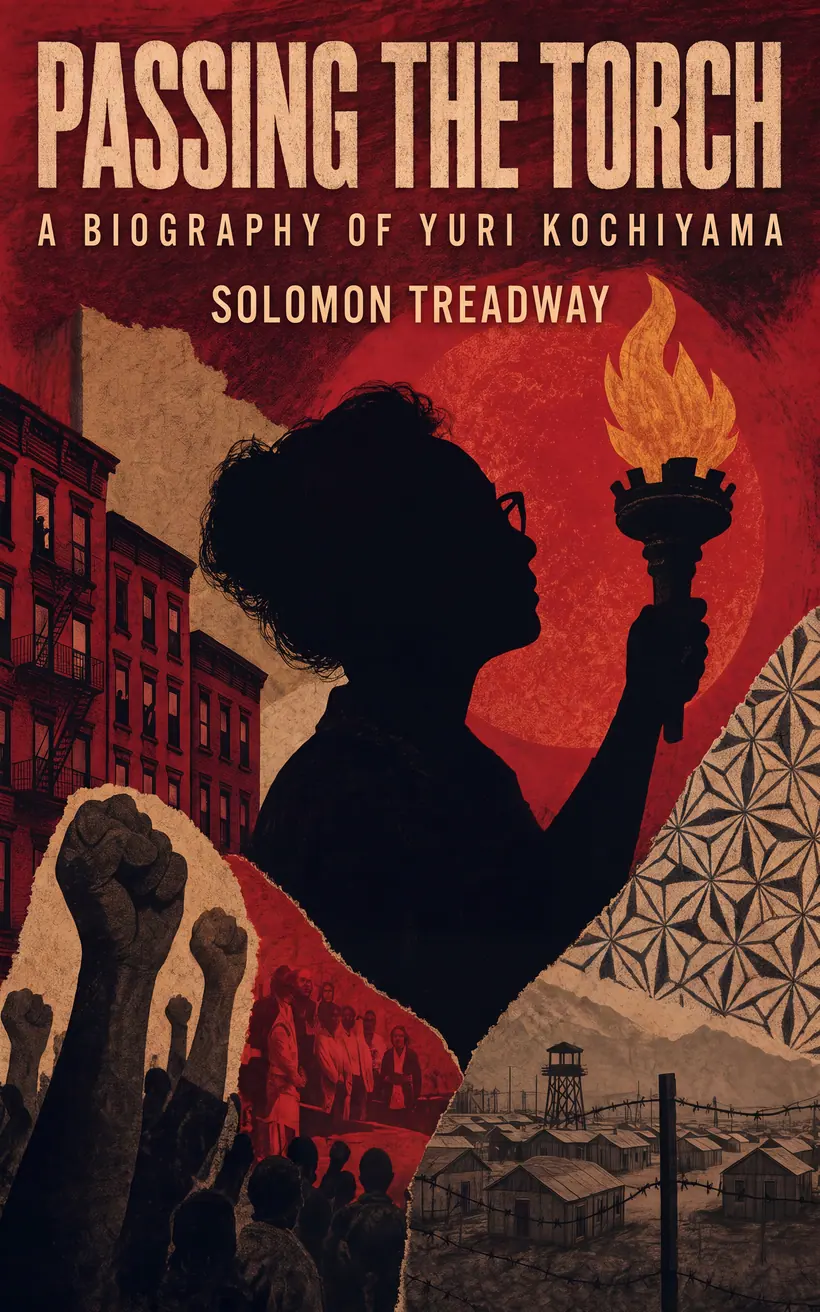
a biography of Mary Yuriko Nakahara Kochiyama
February 21, 1965, the Audubon Ballroom in Manhattan. Mary Yuriko Kochiyama is in the audience when Talmadge Hayer, Norman 3X Butler, and Thomas 15X Johnson assassinate Malcolm X. The photograph that ran in Life magazine the next week shows her on the stage cradling his head in her lap. She is forty-three years old.
Solomon Treadway's biography opens earlier, in San Pedro, California, where Mary Nakahara was born in 1921 to Japanese immigrant parents, and follows the arc through the Jerome and Topaz internment camps of the Second World War, the postwar move to Harlem, the late friendship with Malcolm X, the lifetime of activism in the Asian-American, Black, and Puerto-Rican independence movements, the long campaign for Japanese-American reparations that produced the 1988 Civil Liberties Act, and the thirty years of her life that followed — until her death in 2014 — as the elder of the movement she had helped build.
What emerges is a portrait of a Nisei activist whose forty-year political education began in a tar-paper barracks in Arkansas and whose moral compass never wavered after.
The opening chapter is published in full — read it here.
The printed edition has no ISBN registered yet. It affects library and retail listing, not your order.
Mary Yuriko Nakahara Kochiyama. The title never carries the subject's name: it names one concrete thing out of the life — in this case Passing the Torch — and the name goes on the line underneath.
No. No subject, estate, label or foundation had approval over the text, and none paid for a word of it. The cost of that independence is that no new interviews were conducted for the book; it is built from the public record, and it says on the page where a scene is reconstructed rather than documented.
Yes — the whole opening chapter and the writer's foreword, free and in full, with no email address and no account. That is 4,759 words of the book.
About 69,500 words, 19 chapters, 222 pages in the paperback.
6 × 9 in, 60# uncoated cream, black ink, perfect-bound paperback, matte laminate. Every title in the series uses the same specification, so they line up on a shelf.