The Days Inn Room 158
Paperback · Hardcover
Ships in 2 to 5 working days. Delivery quoted from your address at checkout.
4,696 words · no email, no account
No. 079 · Music · Latin
a biography of Úrsula Hilaria Celia de la Caridad Cruz Alfonso
Three Grammy Awards, four Latin Grammys, a National Medal of Arts handed over by Bill Clinton in 1994. The tally is easy to recite and it explains almost nothing, because the number that decided Celia Cruz's life was a year. In 1959 the Castro government took power and she refused to go back to Cuba. She never did. Everything that followed was made in exile: Mexico City, then New York, then a house in Fort Lee, New Jersey.
Úrsula Hilaria Celia de la Caridad Cruz Alfonso, born in Santos Suárez, Havana, on October 21, 1925, was the second of four children of a railroad stoker. She trained at the Conservatorio Nacional de Música. In 1950 she joined La Sonora Matancera as the band's first female lead singer and recorded with them through the decade. She put ¡Azúcar! on a record for the first time in 1959. In 1962 she married the band's trumpet player, Pedro Knight.
Esperanza Villalobos starts before all of that and works forward with bilingual archival rigour: the Havana childhood, the Sonora Matancera years, the Mexico City period and the Tito Puente collaborations of the 1960s, the Fania Records years at the height of the 1970s salsa boom, the Celia & Johnny and Celia & Willie albums, the long stretch in Fort Lee, the 1990 Madison Square Garden concert with the Fania All-Stars, the Medal of Arts in 1994, and the cancer diagnosis of 2003. She died of brain cancer at her Fort Lee home on July 16, 2003, at seventy-seven.
Exile fixed the Queen of Salsa inside a New York-Miami-San Juan triangle for the rest of her working life. It also handed the Latin music world a one-word call that it has been answering ever since.
The opening chapter is published in full — read it here.
The printed edition has no ISBN registered yet. It affects library and retail listing, not your order.
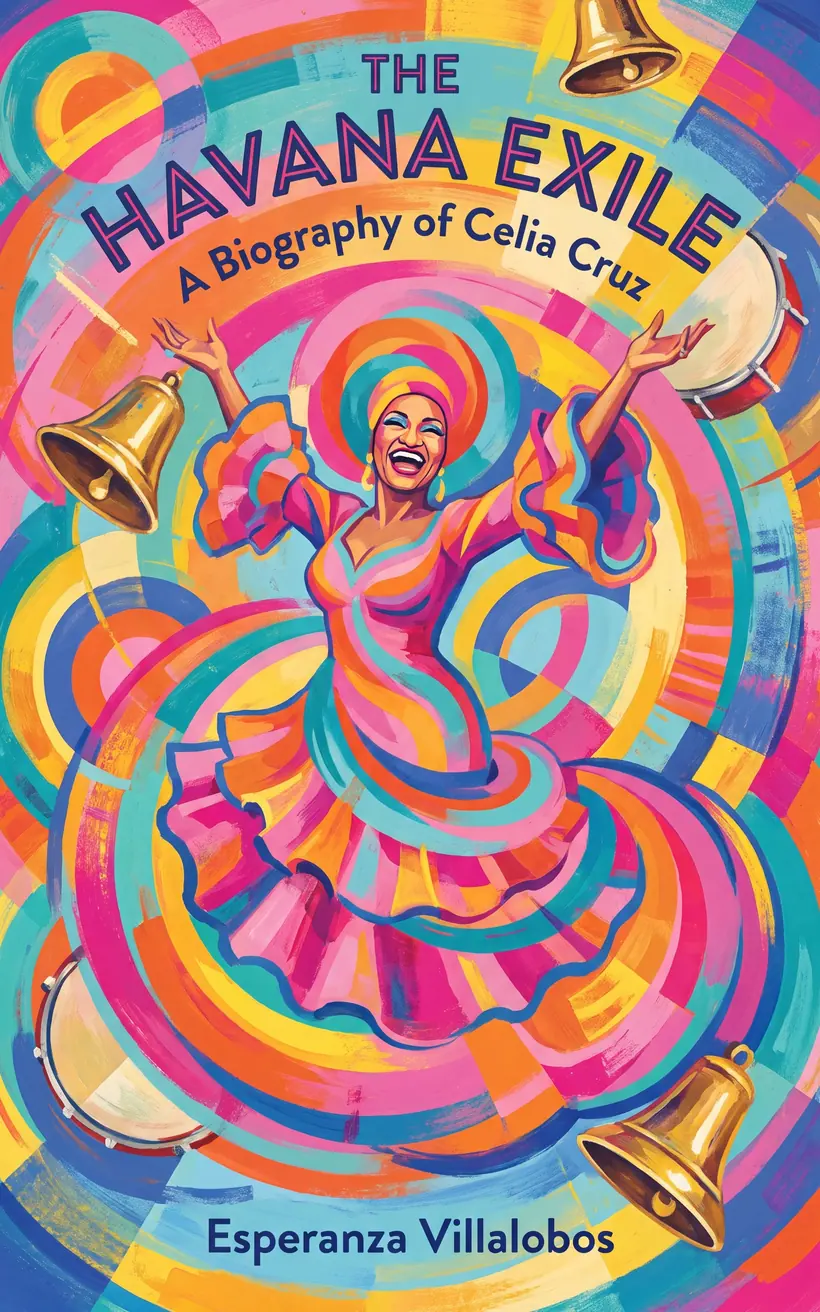
Úrsula Hilaria Celia de la Caridad Cruz Alfonso. The title never carries the subject's name: it names one concrete thing out of the life — in this case The Havana Exile — and the name goes on the line underneath.
No. No subject, estate, label or foundation had approval over the text, and none paid for a word of it. The cost of that independence is that no new interviews were conducted for the book; it is built from the public record, and it says on the page where a scene is reconstructed rather than documented.
Yes — the whole opening chapter and the writer's foreword, free and in full, with no email address and no account. That is 4,696 words of the book.
About 64,000 words, 19 chapters, 199 pages in the paperback.
6 × 9 in, 60# uncoated cream, black ink, perfect-bound paperback, matte laminate. Every title in the series uses the same specification, so they line up on a shelf.
Paperback · Hardcover
Paperback
Digital edition