The Lake Forest Park Sidewalk
Paperback
Ships in 2 to 5 working days. Delivery quoted from your address at checkout.
5,406 words · no email, no account
No. 096 · Letters & Ideas · Literature
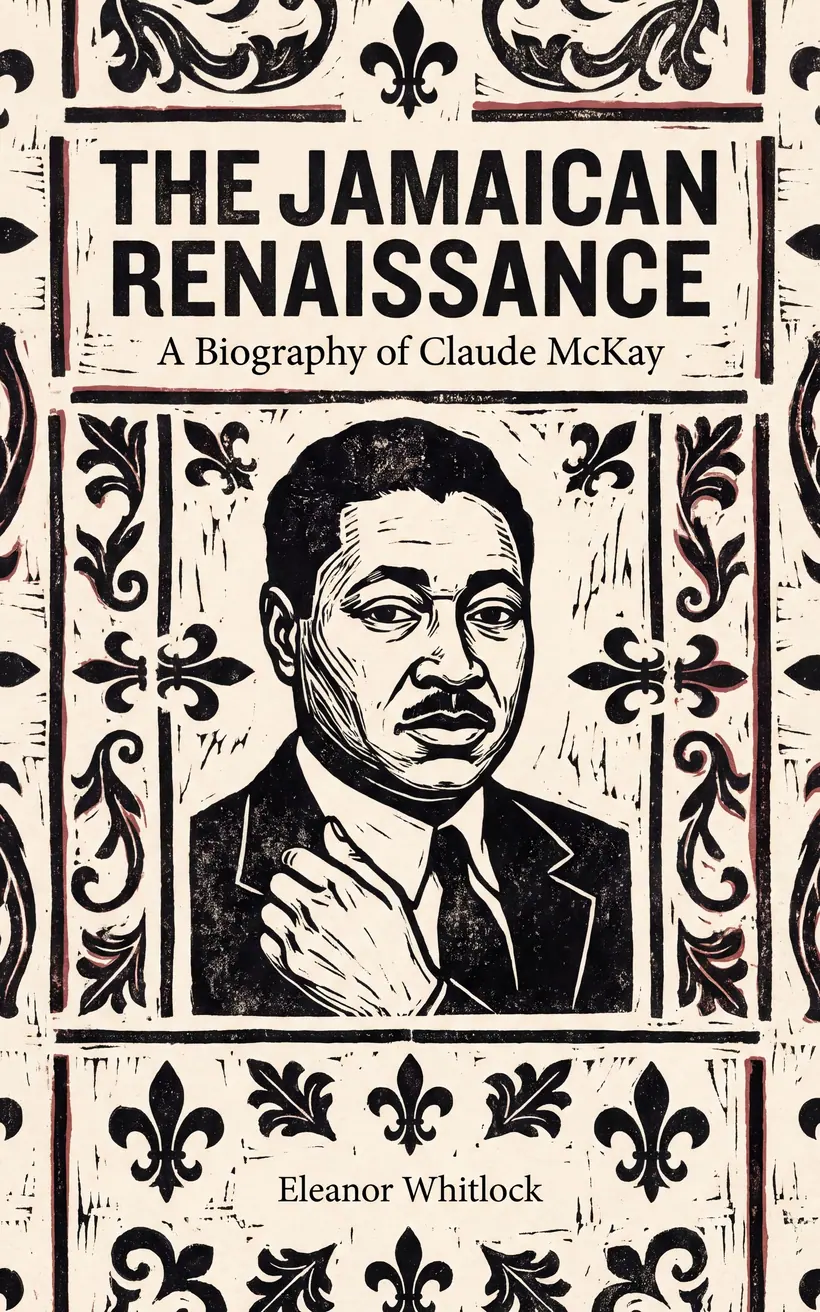
a biography of Festus Claudius McKay
If We Must Die appeared in The Liberator in 1919. Winston Churchill quoted it to the House of Commons during the darkest days of 1940 and did not name its author — a Jamaican poet who had emigrated to the United States in 1912. The sonnet became the anthem of the New Negro movement, against the wishes of Claude McKay's more cautious peers.
Festus Claudius McKay, born September 15, 1889 in James Hill, Clarendon, was the youngest of eleven children of a peasant farmer. He apprenticed as a wheelwright and served as a sub-inspector in the Jamaica Constabulary. Walter Jekyll's patronage got the young constable his first London publication; Songs of Jamaica and Constab Ballads both appeared in 1912, the year he left the island. Two years at Tuskegee Institute and Kansas State University followed, then a drift to New York.
Eleanor Whitlock opens in Jamaica's central highlands and follows the whole Atlantic circuit from there: the long editorial work at The Liberator and the Workers Dreadnought, the 1922 collection Harlem Shadows that established him as the major poet of the Harlem Renaissance, the Comintern's Fourth Congress in Moscow in 1923, the long European years, the interwar drifts through Marseille and Tangier and Casablanca. Home to Harlem came in 1928, the first bestseller by a Black writer in the United States. Then Banjo in 1929, the memoir A Long Way From Home in 1937, and the sociology of Harlem: Negro Metropolis in 1940.
He converted to Roman Catholicism in 1944 and died of a heart attack in Chicago on May 22, 1948, at fifty-eight. The canon kept the sonnet and mislaid the man who wrote it. Whitlock's account is of a vagrant Atlantic career that the Harlem Renaissance took eighty years to write back into its own record.
The opening chapter is published in full — read it here.
The printed edition has no ISBN registered yet. It affects library and retail listing, not your order.
Festus Claudius McKay. The title never carries the subject's name: it names one concrete thing out of the life — in this case The Jamaican Renaissance — and the name goes on the line underneath.
No. No subject, estate, label or foundation had approval over the text, and none paid for a word of it. The cost of that independence is that no new interviews were conducted for the book; it is built from the public record, and it says on the page where a scene is reconstructed rather than documented.
Yes — the whole opening chapter and the writer's foreword, free and in full, with no email address and no account. That is 5,406 words of the book.
About 63,500 words, 19 chapters, 198 pages in the paperback.
6 × 9 in, 60# uncoated cream, black ink, perfect-bound paperback, matte laminate. Every title in the series uses the same specification, so they line up on a shelf.
Paperback
Paperback · Hardcover
Digital edition