Room 607
Paperback
Ships in 2 to 5 working days. Delivery quoted from your address at checkout.
5,067 words · no email, no account
No. 113 · Screen & Stage · Performing Arts
a biography of David Khari Webber Chappelle
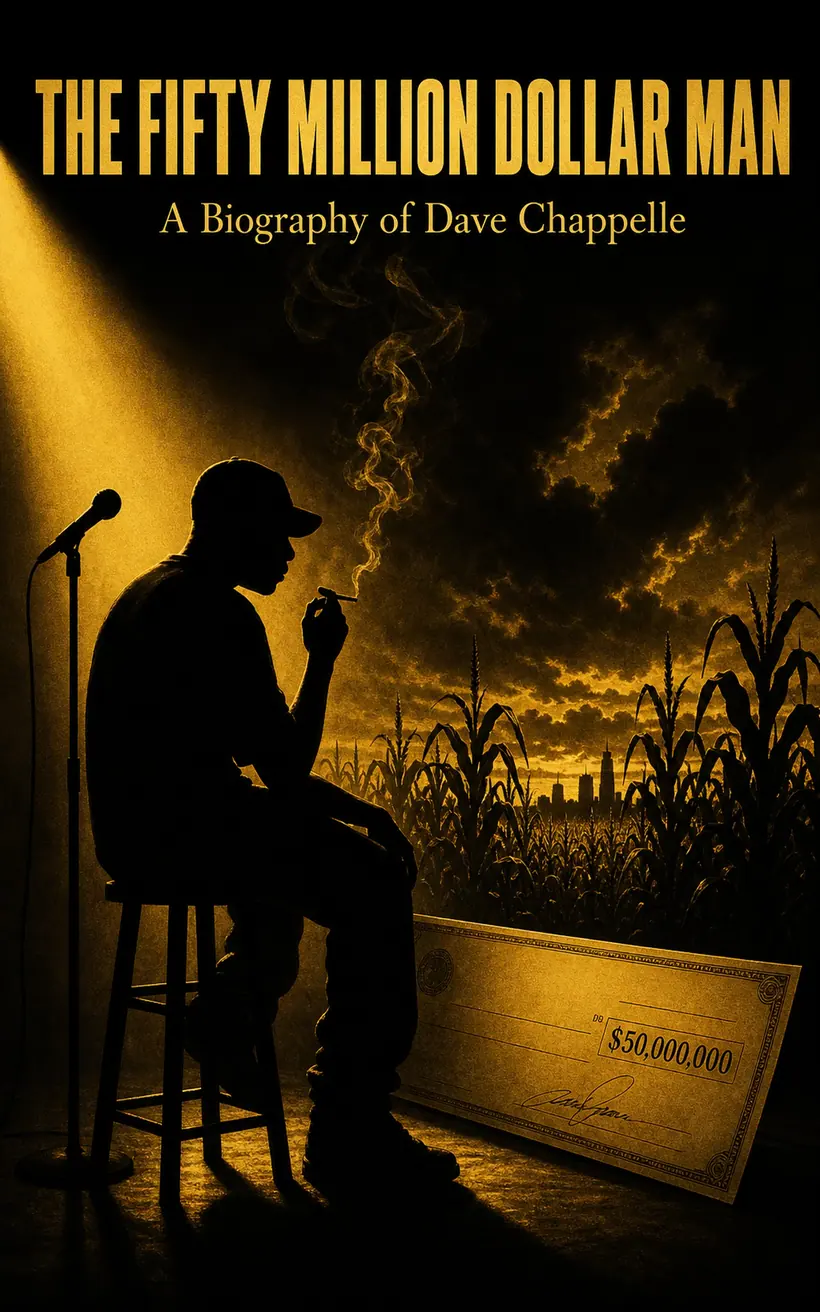
On a soundstage in Los Angeles, in the spring of 2005, a thirty-one-year-old comedian stopped showing up. The contract on the table was worth fifty million dollars. The show, in its third season, was the most quoted on American television. He boarded a plane to South Africa instead, and when he came home, he came home to Yellow Springs, Ohio — population three thousand, the town where he had grown up watching his father teach music at Antioch College.
He did not explain. Not then. The explanation arrived, when it arrived at all, in fragments: a Tavis Smiley interview, a series of late-night sets at the Comedy Cellar, a return to the road, a deal with Netflix, a special called The Closer, and the long argument that followed it.
Donovan Hadley traces the education of a comedian — from the professors' house in Washington, D.C., where dinner-table conversation was Baldwin and Baraka; to the open mics he worked at fourteen, child of a divorce and a city in crack-era collapse; to Def Comedy Jam at nineteen; to the sketch show that made him a millionaire and something he had not bargained for.
What does it cost to be the funniest person in the room? What does it cost to leave the room? Hadley's portrait is patient, archival, and unwilling to settle the question on anyone's behalf.
The opening chapter is published in full — read it here.
The printed edition has no ISBN registered yet. It affects library and retail listing, not your order.
David Khari Webber Chappelle. The title never carries the subject's name: it names one concrete thing out of the life — in this case The Fifty Million Dollar Man — and the name goes on the line underneath.
No. No subject, estate, label or foundation had approval over the text, and none paid for a word of it. The cost of that independence is that no new interviews were conducted for the book; it is built from the public record, and it says on the page where a scene is reconstructed rather than documented.
Yes — the whole opening chapter and the writer's foreword, free and in full, with no email address and no account. That is 5,067 words of the book.
About 60,000 words, 18 chapters, 200 pages in the paperback.
6 × 9 in, 60# uncoated cream, black ink, perfect-bound paperback, matte laminate. Every title in the series uses the same specification, so they line up on a shelf.