Room 607
Paperback
Ships in 2 to 5 working days. Delivery quoted from your address at checkout.
3,301 words · no email, no account
No. 187 · Screen & Stage · Performing Arts
a biography of Norma Jeane Mortenson (Marilyn Monroe)
On the night of 14 September 1954, on the corner of Lexington Avenue and 52nd Street, Twentieth Century Fox shoots a publicity sequence that will outlive every print of the film it advertises. The actress is twenty-eight. Her contract is in the third year of a seven-year hold. Her husband, watching from the rope line, will sign the divorce papers within two weeks. The fan beneath the subway grate runs on a generator the second-unit director hides on the next block, and the take is repeated, reportedly, more than fifteen times.
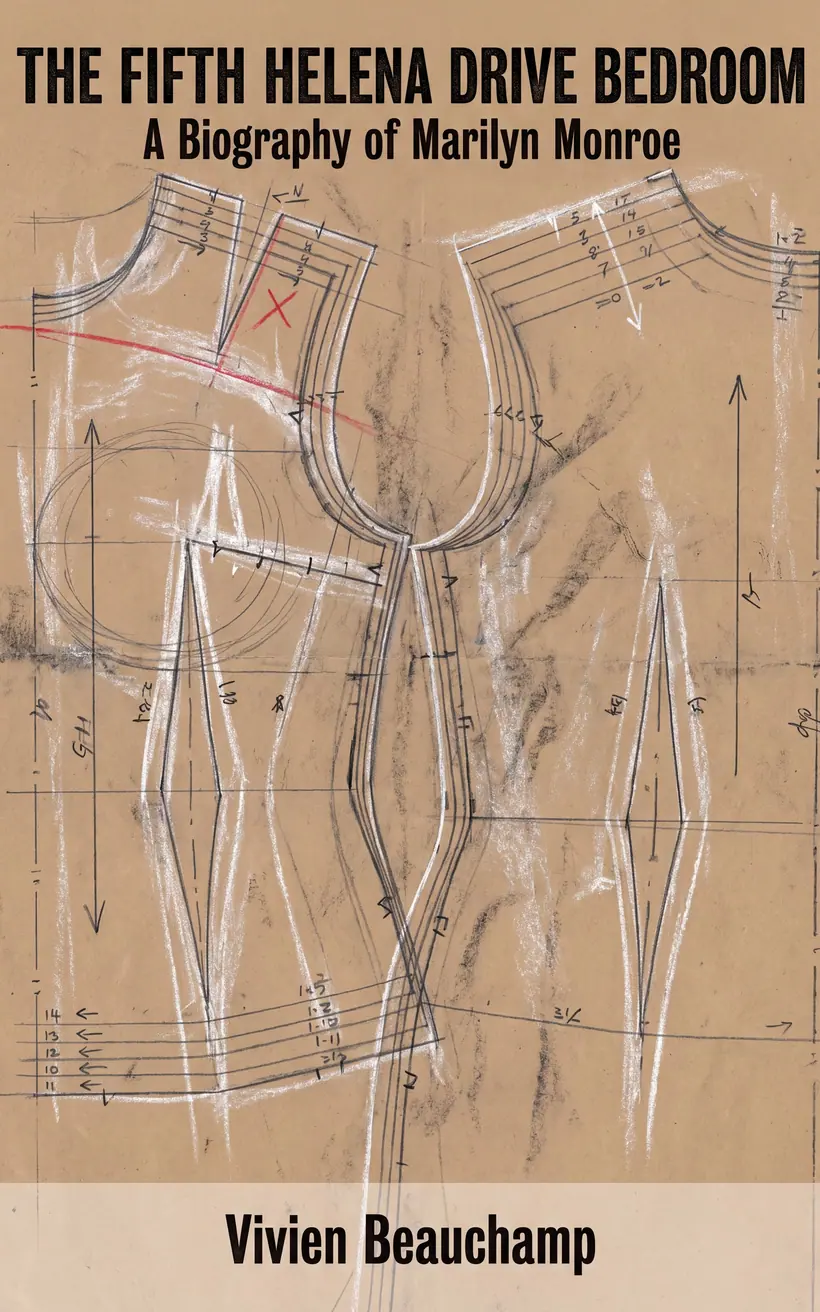
Vivien Beauchamp reads Marilyn Monroe's life as the labour history that golden-age Hollywood spent fifty years insisting was a fairy tale. She follows the contract — Norma Jeane's at Twentieth Century Fox in 1946, Marilyn's at Fox in 1951, the renegotiated terms after the 1954 walkout, the company she formed in 1955 to escape, and the suspension that followed every refusal. She traces the rooms: the studio commissary, the photography sessions, the analyst's couch on East 93rd Street, the bungalow at Brentwood.
Drawing on Monroe's papers at the Lee Strasberg Theatre Institute, on production memoranda, on the day-rates of the dancers and stand-ins around her, and on the letters of her three husbands, Beauchamp assembles a portrait that takes its subject seriously as a working actor — and treats Hollywood's manufactured-icon model as the labour story it has always been.
The opening chapter is published in full — read it here.
The printed edition has no ISBN registered yet. It affects library and retail listing, not your order.
Norma Jeane Mortenson (Marilyn Monroe). The title never carries the subject's name: it names one concrete thing out of the life — in this case The Fifth Helena Drive Bedroom — and the name goes on the line underneath.
No. No subject, estate, label or foundation had approval over the text, and none paid for a word of it. The cost of that independence is that no new interviews were conducted for the book; it is built from the public record, and it says on the page where a scene is reconstructed rather than documented.
Yes — the whole opening chapter and the writer's foreword, free and in full, with no email address and no account. That is 3,301 words of the book.
About 59,000 words, 18 chapters, 172 pages in the paperback.
6 × 9 in, 60# uncoated cream, black ink, perfect-bound paperback, matte laminate. Every title in the series uses the same specification, so they line up on a shelf.
Yes: suspicious death; substance use; sexual harassment. They are listed before you buy rather than discovered afterwards. The material is handled as evidence, not as spectacle.
Listed before you buy, not after.