The Castro Camera Storefront
Paperback · Hardcover
Download link emailed the moment payment clears.
4,356 words · no email, no account
No. 234 · Power & Politics · American Politics
a biography of Richard Milhous Nixon
Richard Milhous Nixon was born on January 9, 1913, in a house his father built in Yorba Linda, California, and died in New York on April 22, 1994. He was the 36th Vice President of the United States, the 37th President, and the only person to resign the office. He opened relations with China, ended American ground involvement in Vietnam, signed the first strategic arms limitation treaty, created the Environmental Protection Agency, ended the draft, and ran a criminal conspiracy out of the Oval Office that he recorded himself committing.
The argument everyone has about Nixon — the two-Nixons argument — only survives because people keep trying to separate them. Vivian Ashcombe's biography refuses the split. There is one operating method, learned early and never abandoned: build the circuit outside the institution, tell nobody who does not have to know, and assume the people who would stop you are not acting in good faith. In July 1971 that method produced the greatest diplomatic reversal of the century, executed under a cover story about a stomach complaint. In September 1971 it produced two men with a camera in a psychiatrist's office in Beverly Hills.
The book begins where the method does, at Whittier College in 1930, where a student who had not been asked into the campus club founded a rival one, counted the people who had been left out, named them the Orthogonians, gave them a song, and won. Sixteen of its twenty-two chapters cover the fifty-nine years in which the man was assembled; six cover the burglary, the cover-up, the tapes and the resignation. The scandal is the end of the story and it is not the story.
He installed the taping system himself, in secret, at his own expense, kept it running for two and a half years, and would not destroy the reels when they destroyed him, because he believed the record would clear him. It did not. It made him the most documented consciousness in the history of the presidency, and this book is written from it.
The opening chapter is published in full — read it here.
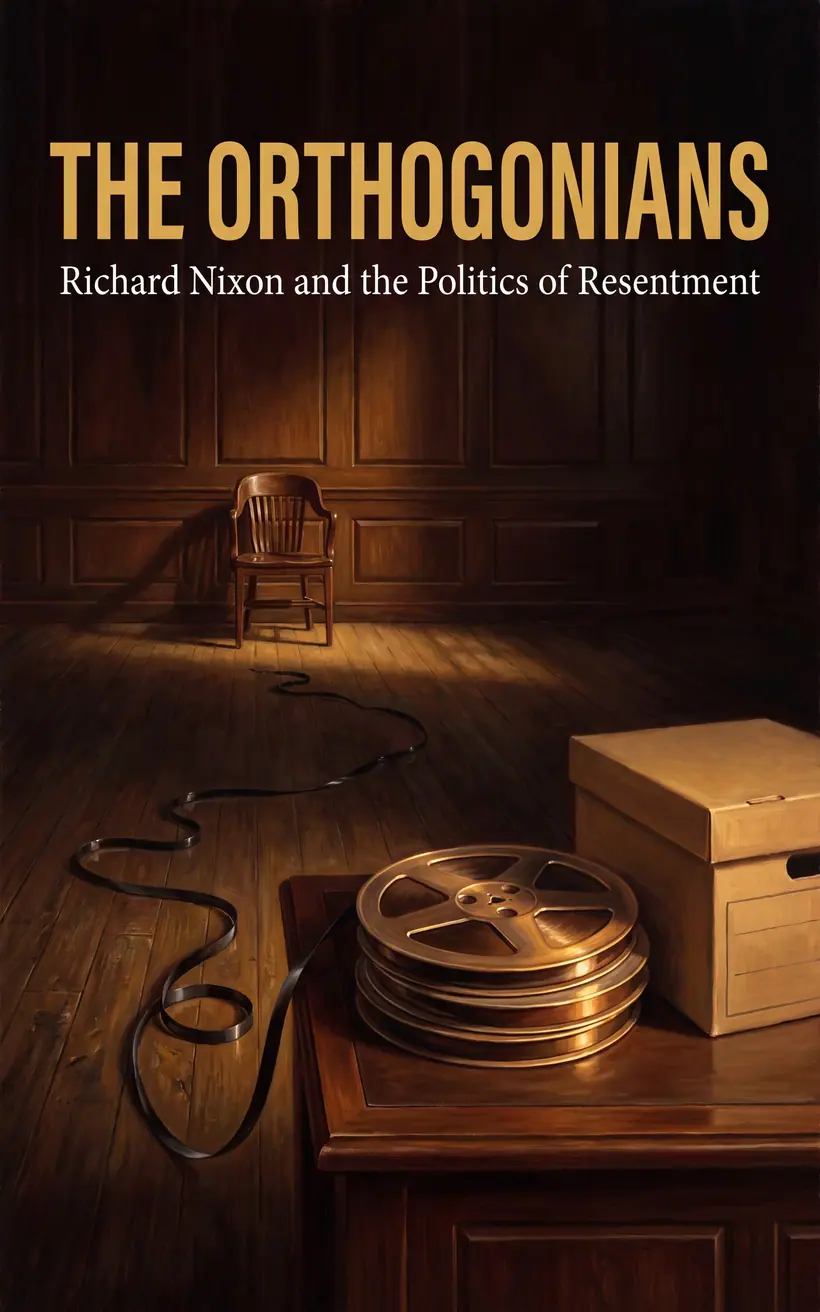
Richard Milhous Nixon. The title never carries the subject's name: it names one concrete thing out of the life — in this case The Orthogonians — and the name goes on the line underneath.
No. No subject, estate, label or foundation had approval over the text, and none paid for a word of it. The cost of that independence is that no new interviews were conducted for the book; it is built from the public record, and it says on the page where a scene is reconstructed rather than documented.
Yes — the whole opening chapter and the writer's foreword, free and in full, with no email address and no account. That is 4,356 words of the book.
About 71,000 words, 22 chapters, 230 pages in the paperback.