The Twelve Adopted Children
Paperback
Download link emailed the moment payment clears.
5,048 words · no email, no account
No. 255 · Music · Jazz
a biography of Billie Holiday
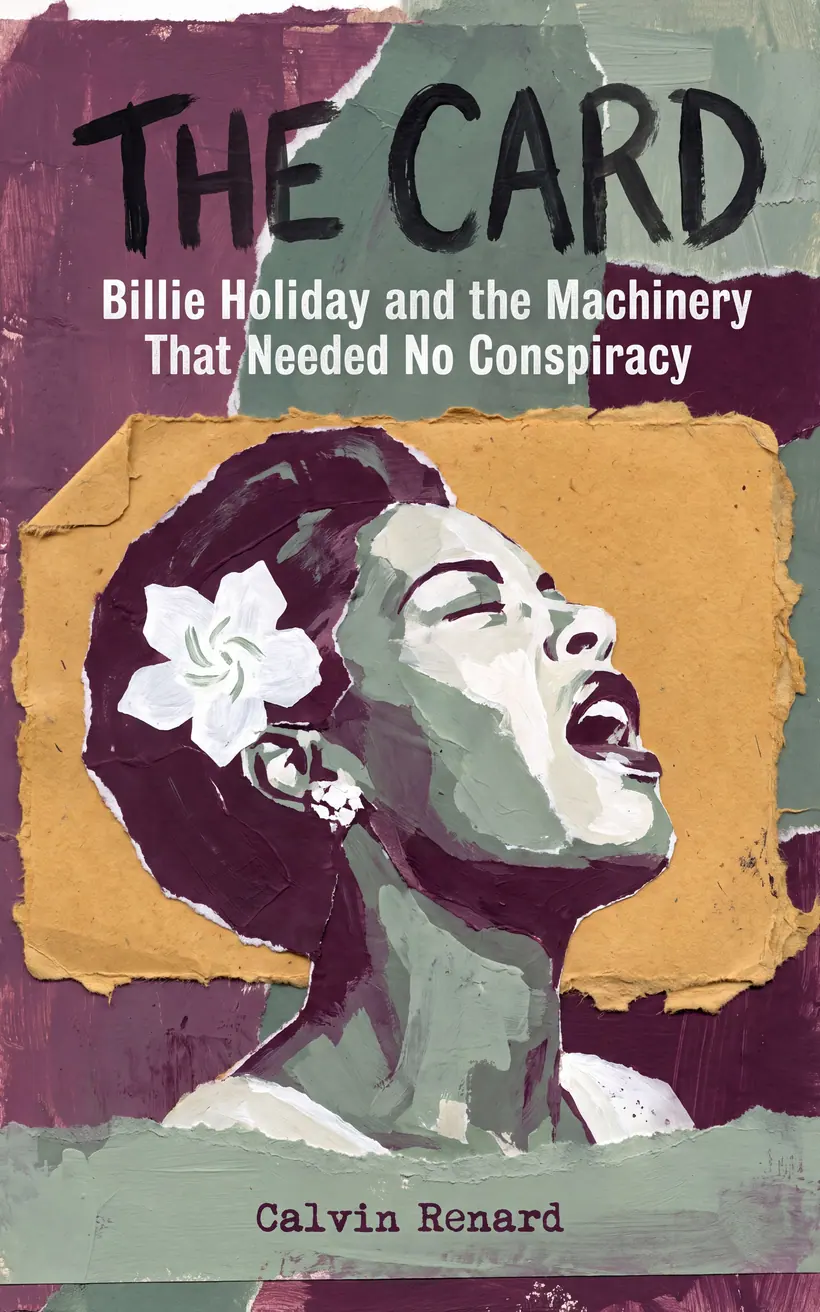
Everyone knows that Harry Anslinger's Federal Bureau of Narcotics hunted Billie Holiday for singing "Strange Fruit." That version was fixed in public memory by a few pages of Johann Hari's Chasing the Scream and by Lee Daniels' 2021 film, and it does not survive the record. Lewis Porter's four-part investigation of 2022 traced the claim back to a misread sentence in a 1947 DownBeat interview about a family-bill theater in Philadelphia. Her FBI file runs to about ten pages, all of it a single 1949 arrest in San Francisco of which she was acquitted. The older tabloid version, in which she destroyed herself, is no better. The demolition sits at Chapter 10 of twenty-one, not at the end, because everything after it has to fill the hole. Removing the conspiracy does not reduce the crime. It removes the excuse that the crime took a villain.
What fills the hole is a set of ordinary procedures. From 1940 to 1967 New York required anyone working a liquor-licensed room to be fingerprinted at police headquarters and issued a card, revocable without hearing, without appeal, and without written reason. Hers was taken while she was inside Alderson, and never restored. She came out on March 16, 1948, and eleven days later she filled Carnegie Hall. For the twelve years she had left she could fill that hall and could not work a single New York nightclub, and no known document says why. A Baltimore court had committed her at nine as a minor without proper care, then ordered her back at eleven in a proceeding in which she was the victim of a rape.
The music is not illustration. It is the evidence, often the only evidence, because each record was made on a known day in a known room by named people and can still be played. It carries the second argument: the instrument was destroyed between 1955 and 1959 and the musicianship was not. Where the record is contested the book prints the disagreement. Where it stops, it says so. No lyric is quoted anywhere.
The opening chapter is published in full — read it here.
Billie Holiday. The title never carries the subject's name: it names one concrete thing out of the life — in this case The Card — and the name goes on the line underneath.
No. No subject, estate, label or foundation had approval over the text, and none paid for a word of it. The cost of that independence is that no new interviews were conducted for the book; it is built from the public record, and it says on the page where a scene is reconstructed rather than documented.
Yes — the whole opening chapter and the writer's foreword, free and in full, with no email address and no account. That is 5,048 words of the book.
About 72,000 words, 21 chapters, 234 pages in the paperback.
Paperback
Paperback · Hardcover
Digital edition