The Hare Krishna Years
Paperback
Download link emailed the moment payment clears.
4,646 words · no email, no account
No. 257 · Music · Rock
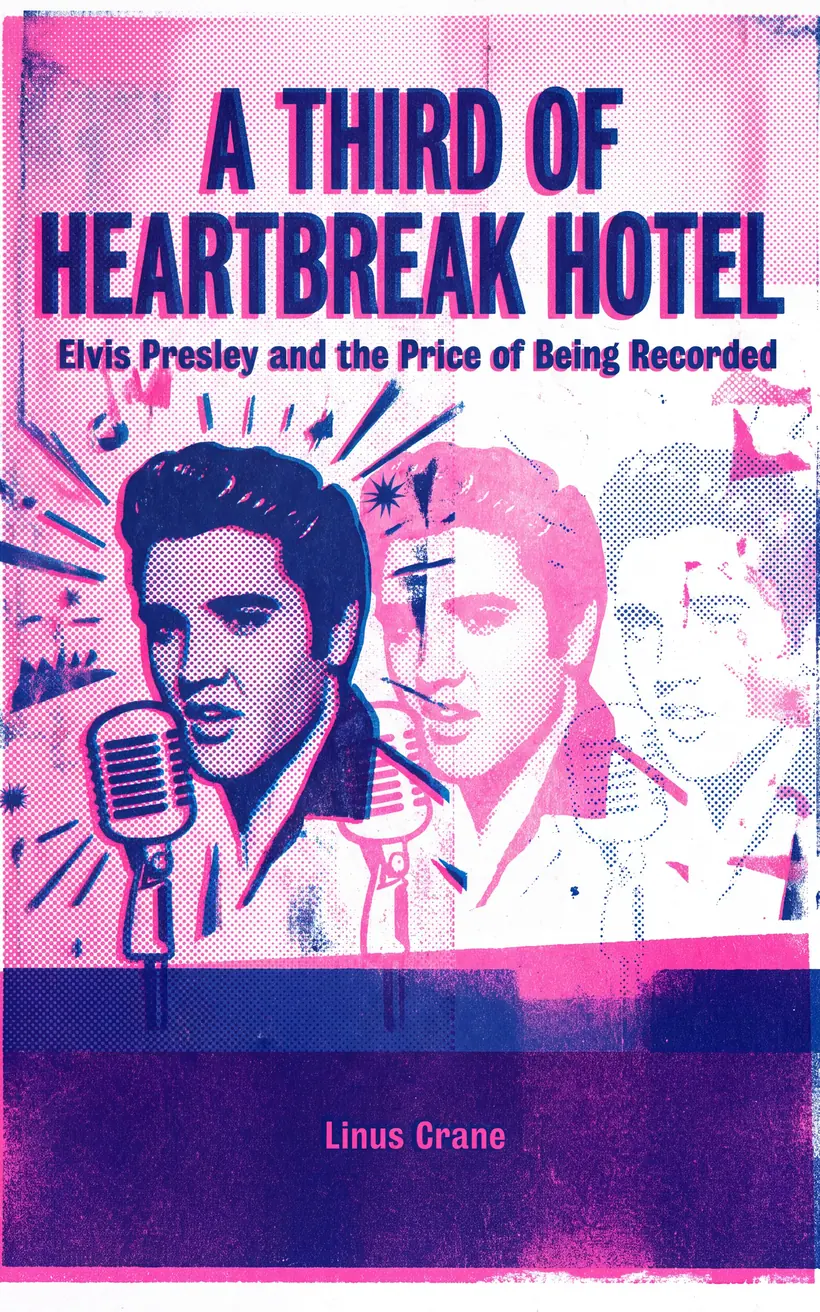
a biography of Elvis Aaron Presley
Elvis Presley did not own his own recordings. In March 1973 his manager sold RCA the entire pre-1973 master catalog for $5.4 million, and that manager had no legal identity of his own: Andreas Cornelis van Kuijk of Breda, who entered the United States illegally in May 1929 and never acquired one. He took twenty-five percent, then fifty from January 2, 1967 on a widening list of transactions. Two charges have been attached to Presley's name: that he took Black music, and that his manager took half of him. They have been argued separately for decades, and the separation is the mistake. The instrument in both is the same piece of paper. The appropriation that is actually documented is not a white boy singing a Black man's song; it is a publishing office, Hill and Range Songs, Inc., set up so that no song reached the microphone unless the organization held a piece of it. Mae Boren Axton gave the singer a third of the royalties on "Heartbreak Hotel" to make it his first RCA single. Arthur Crudup, who wrote the A-side of the first Sun record, watched a $60,000 settlement collapse in 1968 and died saying he was born poor and would die poor. Big Mama Thornton was paid one check for $500.
Six of the twenty-two chapters are over before RCA buys the contract, because the reader has to watch the signatures happen. The seven years of films get one chapter, because the collapse in the songs was a contract rather than a failure of taste. The book ends in the Probate Court of Shelby County, where a lawyer appointed to look after a thirteen-year-old girl read the contracts and called a fifty percent management share extortionate against an industry standard of fifteen to twenty. That is the only independent audit the arrangement ever received, and it came four years after the client was dead. No lyrics are quoted and no quotations invented. There is no decline in the instrument, only in what was handed to it.
The opening chapter is published in full — read it here.
Elvis Aaron Presley. The title never carries the subject's name: it names one concrete thing out of the life — in this case A Third of Heartbreak Hotel — and the name goes on the line underneath.
No. No subject, estate, label or foundation had approval over the text, and none paid for a word of it. The cost of that independence is that no new interviews were conducted for the book; it is built from the public record, and it says on the page where a scene is reconstructed rather than documented.
Yes — the whole opening chapter and the writer's foreword, free and in full, with no email address and no account. That is 4,646 words of the book.
About 75,500 words, 22 chapters, 244 pages in the paperback.