The Birkbeck Years
Paperback
Ships in 2 to 5 working days. Delivery quoted from your address at checkout.
4,139 words · no email, no account
No. 070 · Science · Science
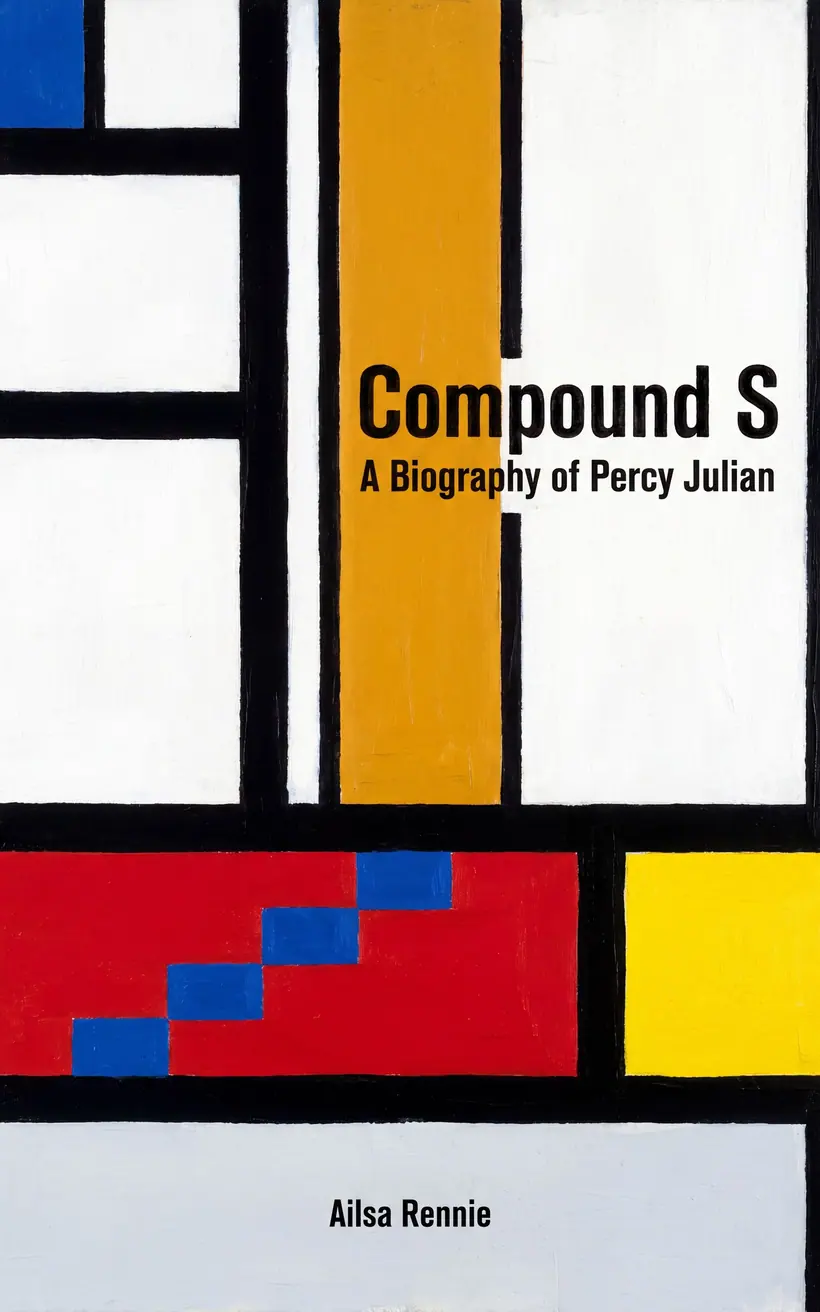
a biography of Percy Lavon Julian
He was born on April 11, 1899, in Montgomery, Alabama, six years after the Plessy v. Ferguson plaintiff Homer Plessy had been arrested in New Orleans, and the grandson of two formerly enslaved Alabama field hands. He graduated valedictorian of DePauw University's class of 1920 — a young Black man in a class otherwise entirely white — and the chemistry department recommended he abandon graduate study. He earned his Vienna Ph.D. anyway in 1931, returned to a country that would not give him a research-faculty appointment, and went to work for a Chicago paint company.
Ailsa Rennie's biography traces the arc through the Glidden Company soybean-protein laboratory where Percy Lavon Julian synthesised the physostigmine, cortisone, and progesterone precursors that built half of twentieth-century pharmacology, through the 1950 firebombing of his Oak Park house, through the founding of Julian Laboratories in 1953 and its 1961 sale for $2.3 million, and through the National Academy of Sciences election in 1973 — the second African-American member.
What emerges is a portrait of an organic chemist whose work the country kept downstream of his life and whose patents are still cited in the literature of two pharmaceutical industries.
The opening chapter is published in full — read it here.
The printed edition has no ISBN registered yet. It affects library and retail listing, not your order.
Percy Lavon Julian. The title never carries the subject's name: it names one concrete thing out of the life — in this case Compound S — and the name goes on the line underneath.
No. No subject, estate, label or foundation had approval over the text, and none paid for a word of it. The cost of that independence is that no new interviews were conducted for the book; it is built from the public record, and it says on the page where a scene is reconstructed rather than documented.
Yes — the whole opening chapter and the writer's foreword, free and in full, with no email address and no account. That is 4,139 words of the book.
About 60,000 words, 18 chapters, 201 pages in the paperback.
6 × 9 in, 60# uncoated cream, black ink, perfect-bound paperback, matte laminate. Every title in the series uses the same specification, so they line up on a shelf.
Paperback
Paperback · Hardcover
Paperback