The Birkbeck Years
Paperback
Ships in 2 to 5 working days. Delivery quoted from your address at checkout.
3,583 words · no email, no account
No. 078 · Science · Science
a biography of Alan Mathison Turing
A half-eaten apple on a bedside table in Wilmslow, June 1954. The man beside it is forty-one years old. He has imagined the computer before it existed, broken the cipher that shortened a war by years, and asked, in print, whether a machine might one day think. His country has thanked him with a criminal conviction and a course of synthetic oestrogen.
Theodore Pemberton's biography moves between the mind and the life, refusing to separate them. It begins at Sherborne, with a solitary boy and the friend, Christopher Morcom, whose early death would shape every question Turing afterwards asked about thought, matter, and what survives the body. It follows him to a Grantchester meadow in 1935, where the idea of a universal machine first took shape, and to the huts at Bletchley Park, where abstraction became the daily, exhausting work of saving lives.
After the war came Manchester, the first stored-program computer, the paper on machine intelligence, and a burglary reported to the wrong policeman.
Pemberton writes with the patience of a mathematician and the attention of a novelist. What emerges is a portrait of a man who built the century we are still living in, and a quieter, harder argument about the cost extracted from him — and about a question, posed in 1950, that the world has not yet answered.
The opening chapter is published in full — read it here.
The printed edition has no ISBN registered yet. It affects library and retail listing, not your order.
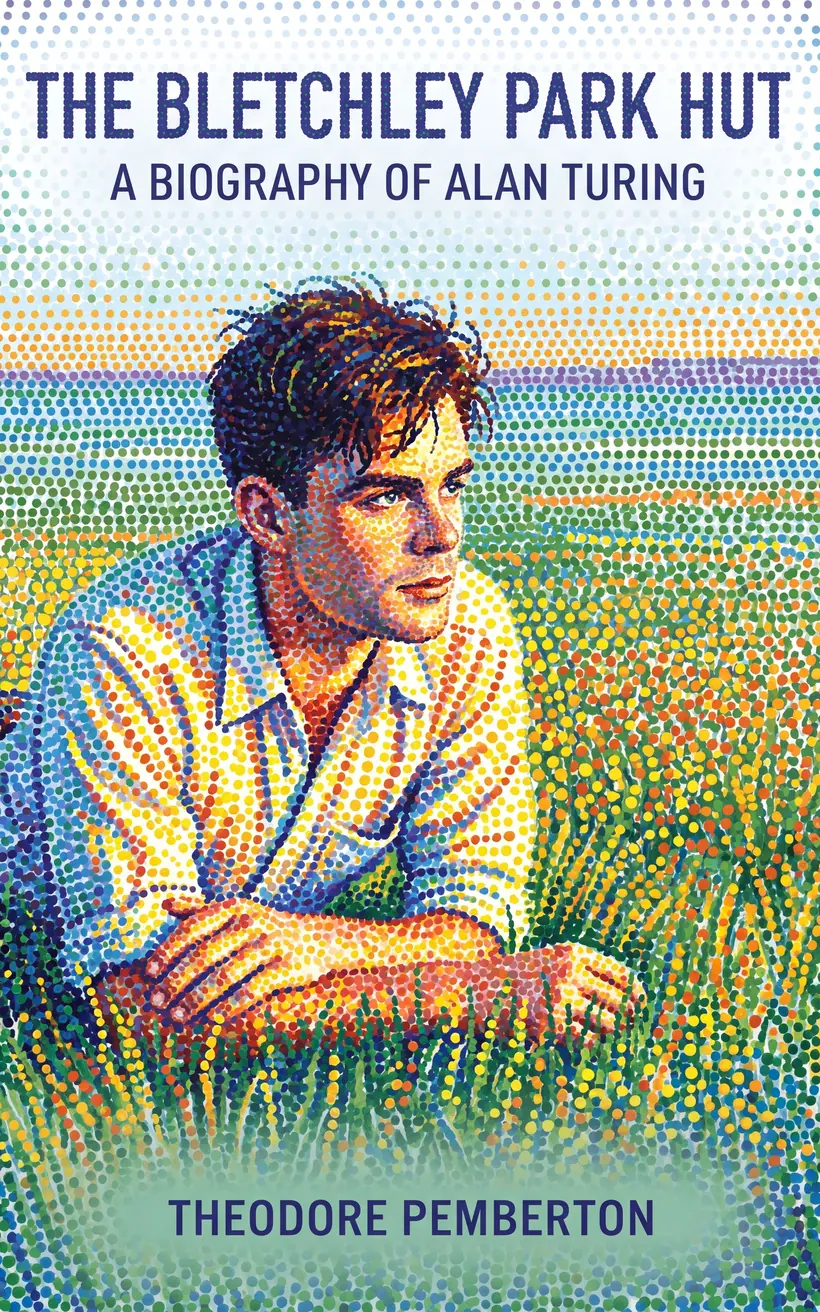
Alan Mathison Turing. The title never carries the subject's name: it names one concrete thing out of the life — in this case The Bletchley Park Hut — and the name goes on the line underneath.
No. No subject, estate, label or foundation had approval over the text, and none paid for a word of it. The cost of that independence is that no new interviews were conducted for the book; it is built from the public record, and it says on the page where a scene is reconstructed rather than documented.
Yes — the whole opening chapter and the writer's foreword, free and in full, with no email address and no account. That is 3,583 words of the book.
About 64,500 words, 18 chapters, 214 pages in the paperback.
6 × 9 in, 60# uncoated cream, black ink, perfect-bound paperback, matte laminate. Every title in the series uses the same specification, so they line up on a shelf.