Compound S
Paperback
Ships in 2 to 5 working days. Delivery quoted from your address at checkout.
3,573 words · no email, no account
No. 064 · Science · Science
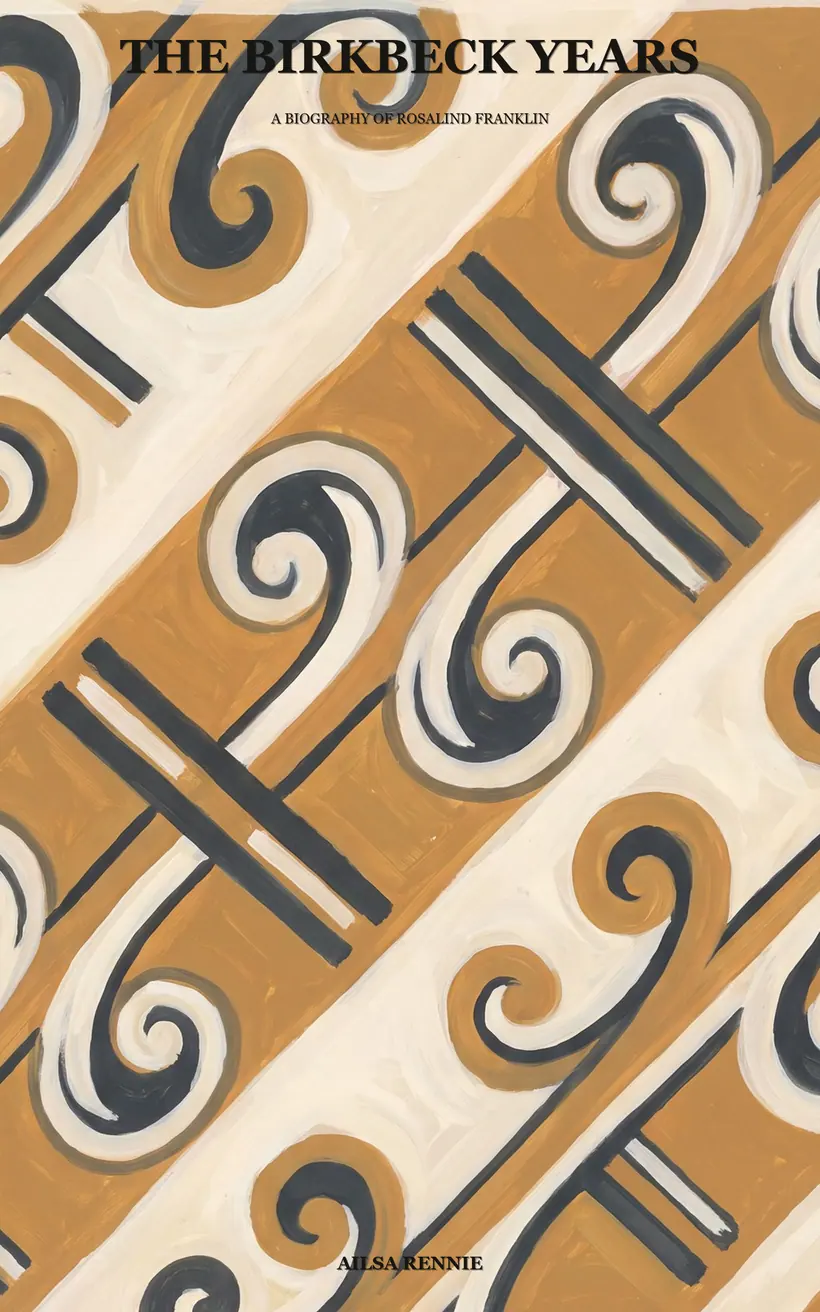
a biography of Rosalind Elsie Franklin
She was born on July 25, 1920, in London, the second of five children in a prominent Anglo-Jewish family. She read natural sciences at Newnham College, Cambridge, and earned her Cambridge doctorate at twenty-five for work on the porosity of coal. In 1951 she moved to John Randall's biophysics unit at King's College London. In May 1952 she made the X-ray diffraction image now known as Photo 51. In January 1953, without her knowledge, her colleague Maurice Wilkins showed Photo 51 to James Watson; Watson and Francis Crick used it to model the double-helix structure of DNA, which they published in Nature in April. Franklin died of ovarian cancer four years later, in 1958, at thirty-seven. Watson, Crick, and Wilkins shared the 1962 Nobel Prize.
Ailsa Rennie's biography traces the arc through the Notting Hill childhood and the St. Paul's Girls' School physical-sciences scholarship, the Cambridge years and the Paris BCURA post-doctoral work, the King's College Birkbeck years, the Photo 51 image, the long later collaboration with Aaron Klug on tobacco-mosaic virus that the field has come to value as Franklin's most important work, and the 1958 cancer diagnosis and death.
What emerges is a portrait of an Anglo-Jewish crystallographer whose Photo 51 the Nobel committee could not consider because she was dead and whose work the post-1960s history of science has spent sixty years writing back into the record.
The opening chapter is published in full — read it here.
The printed edition has no ISBN registered yet. It affects library and retail listing, not your order.
Rosalind Elsie Franklin. The title never carries the subject's name: it names one concrete thing out of the life — in this case The Birkbeck Years — and the name goes on the line underneath.
No. No subject, estate, label or foundation had approval over the text, and none paid for a word of it. The cost of that independence is that no new interviews were conducted for the book; it is built from the public record, and it says on the page where a scene is reconstructed rather than documented.
Yes — the whole opening chapter and the writer's foreword, free and in full, with no email address and no account. That is 3,573 words of the book.
About 63,500 words, 19 chapters, 203 pages in the paperback.
6 × 9 in, 60# uncoated cream, black ink, perfect-bound paperback, matte laminate. Every title in the series uses the same specification, so they line up on a shelf.