The Annina Nosei Gallery
Paperback · Hardcover
Ships in 2 to 5 working days. Delivery quoted from your address at checkout.
3,596 words · no email, no account
No. 075 · Art & Design · Visual Art
a biography of Keith Allen Haring
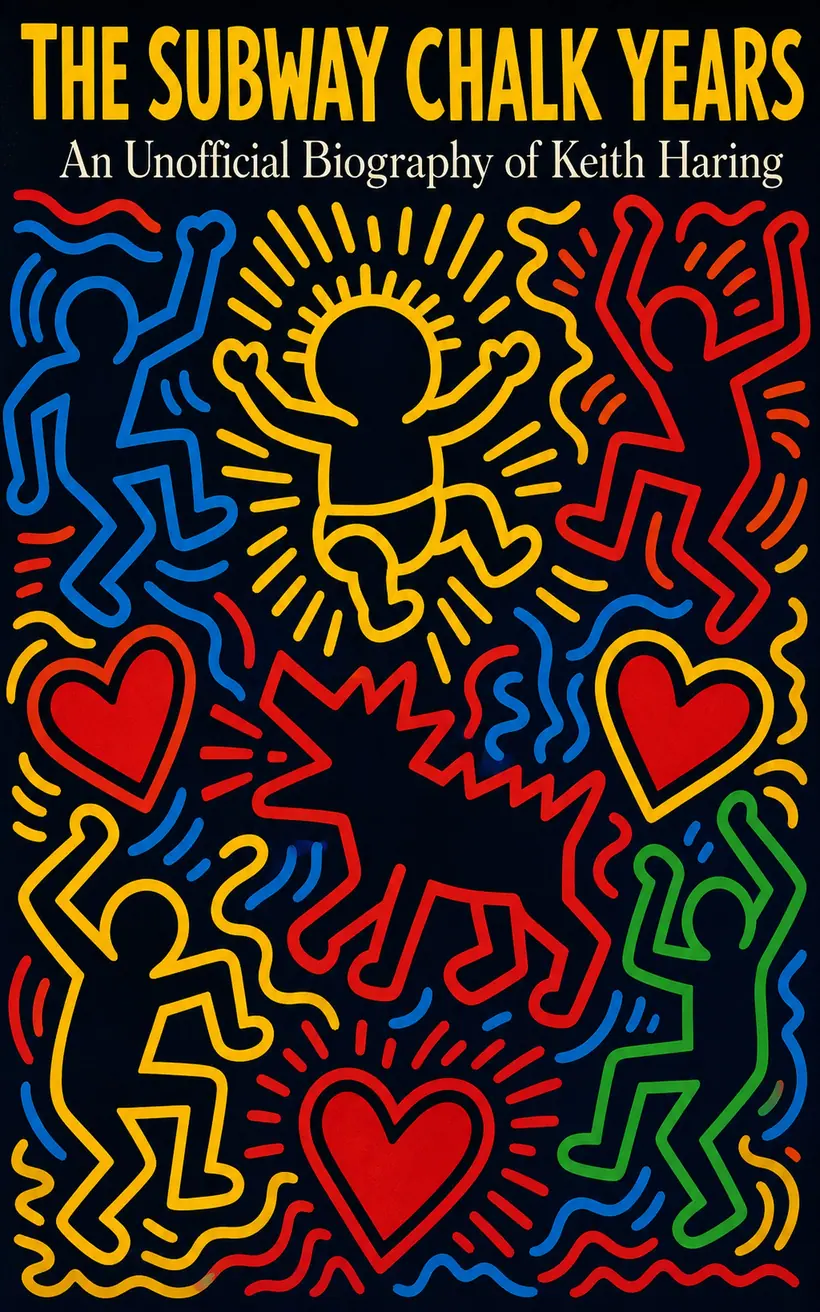
He was born on May 4, 1958, in Reading, Pennsylvania, the son of an amateur cartoonist and a homemaker, and grew up in Kutztown drawing Disney characters at the kitchen table. He moved to New York in 1978 for the School of Visual Arts and spent the next decade drawing in white chalk on the black paper covering unrented subway-station advertisement frames — five thousand subway drawings between 1980 and 1985, by his own count — that built the visual vocabulary the world now knows as the radiant baby, the barking dog, the dancing figures. He died of AIDS-related complications at his Manhattan loft on February 16, 1990, at thirty-one.
Sofía Estrada's biography opens earlier and follows the arc with the documentary care the subject demands. The book traces the Kutztown childhood and the bisexual coming-of-age, the SVA years and the downtown New York scene with Basquiat and Madonna and Klaus Nomi and Grace Jones, the 1986 Pop Shop opening on Lafayette Street that made the Haring image affordable to the people who saw it in the subway, the long Kutztown trips and the Children's Village mural work, the 1988 AIDS diagnosis and the Keith Haring Foundation established the same year, and the morning of February 16, 1990.
What emerges is a portrait of the Pennsylvania-born New York graffiti artist whose subway-drawing decade built the most democratically distributed body of imagery in late-twentieth-century American visual art.
The opening chapter is published in full — read it here.
The printed edition has no ISBN registered yet. It affects library and retail listing, not your order.
Keith Allen Haring. The title never carries the subject's name: it names one concrete thing out of the life — in this case The Subway Chalk Years — and the name goes on the line underneath.
No. No subject, estate, label or foundation had approval over the text, and none paid for a word of it. The cost of that independence is that no new interviews were conducted for the book; it is built from the public record, and it says on the page where a scene is reconstructed rather than documented.
Yes — the whole opening chapter and the writer's foreword, free and in full, with no email address and no account. That is 3,596 words of the book.
About 60,500 words, 18 chapters, 188 pages in the paperback.
6 × 9 in, 60# uncoated cream, black ink, perfect-bound paperback, matte laminate. Every title in the series uses the same specification, so they line up on a shelf.
Paperback · Hardcover
Paperback · Hardcover
Paperback