The Bedroll
Paperback
Ships in 2 to 5 working days. Delivery quoted from your address at checkout.
3,887 words · no email, no account
No. 076 · Power & Politics · History
a biography of François-Dominique Toussaint Louverture
He was born around 1743, an enslaved man on the Bréda plantation in the French colony of Saint-Domingue, the most profitable sugar colony in the world. He was granted his freedom around 1776, became a modest property owner with enslaved labour of his own, and was fifty when the August 1791 slave uprising began. He led the formerly enslaved through the Spanish-allied years and the 1794 French abolition decree, became governor general of Saint-Domingue in 1801, and was captured by Napoleon Bonaparte's expeditionary force on June 7, 1802, deported in chains across the Atlantic, and died of pneumonia in the Fort de Joux dungeon in the Jura mountains of France on April 7, 1803. He never saw the independence of Haiti, declared by Jean-Jacques Dessalines nine months after his death.
Edward Forrester's biography traces the arc through the Bréda plantation childhood and the long apprenticeship as a coachman, the 1791 Bois Caïman ceremony, the long Spanish alliance and the 1794 French defection, the unification of the colony in 1801 and the constitution he promulgated that summer, the February 1802 Leclerc expedition, the June 1802 betrayal at Le Gonaïves and the Atlantic crossing in irons, and the death in the high cold of the Fort de Joux dungeon.
What emerges is a portrait of the formerly enslaved general who led the only successful slave revolution in modern history — and the French Republic that, in the end, killed him for it.
The opening chapter is published in full — read it here.
The printed edition has no ISBN registered yet. It affects library and retail listing, not your order.
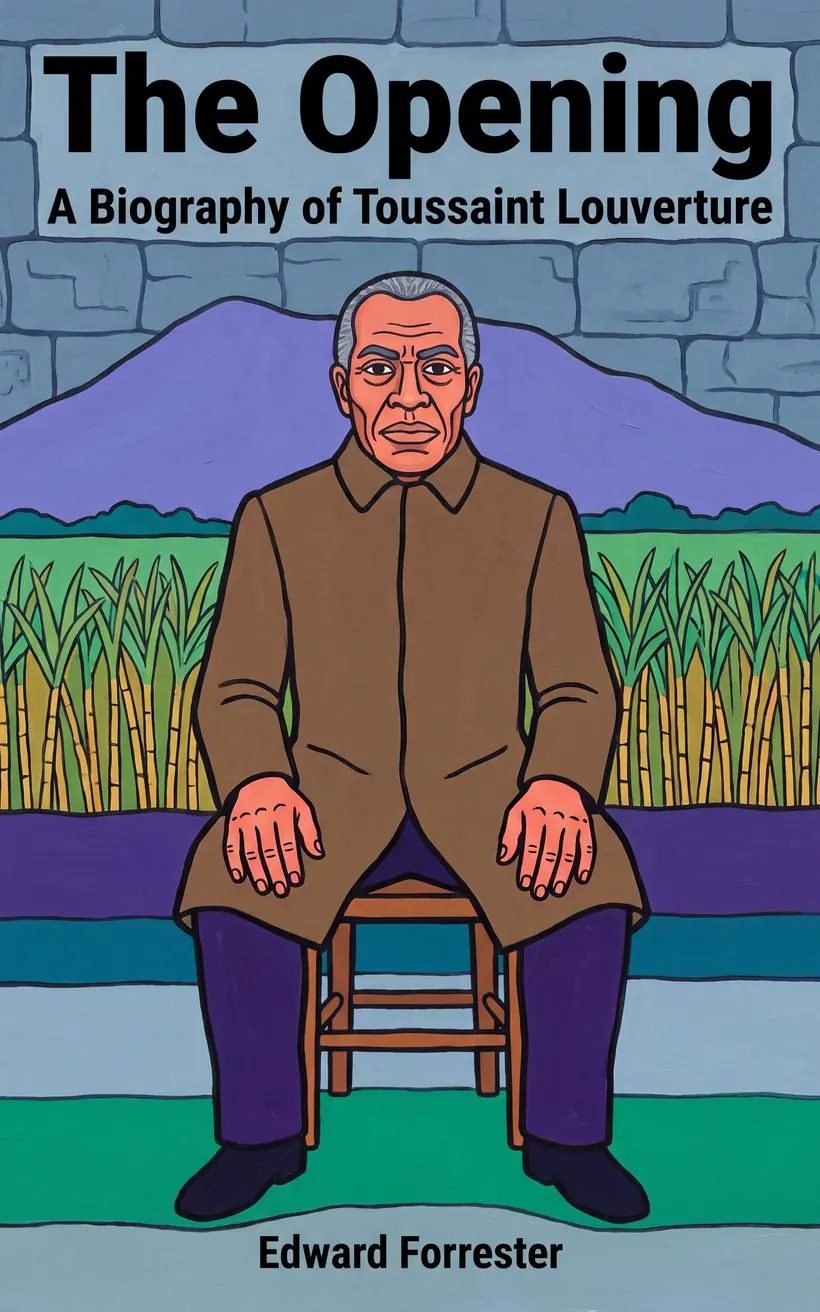
François-Dominique Toussaint Louverture. The title never carries the subject's name: it names one concrete thing out of the life — in this case The Opening — and the name goes on the line underneath.
No. No subject, estate, label or foundation had approval over the text, and none paid for a word of it. The cost of that independence is that no new interviews were conducted for the book; it is built from the public record, and it says on the page where a scene is reconstructed rather than documented.
Yes — the whole opening chapter and the writer's foreword, free and in full, with no email address and no account. That is 3,887 words of the book.
About 60,000 words, 18 chapters, 198 pages in the paperback.
6 × 9 in, 60# uncoated cream, black ink, perfect-bound paperback, matte laminate. Every title in the series uses the same specification, so they line up on a shelf.