The Birkbeck Years
Paperback
Ships in 2 to 5 working days. Delivery quoted from your address at checkout.
3,981 words · no email, no account
No. 100 · Science · Science
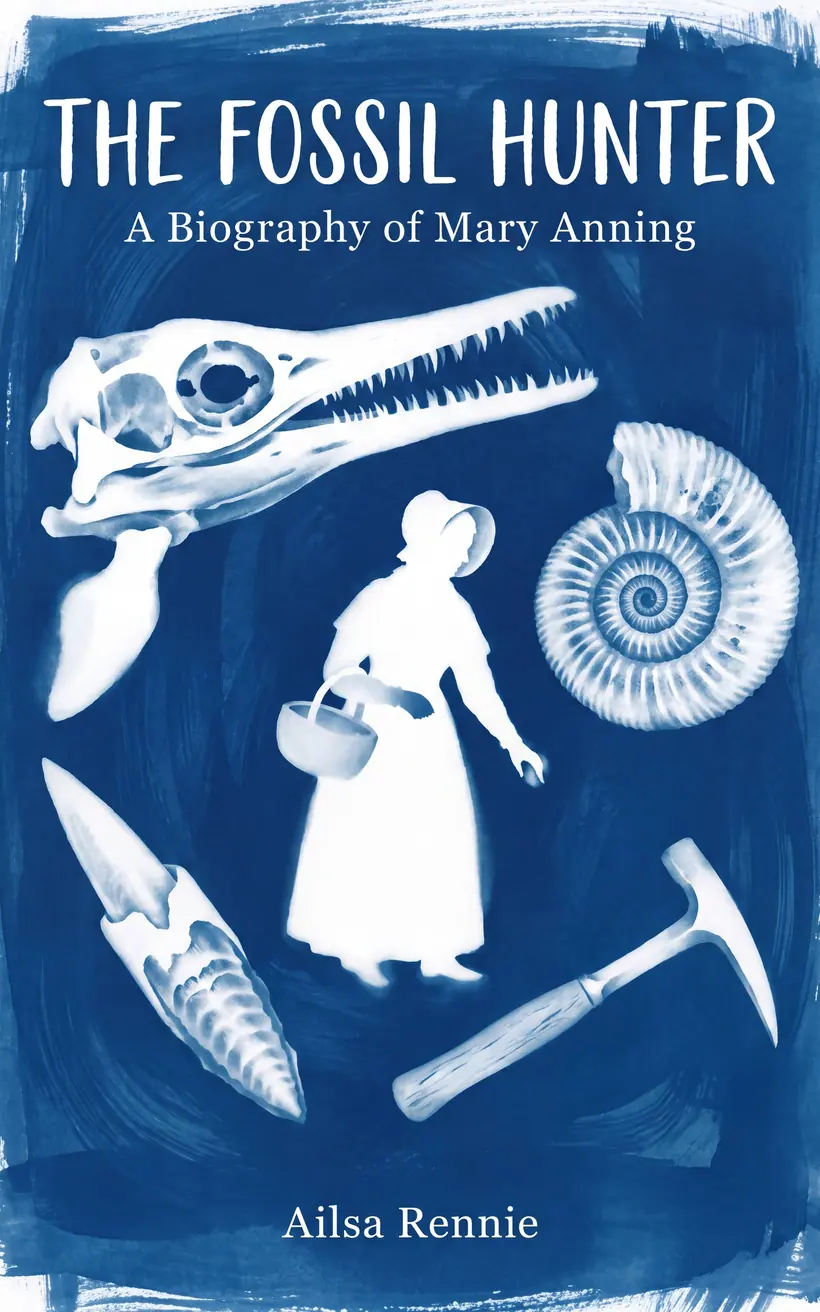
a biography of Mary Anning
Mary Anning died of breast cancer in 1847, living out her last years on an annuity raised for her by the Geological Society. The same Society would not admit her. Its members had been writing to her for years.
Everything that made that ending strange happened in the Blue Lias cliffs of the Dorset coast. Anning was born on May 21, 1799, in Lyme Regis, the daughter of a cabinetmaker and curio-seller named Richard Anning, and the second child of ten to carry the name Mary; eight of her siblings had died young. At twelve, working with her brother Joseph, she excavated the first complete ichthyosaur skeleton out of those cliffs. Before she was finished she had also found the first complete plesiosaur, the first British pterosaur, and the squid ink sacs that proved fossil cephalopods had existed.
Ailsa Rennie's biography opens earlier still, with the lightning strike of August 1800 that killed the woman holding the infant Mary in her arms and left the child alive. From there it follows the long working partnership with Joseph, the correspondence with William Conybeare and Henry De la Beche of the Geological Society, the 1839 fall from the cliffs that crushed her hand, and the annuity of the final years. The correspondence is the spine of the book: years of letters between a collector working a stretch of English shoreline and the London society that would not have her as a member.
What emerges is a portrait of a working-class Dorset woman whose finds in the cliffs of her village remade the entire scientific picture of deep time — and whose name the science she founded was a hundred and fifty years late in writing into the record.
The opening chapter is published in full — read it here.
The printed edition has no ISBN registered yet. It affects library and retail listing, not your order.
Mary Anning. The title never carries the subject's name: it names one concrete thing out of the life — in this case The Fossil Hunter — and the name goes on the line underneath.
No. No subject, estate, label or foundation had approval over the text, and none paid for a word of it. The cost of that independence is that no new interviews were conducted for the book; it is built from the public record, and it says on the page where a scene is reconstructed rather than documented.
Yes — the whole opening chapter and the writer's foreword, free and in full, with no email address and no account. That is 3,981 words of the book.
About 64,000 words, 19 chapters, 203 pages in the paperback.
6 × 9 in, 60# uncoated cream, black ink, perfect-bound paperback, matte laminate. Every title in the series uses the same specification, so they line up on a shelf.