The Thirteen-Year Conservatorship
Paperback · Hardcover
Download link emailed the moment payment clears.
3,530 words · no email, no account
No. 121 · Music · Pop
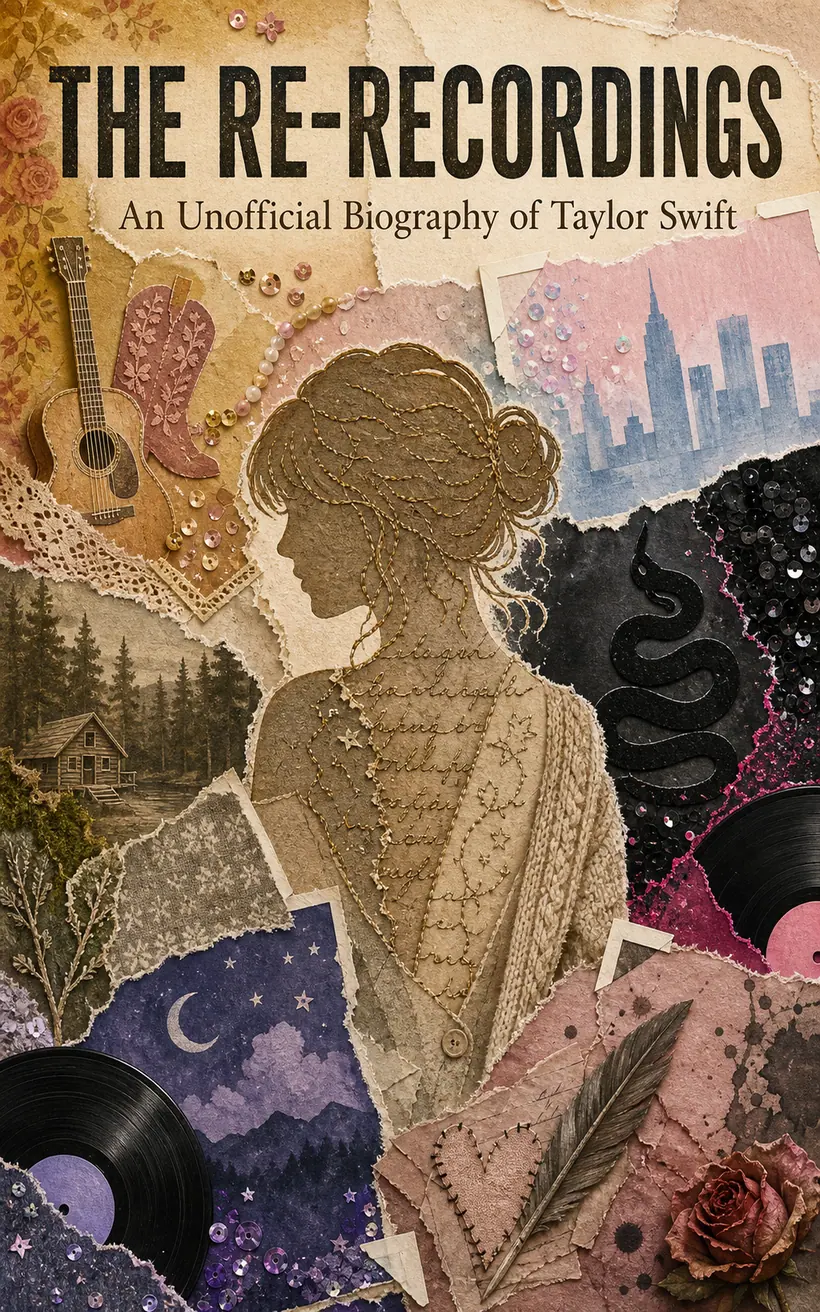
a biography of Taylor Alison Swift
The received version is a list of albums and one enormous number. Taylor Swift in 2006, then Fearless, Speak Now, Red, 1989, reputation, Lover, folklore and evermore, Midnights, and The Tortured Poets Department in 2024. Then the Eras Tour of 2023 and 2024: $2.077 billion across 149 shows, the highest-grossing concert tour in history.
That version leaves out what the career has mostly been about. In 2019 Scooter Braun acquired her masters, and her answer was to make the records again, four re-recordings between 2021 and 2023, released as Taylor's Version. It was not the first time she had gone at the terms of the business rather than the songs. Speak Now carries her name as its only writer. She pulled her catalog off Spotify for years. She published an open letter to Apple Music in 2015. Each of those was a decision about who controls the work.
Keisha Morgan's biography starts in West Reading, Pennsylvania, where Swift was born on December 13, 1989, the elder of two children of a Merrill Lynch financial advisor and a homemaker, and in Hendersonville, Tennessee, where the family moved when she was fourteen so she could pursue country music. She signed with Big Machine Records at fifteen. The book covers the long Scott Borchetta years, the pop pivot of 1989 in 2014 and the bridge burned with country radio, the 2016 leak of the Kim Kardashian and Kanye West phone call about Famous, reputation in 2018 and the long relationship with Joe Alwyn, the pandemic sister-albums folklore and evermore, the Eras Tour, and The Tortured Poets Department and the engagement to Travis Kelce.
What emerges is a portrait of a songwriter who changed what an American pop catalog can be, and whose tour rewrote what the concert-touring business could earn.
The opening chapter is published in full — read it here.
Taylor Alison Swift. The title never carries the subject's name: it names one concrete thing out of the life — in this case The Re-Recordings — and the name goes on the line underneath.
No. No subject, estate, label or foundation had approval over the text, and none paid for a word of it. The cost of that independence is that no new interviews were conducted for the book; it is built from the public record, and it says on the page where a scene is reconstructed rather than documented.
Yes — the whole opening chapter and the writer's foreword, free and in full, with no email address and no account. That is 3,530 words of the book.
About 55,500 words, 18 chapters, 184 pages in the paperback.
Paperback · Hardcover
Digital edition
Paperback