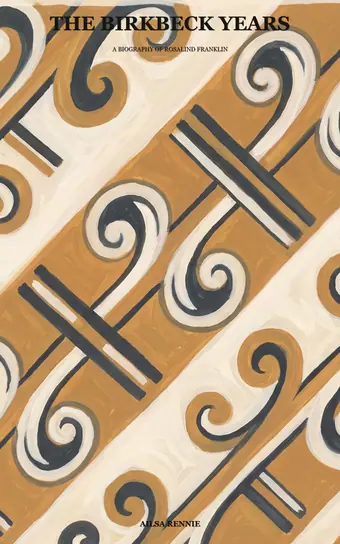
The Birkbeck Years
Paperback
Ships in 2 to 5 working days. Delivery quoted from your address at checkout.
2,264 words · no email, no account
No. 197 · Science · Science
a biography of Maria Salomea Skłodowska-Curie
She was born Maria Salomea Skłodowska on November 7, 1867, in Warsaw, the youngest of five children of a physics teacher and a girls'-school principal. She worked as a governess in the Russian-partitioned countryside for five years before saving enough to enroll at the Sorbonne in November 1891. She studied physics and mathematics with Henri Becquerel, married Pierre Curie in 1895, and over the next eight years isolated the elements polonium and radium from pitchblende ore — work that won her, with Pierre and Becquerel, the 1903 Nobel Prize in Physics. She was the first woman to win a Nobel Prize. She won the 1911 Nobel Prize in Chemistry — alone, for the isolation of pure radium — making her the first person to win Nobel Prizes in two sciences. She died on July 4, 1934, of aplastic anaemia from her three decades of unshielded radioactive-element handling, at sixty-six.
Ailsa Rennie's biography traces the arc through the Warsaw governess years and the 1891 Paris arrival, the Sorbonne years and the Pierre Curie marriage, the long pitchblende-shed years that produced the radium, the 1903 Physics Nobel, the long École Polytechnique laboratory work, the 1906 horse-cart death of Pierre Curie on a Paris street, the long Paul Langevin affair that became a public scandal in 1911, the 1911 Chemistry Nobel and the Petit Journal ostracism, the First World War radiology-truck campaign, the long Radium Institute construction in Paris, the long international fundraising tours, and the 1934 death at the Sancellemoz Sanatorium in Passy.
What emerges is a portrait of the Polish-French physicist whose two-Nobel career remade the practical and political infrastructure of modern science — and whose body the radioactivity she had isolated finally took at sixty-six.
The opening chapter is published in full — read it here.
The printed edition has no ISBN registered yet. It affects library and retail listing, not your order.
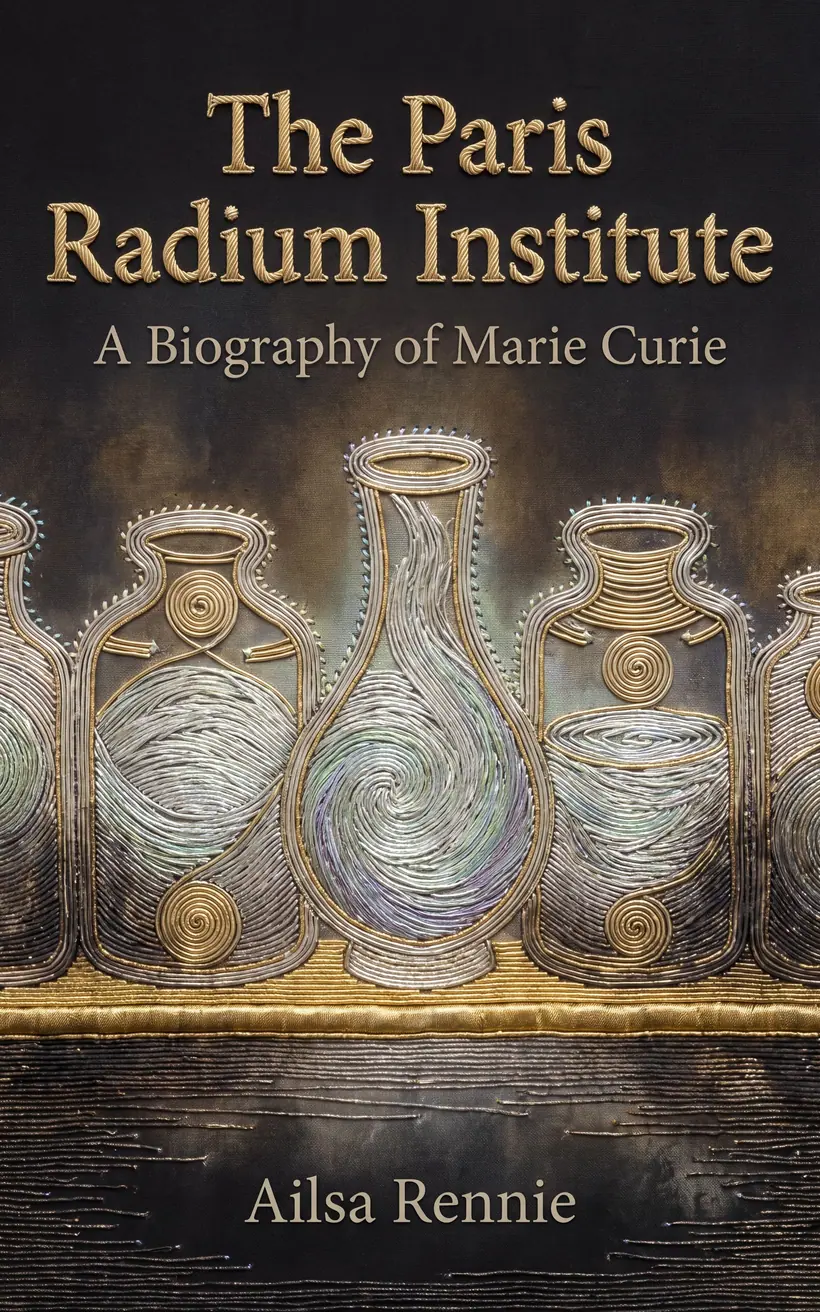
Maria Salomea Skłodowska-Curie. The title never carries the subject's name: it names one concrete thing out of the life — in this case The Paris Radium Institute — and the name goes on the line underneath.
No. No subject, estate, label or foundation had approval over the text, and none paid for a word of it. The cost of that independence is that no new interviews were conducted for the book; it is built from the public record, and it says on the page where a scene is reconstructed rather than documented.
Yes — the whole opening chapter and the writer's foreword, free and in full, with no email address and no account. That is 2,264 words of the book.
About 60,000 words, 19 chapters, 220 pages in the paperback.
6 × 9 in, 60# uncoated cream, black ink, perfect-bound paperback, matte laminate. Every title in the series uses the same specification, so they line up on a shelf.