The Annina Nosei Gallery
Paperback · Hardcover
Ships in 2 to 5 working days. Delivery quoted from your address at checkout.
3,239 words · no email, no account
No. 219 · Art & Design · Visual Art
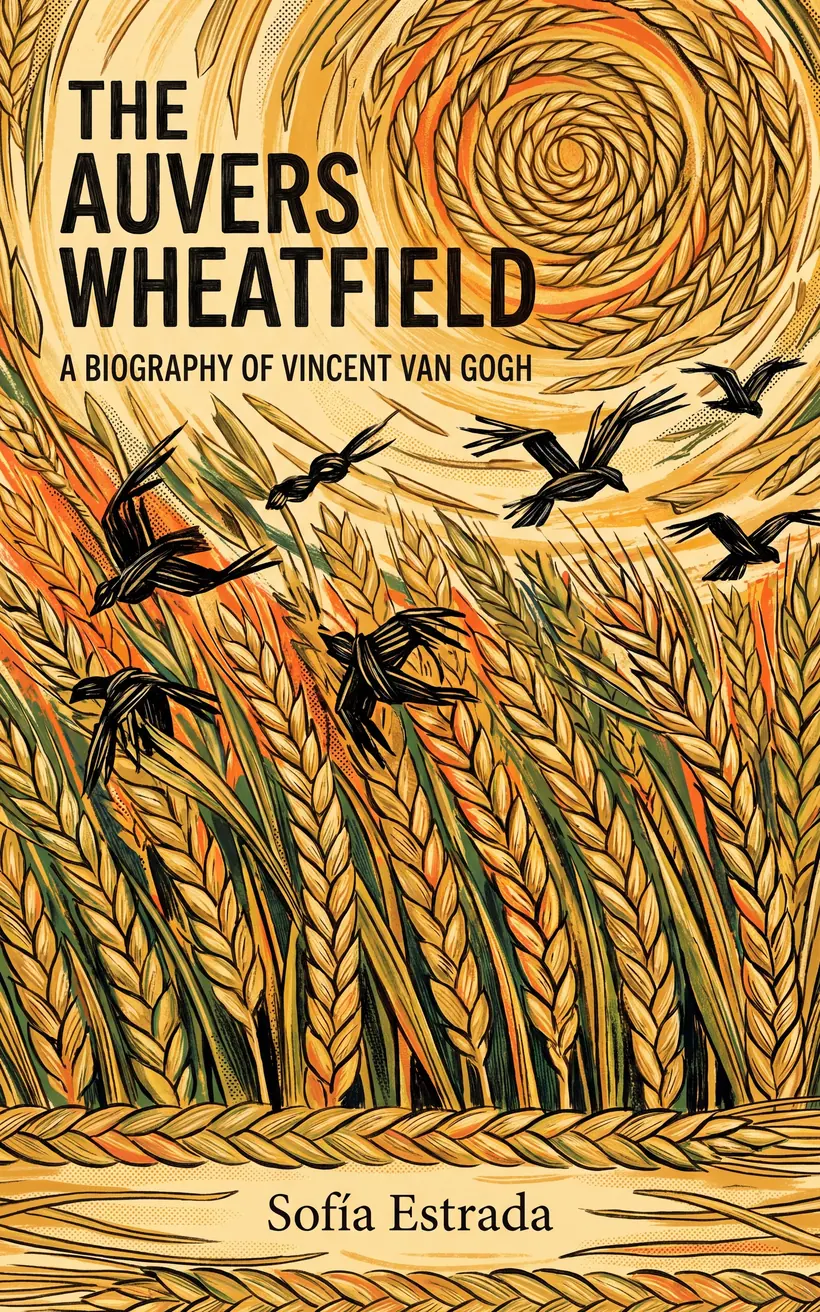
a biography of Vincent Willem van Gogh
July 27, 1890, a wheatfield outside the village of Auvers-sur-Oise, twenty-five kilometres north of Paris. Vincent Willem van Gogh, thirty-seven, the Dutch painter who has produced approximately two thousand works in the previous ten years and sold one, shoots himself in the chest with a revolver. He walks back to the Ravoux Inn in the village. He dies in his bed in his attic room two days later, with his brother Theo beside him. His last words: "La tristesse durera toujours." The sadness will last forever.
Sofía Estrada's biography opens earlier — in Zundert, the Brabant village where Vincent was born in 1853, the eldest of six children of a Dutch Reformed pastor — and follows the arc through the long Goupil & Cie art-dealer apprenticeship, the Borinage Belgian-coalfield missionary year, the 1881 turn to painting at twenty-seven, the long Hague and Drenthe and Nuenen studio years and The Potato Eaters, the 1886 move to Paris and Theo's Cormon studio, the long winter of friendship with Toulouse-Lautrec and Gauguin, the 1888 move to Arles and the Yellow House and the Sunflowers, the December 1888 ear incident after Gauguin's arrival, the Saint-Rémy-de-Provence asylum year of 1889 and the Starry Night, the May 1890 move to Auvers-sur-Oise under Dr. Gachet, and the July 27 wheatfield.
What emerges is a portrait of the Dutch painter whose ten years of production — sold once, kept by his brother's family until the wife Johanna Bonger turned the catalog into the modern record — built the visual grammar of post-impressionism.
The opening chapter is published in full — read it here.
The printed edition has no ISBN registered yet. It affects library and retail listing, not your order.
Vincent Willem van Gogh. The title never carries the subject's name: it names one concrete thing out of the life — in this case The Auvers Wheatfield — and the name goes on the line underneath.
No. No subject, estate, label or foundation had approval over the text, and none paid for a word of it. The cost of that independence is that no new interviews were conducted for the book; it is built from the public record, and it says on the page where a scene is reconstructed rather than documented.
Yes — the whole opening chapter and the writer's foreword, free and in full, with no email address and no account. That is 3,239 words of the book.
About 60,000 words, 18 chapters, 157 pages in the paperback.
6 × 9 in, 60# uncoated cream, black ink, perfect-bound paperback, matte laminate. Every title in the series uses the same specification, so they line up on a shelf.
Yes: mental illness; suicide. They are listed before you buy rather than discovered afterwards. The material is handled as evidence, not as spectacle.
Listed before you buy, not after.
Paperback · Hardcover
Paperback · Hardcover
Paperback