The Castro Camera Storefront
Paperback · Hardcover
Download link emailed the moment payment clears.
4,059 words · no email, no account
No. 240 · Power & Politics · American Politics
a biography of Theodore Roosevelt Jr.
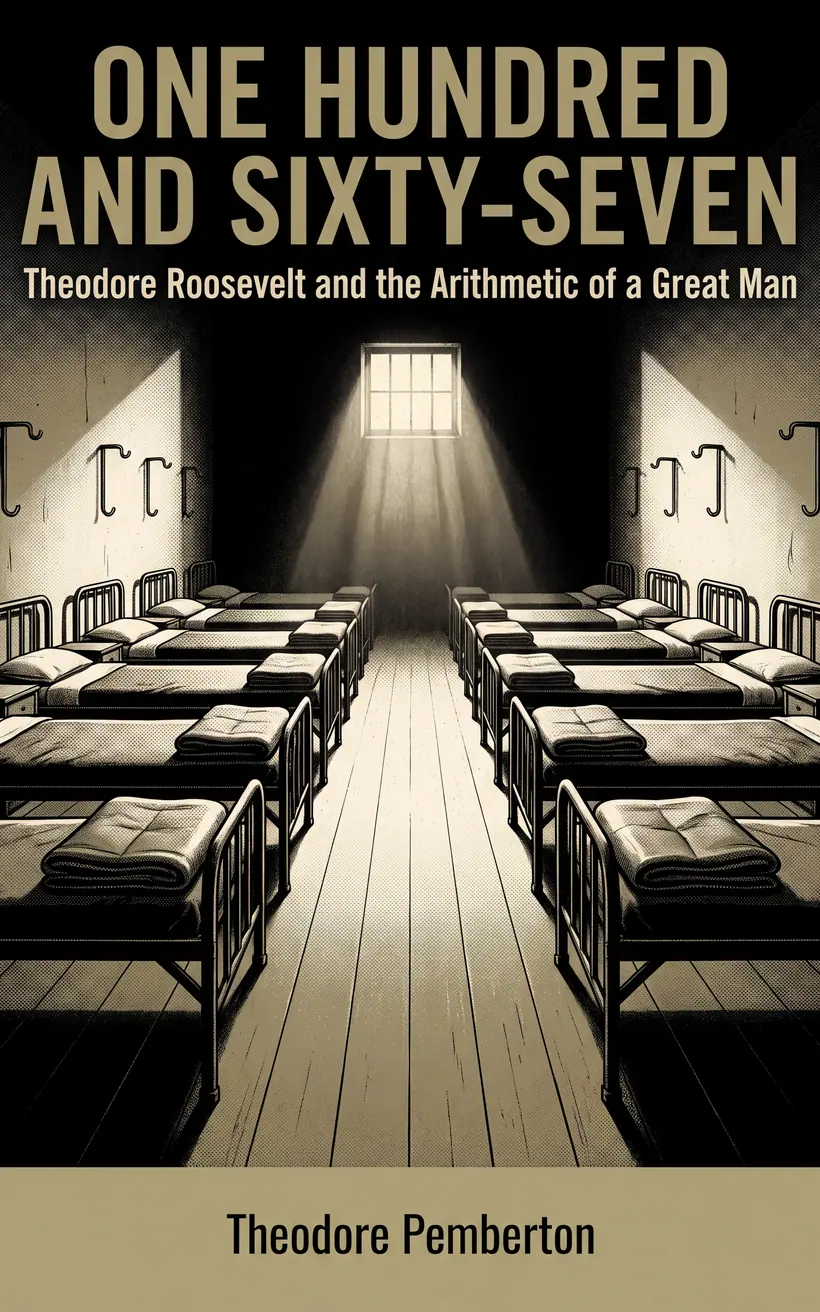
Theodore Roosevelt comes down to us as the asthmatic boy who built himself a body, ran uphill at Kettle Hill, took the 1906 Nobel Peace Prize, and protected some 230 million acres of American land. All of that is true. In August 1906 he also ordered 167 soldiers discharged from the Army without honor, without a trial, without a court-martial, without a single man charged.
Shots had been fired through the streets of Brownsville, Texas, backing on the wall of Fort Brown. No shooter was ever identified. They were the First Battalion of the Twenty-Fifth Infantry, a Black regular regiment whose own white officers testified under oath that they had been in barracks the whole time. The announcement was held until the polls closed in that November's elections. Roosevelt conceded a court of inquiry two days before he left office and never retracted a syllable of the judgment. The Army reversed it in September 1972: honorable discharges, no back pay. In 1973 Congress voted $25,000 to Dorsie Willis, one of two men still alive to be told, who had spent sixty-seven years shining shoes in a Minneapolis barbershop.
Around that number the book builds the whole life in twenty-two chapters, and refuses to let the adventure eat the accounting. The 1884 pocket diary with its cancelling black X. The Ninth and Tenth Cavalry, thanked in public in 1898 and written out of the charge in a magazine serial the following spring, answered by Sergeant Presley Holliday in a letter that waited most of a century to reach the record. Panama, the trusts, the conservation record held in one chapter against the room at Sagamore Hill full of heads. Quentin, shot down over France in July 1918.
The governing question is what happens to a country when the man running it has spent his life proving his body will not fail him again. The answer ends in a crate: the equestrian bronze cut from its pedestal in January 2022, absent from the library that opened in the Badlands in July 2026.
The opening chapter is published in full — read it here.
Theodore Roosevelt Jr.. The title never carries the subject's name: it names one concrete thing out of the life — in this case One Hundred and Sixty-Seven — and the name goes on the line underneath.
No. No subject, estate, label or foundation had approval over the text, and none paid for a word of it. The cost of that independence is that no new interviews were conducted for the book; it is built from the public record, and it says on the page where a scene is reconstructed rather than documented.
Yes — the whole opening chapter and the writer's foreword, free and in full, with no email address and no account. That is 4,059 words of the book.
About 61,000 words, 22 chapters, 200 pages in the paperback.