
The Thirteen-Year Conservatorship
Paperback · Hardcover
Download link emailed the moment payment clears.
4,559 words · no email, no account
No. 260 · Music · Pop
a biography of Francis Albert Sinatra
A flat in Hoboken, a bad delivery, forceps that perforated the newborn's left eardrum. In 1943 an Army physician examining Frank Sinatra for induction found that ear and classified him 4-F. That is the public reason he did not go to the war, and this book says it is true. The same examination made a second finding, kept out of his classification on the stated grounds that telling him would cause him emotional upset: that he was not acceptable material from a psychiatric viewpoint. He lived fifty-five more years without knowing the sentence existed. It surfaced seven months after he died, when the FBI released its Sinatra dossier and the New York Times filed it under a headline calling the contents tidbits, old and new.
The Bureau watched him from the war until the nineteen-eighties and never brought a charge. The argument here is that the two things everybody knows about Sinatra, that the mob made him and that America eventually made him a monument, are one fact seen from opposite ends, and that both were assembled out of proximity rather than evidence. Nevada took his gaming license in 1963 without charging him with anything, on the evidence of a guest sleeping in a chalet at his lodge, and handed it back in February 1981 on a letter from a President, with nothing underneath it changed. The suspicion and the sainthood came off one machine.
It is neither a prosecution nor a defense. The pistol in Tommy Dorsey's mouth is Mario Puzo's invention and the book says so, and the absence of a charge is not treated as a character reference either. He sought these men out, and he held nine percent of the Sands and better than half of the Cal Neva. No interviews were conducted. The finding the author likes least is not in the file at all. In January 1960 Sinatra hired Albert Maltz, one of the Hollywood Ten, jailed for refusing to testify, to write a screenplay. He defended the hire in public. On April 8, 1960 he fired him.
The opening chapter is published in full — read it here.
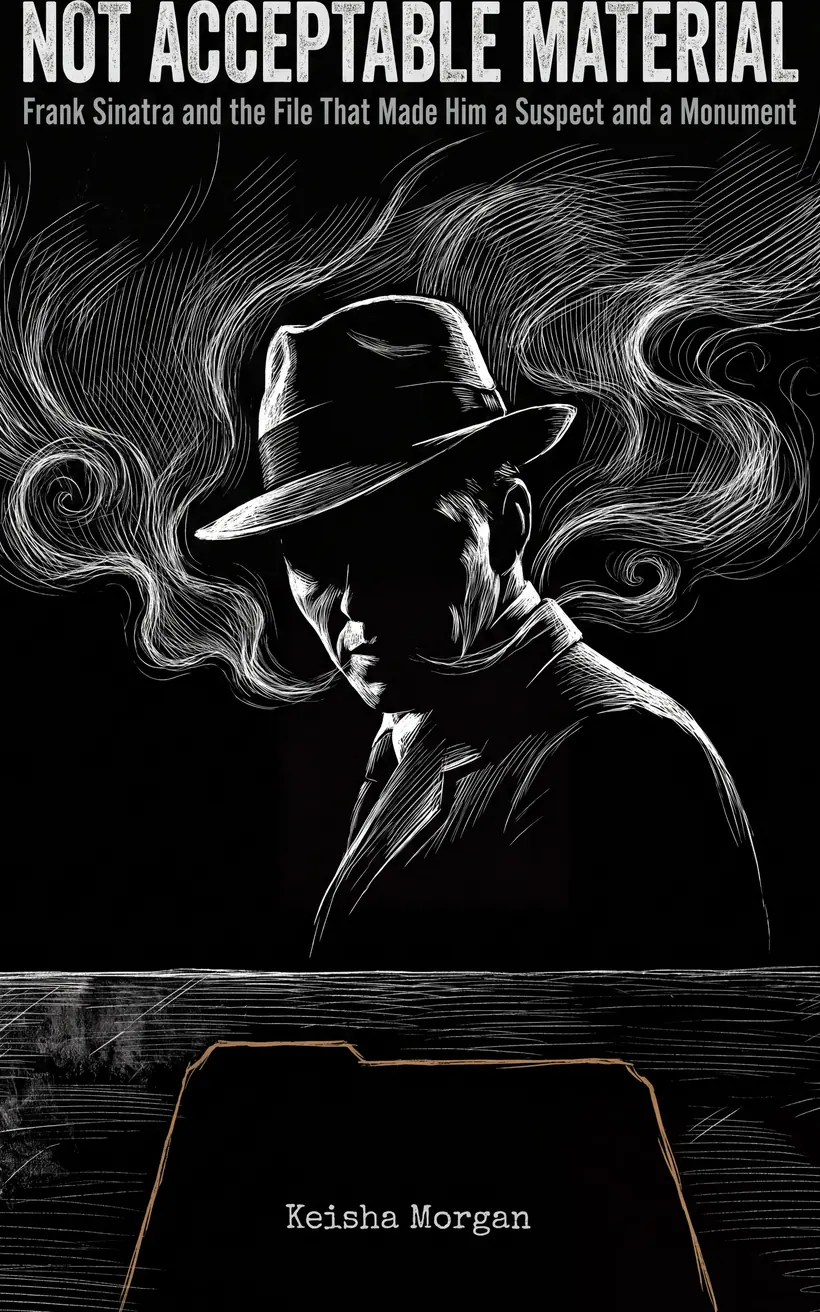
Francis Albert Sinatra. The title never carries the subject's name: it names one concrete thing out of the life — in this case Not Acceptable Material — and the name goes on the line underneath.
No. No subject, estate, label or foundation had approval over the text, and none paid for a word of it. The cost of that independence is that no new interviews were conducted for the book; it is built from the public record, and it says on the page where a scene is reconstructed rather than documented.
Yes — the whole opening chapter and the writer's foreword, free and in full, with no email address and no account. That is 4,559 words of the book.
About 76,000 words, 22 chapters, 244 pages in the paperback.
Paperback · Hardcover

Digital edition

Digital edition