The Opening
Paperback
Download link emailed the moment payment clears.
4,243 words · no email, no account
No. 277 · Power & Politics · History
a biography of Abu Abdallah Muhammad ibn Abdallah ibn Muhammad ibn Ibrahim al-Lawati al-Tanji, called Ibn Battuta
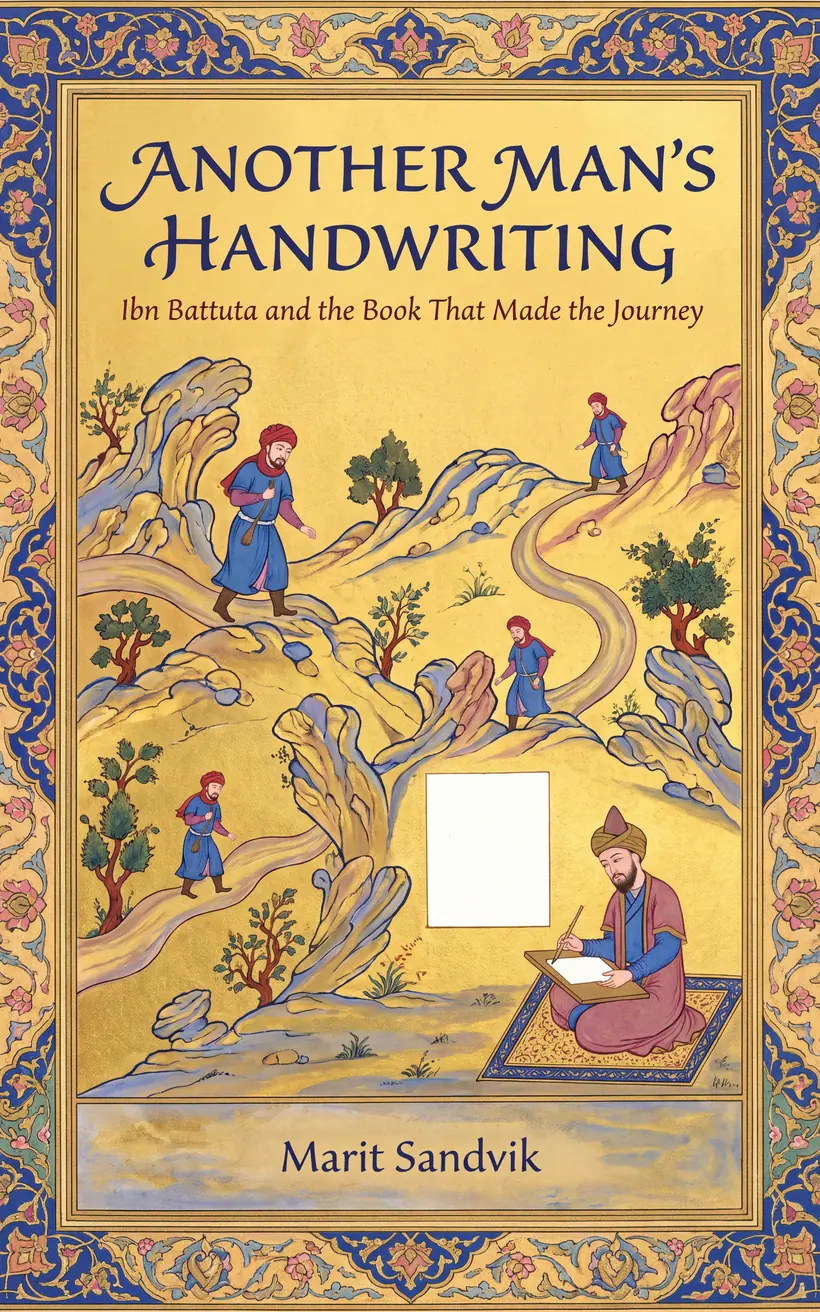
Twenty-nine years of travel and not one page written at the time. No diary, no notebook, no letters home, no log kept at sea, nothing set down by the man who was there. What survives is a court commission. In Fez, the Marinid sultan Abu Inan Faris wanted a gift for his court and assigned a professional Andalusian stylist, Ibn Juzayy, to take the fifty-year-old traveler's dictation. The stylist supplied the poetry, the rhetorical framing and the ornament, and where the memory ran dry he quietly imported pages from Ibn Jubayr, who had described Damascus in the 1180s, and did not say so.
The argument of this book is that the journey and the book are two different objects, and that confusing them is the oldest error in the subject. Ibn Battuta was not a fraud. He was a rememberer under commission, working from a memory thirty years deep beside a professional whose job was to make the result readable, and the consequences of that arrangement are not evenly distributed across the text. So the evidence is graded chapter by chapter, on the page. The excursion north to Bolghar is treated as very probably fabricated. The claimed journey to the Yuan court will not fit any workable chronology and puts an emperor in the wrong place; the southern Chinese ports are handled separately and allowed; Constantinople is left unresolved. Against that: there is no other account by a visitor of imperial Mali under Mansa Sulayman, the seven years at Delhi are the best-corroborated stretch in the work, and Damascus in the plague summer of 1348 is testimony from a man who was in the street. Chapter 18 is placed at the end of the traveling rather than in a note. He bought, sold, married and abandoned enslaved people across three continents for thirty years, and the caravan he left Takedda with in 1353 included six hundred enslaved women being walked north across the Sahara. He recorded the number without comment because he expected none. None of them is named in his book.
The opening chapter is published in full — read it here.
Abu Abdallah Muhammad ibn Abdallah ibn Muhammad ibn Ibrahim al-Lawati al-Tanji, called Ibn Battuta. The title never carries the subject's name: it names one concrete thing out of the life — in this case Another Man's Handwriting — and the name goes on the line underneath.
No. No subject, estate, label or foundation had approval over the text, and none paid for a word of it. The cost of that independence is that no new interviews were conducted for the book; it is built from the public record, and it says on the page where a scene is reconstructed rather than documented.
Yes — the whole opening chapter and the writer's foreword, free and in full, with no email address and no account. That is 4,243 words of the book.
About 68,500 words, 21 chapters, 222 pages in the paperback.