The Birkbeck Years
Paperback
Download link emailed the moment payment clears.
4,182 words · no email, no account
No. 281 · Science · Science
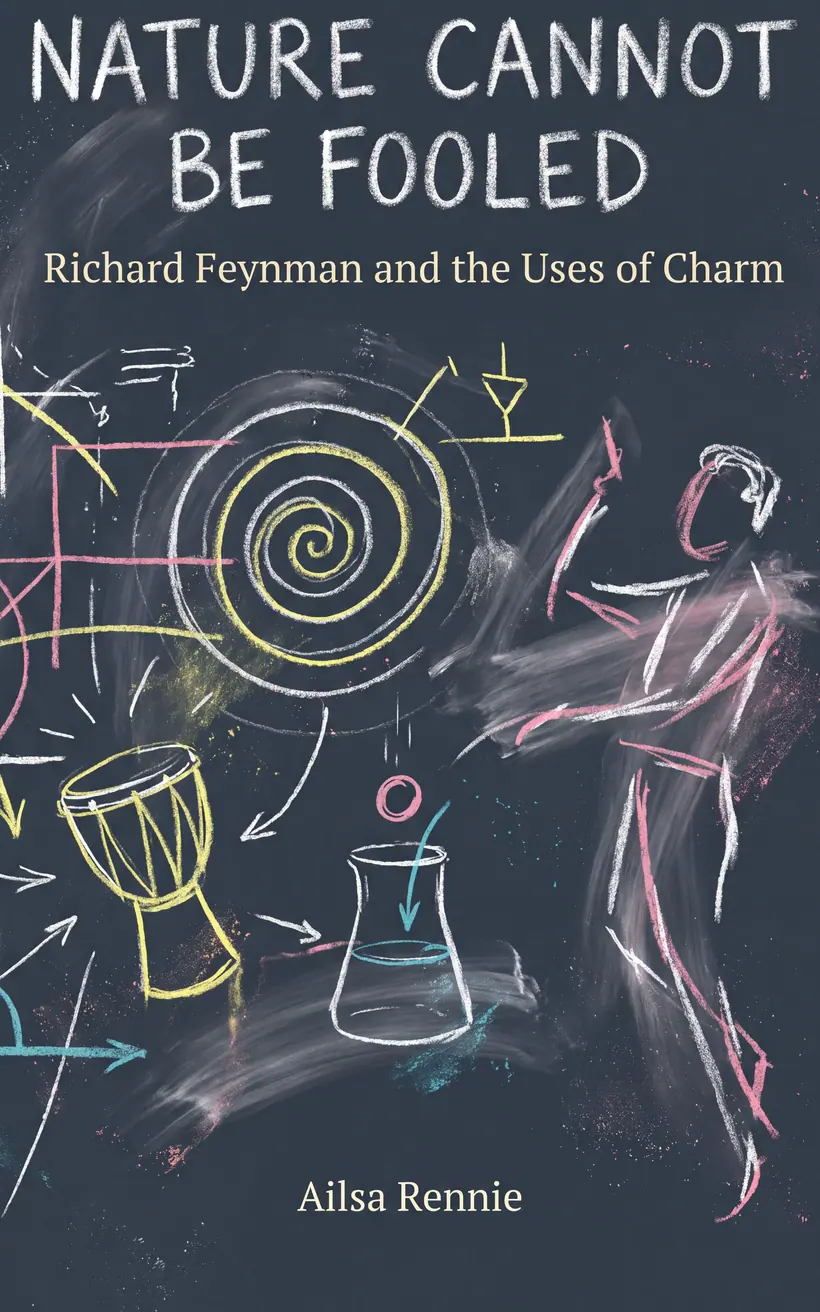
a biography of Richard Phillips Feynman
The man who warned against fooling yourself spent years recording his own legend. He gave that line at a Caltech commencement in 1974: the first principle is that you must not fool yourself, and you are the easiest person to fool. By then he had spent several years telling his life to a friend with a tape machine. Richard Feynman's charm was not decoration laid over the science but a working instrument, and this is the accounting. What it bought was the removal of deference from a room. A man manifestly unimpressed by rank, funny, willing to ask the question a graduate student would be embarrassed to ask, strips the euphemism out of an institution faster than any formal authority can. What it cost was scrutiny, in the one direction he never looked. George Sudarshan and Robert Marshak had the Fermi interaction result before the 1958 paper and did not get the citation; James Bjorken's scaling sits under the parton model of 1969. No theft is alleged. The claim is about a profession: credit flows toward charm, and it flowed toward him for forty years. A chapter on his conduct toward women attaches no verdict and names no private woman. Another sets Surely You're Joking against the oral histories Charles Weiner recorded years earlier, where the same man tells the same life flatter, the punchlines absent and the difficulties present.
The life runs whole. Far Rockaway, and a uniform salesman who taught his son that you can know the name of a bird in every language and know nothing about it. Arline Greenbaum, married on Staten Island in 1942 over his parents' objection, dead a month before Trinity. Los Alamos at twenty-four. The Nobel of 1965. Challenger closes the book, and the ice water is not the whole of it. Appendix F reached the report only because he threatened to take his name off it: management put catastrophic failure at one in a hundred thousand, and the engineers who built the machine at one in a hundred.
The opening chapter is published in full — read it here.
Richard Phillips Feynman. The title never carries the subject's name: it names one concrete thing out of the life — in this case Nature Cannot Be Fooled — and the name goes on the line underneath.
No. No subject, estate, label or foundation had approval over the text, and none paid for a word of it. The cost of that independence is that no new interviews were conducted for the book; it is built from the public record, and it says on the page where a scene is reconstructed rather than documented.
Yes — the whole opening chapter and the writer's foreword, free and in full, with no email address and no account. That is 4,182 words of the book.
About 67,000 words, 21 chapters, 218 pages in the paperback.