The Opening
Paperback
Download link emailed the moment payment clears.
4,116 words · no email, no account
No. 286 · Power & Politics · History
a biography of Gaius Julius Caesar
This book does not settle whether the word genocide fits the conquest of Gaul, and it explains why it cannot. Nobody counted the peoples of Gaul before 58 BC. Every casualty figure in the Commentarii comes from the man who caused the casualties, and David Henige has demonstrated that not one of the ancient totals is usable: not Plutarch's million dead and million enslaved, not Pliny's 1,192,000, recorded a century afterward as a reproach rather than a boast, not Velleius's 400,000. One number is corrected at the front. At Bellum Gallicum 4.15 the figure 430,000 is the count of the Usipetes and Tencteri who had left home, the size of a host and not a body count, placed where a body count would go and set against a Roman return of all safe to a man. The handbooks and the internet have laundered that into 430,000 dead. We do not know the death toll and never will, and that is not the same as saying it was small.
What is documented is documented because Gaius Julius Caesar reported it himself, in the calm administrative register he used for the joinery of a bridge. Fifty-three thousand Aduatuci sold at auction in a single transaction, after terms had been agreed and weapons surrendered. The Usipetes and Tencteri attacked while their chiefs were being detained in the Roman camp. The Mandubii, expelled from Alesia so the garrison could eat and refused passage through the Roman lines, left to starve between the siegeworks. At Uxellodunum, survivors released with their hands cut off, which Hirtius explains had to be visible because Caesar's clemency was famous and might otherwise be mistaken for weakness. He wrote about himself as Caesar. Not as I. The Gauls left no text. They left ground: bone dredged from the Maas at Kessel, a camp at Hermeskeil, the double siege line at Alesia. For four centuries the Bellum Gallicum was the first Latin prose educated Europeans read, and schoolboys construed the sale of fifty-three thousand people as grammar.
The opening chapter is published in full — read it here.
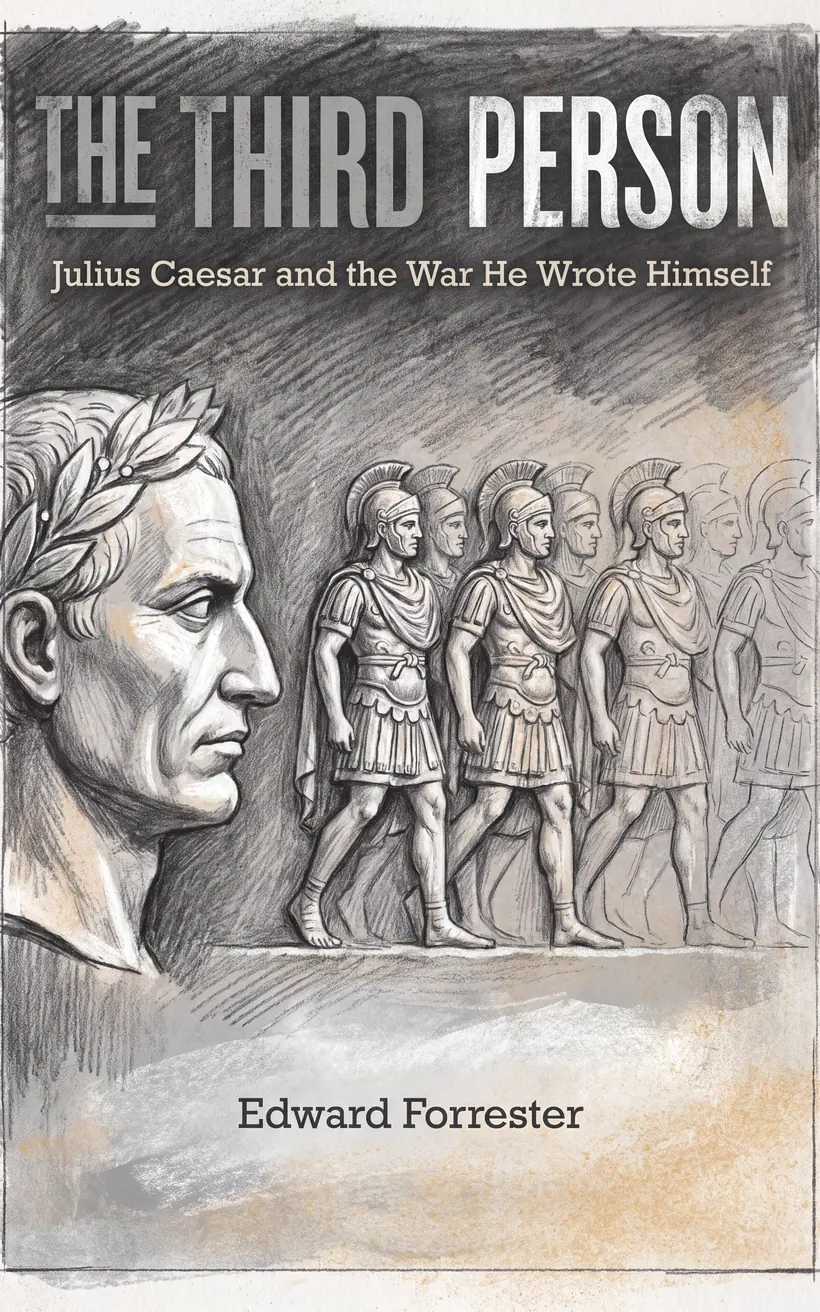
Gaius Julius Caesar. The title never carries the subject's name: it names one concrete thing out of the life — in this case The Third Person — and the name goes on the line underneath.
No. No subject, estate, label or foundation had approval over the text, and none paid for a word of it. The cost of that independence is that no new interviews were conducted for the book; it is built from the public record, and it says on the page where a scene is reconstructed rather than documented.
Yes — the whole opening chapter and the writer's foreword, free and in full, with no email address and no account. That is 4,116 words of the book.
About 72,000 words, 22 chapters, 232 pages in the paperback.