The Opening
Paperback
Download link emailed the moment payment clears.
4,091 words · no email, no account
No. 288 · Power & Politics · History
a biography of Hannibal Barca
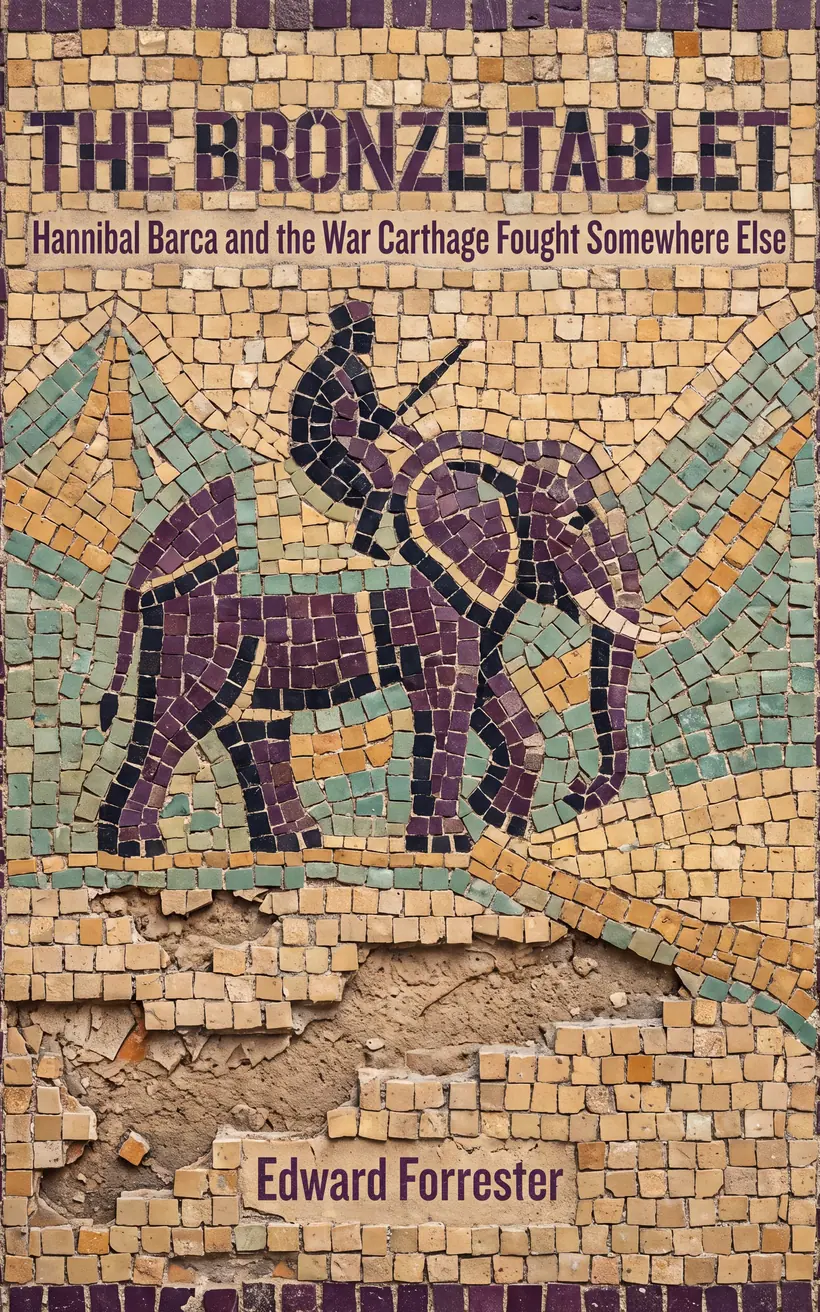
A sheet of bronze at the sanctuary of Juno Lacinia, below Crotone, carried the strength of Hannibal Barca's forces, cut into it in 203 BC before he took ship for Africa after sixteen years in an Italy he never left. Polybius read it and cited it twice. It is the only inventory of that army produced by the man who commanded it, and the closest thing to a Carthaginian document the Second Punic War has left. The bronze itself is gone. At the site, a single column stands.
No Carthaginian account of the war survives. Rome destroyed the city in 146 BC, the libraries went to the Numidian kings and nothing narrative came back. Everything known about Hannibal comes from Greeks and Romans, including the oldest explanation of why he failed. He won every battle and was ruined by a jealous Council at home that would not send men or money: that reaches us through his own Greek apologists, Sosylus and Silenus, who traveled with him and wrote for him, and then through Livy, for whom a divided Carthage answered how Rome survived Cannae. This book does not accept it. Carthage fought in Iberia, Sicily, Sardinia and finally Africa, and lost the war on those fronts while Hannibal was winning it on his, because the silver that paid for everything was in Spain and not in Apulia.
Twelve of the twenty-two chapters sit inside the years in Italy, and two contain no battle. The chapter where the war is lost is one of them. After Cannae the Roman confederation should have come apart and did not. Capua defected because it hated Naples, Croton and Locri moved against each other, the Latin colonies not at all. Italian cities chose sides against their neighbors, not against Rome, leaving him to arbitrate quarrels he could not garrison. He could win any field he chose to fight on and could not hold a country that would not add up. There are no speeches, no Alpine pass is certified, and the Zama chapter says in its first sentence that the battlefield has never been found.
The opening chapter is published in full — read it here.
Hannibal Barca. The title never carries the subject's name: it names one concrete thing out of the life — in this case The Bronze Tablet — and the name goes on the line underneath.
No. No subject, estate, label or foundation had approval over the text, and none paid for a word of it. The cost of that independence is that no new interviews were conducted for the book; it is built from the public record, and it says on the page where a scene is reconstructed rather than documented.
Yes — the whole opening chapter and the writer's foreword, free and in full, with no email address and no account. That is 4,091 words of the book.
About 71,000 words, 22 chapters, 230 pages in the paperback.