The Birkbeck Years
Paperback
Download link emailed the moment payment clears.
2,529 words · no email, no account
No. 196 · Science · Science
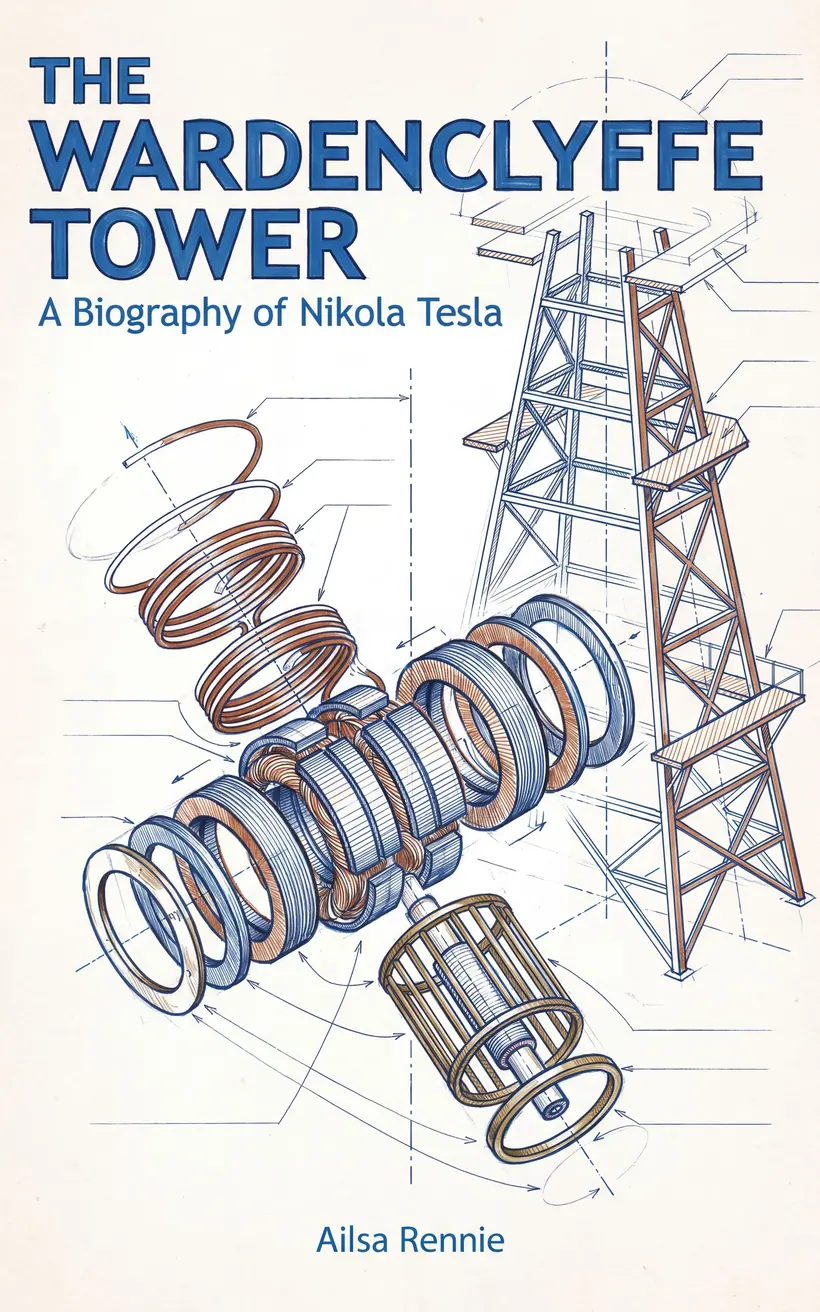
a biography of Nikola Tesla
January 7, 1943, Room 3327 of the New Yorker Hotel on West 34th Street, Manhattan. A maid finds Nikola Tesla, eighty-six, dead in his bed. The Serbian-American inventor of the polyphase alternating-current motor, the Tesla coil, and the wireless-power-transmission Wardenclyffe Tower has been living at the New Yorker on the courtesy account of Westinghouse Electric for nine years. He has been alone with his pigeons. The FBI seizes his papers within hours of his death.
Ailsa Rennie's biography opens earlier — in Smiljan in the Military Frontier of the Austrian Empire (now Croatia), where Nikola was born to a Serbian Orthodox priest and a mother who had built her own household tools without ever having learned to read — and follows the arc through the Graz Polytechnic and the Prague years, the 1884 New York arrival with a letter of introduction to Thomas Edison from Charles Batchelor ("I know two great men, and you are one of them; the other is this young man"), the long Edison-Tesla split, the 1888 polyphase-AC patents that Westinghouse bought for $60,000, the long 1893 Chicago World's Columbian Exposition demonstration that lit the fairgrounds with AC, the long Colorado Springs experiments of 1899-1900, the 1901-1906 Wardenclyffe Tower on Long Island, the long financial decline, the New Yorker Hotel years, and the January 7, 1943 death.
What emerges is a portrait of the Serbian-American inventor whose polyphase alternating-current system the modern electrical grid runs on — and the financial-and-personal-life arc that has, in the century since his death, become the subject of one of the most active twentieth-century scientific cults.
The opening chapter is published in full — read it here.
Nikola Tesla. The title never carries the subject's name: it names one concrete thing out of the life — in this case The Wardenclyffe Tower — and the name goes on the line underneath.
No. No subject, estate, label or foundation had approval over the text, and none paid for a word of it. The cost of that independence is that no new interviews were conducted for the book; it is built from the public record, and it says on the page where a scene is reconstructed rather than documented.
Yes — the whole opening chapter and the writer's foreword, free and in full, with no email address and no account. That is 2,529 words of the book.
About 65,000 words, 17 chapters, 212 pages in the paperback.